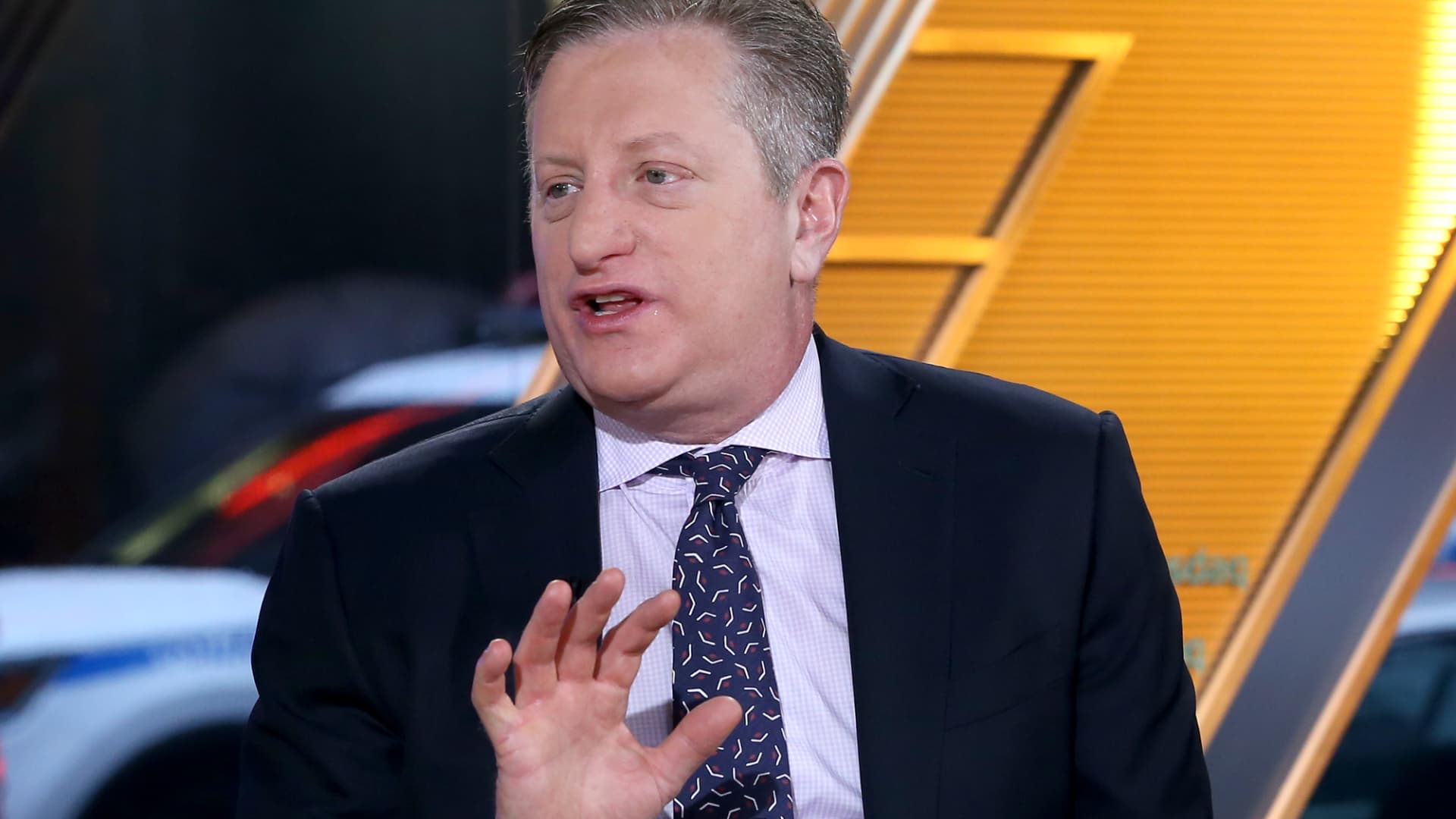
Steve Eisman, the investor renowned for his role in "The Big Short," recently revealed that he has scaled back his investments in artificial intelligence, having sold his long-standing shares in Alphabet. He cautiously suggested that investors might be underestimating the potential pitfalls should the anticipated AI expansion not meet the high expectations set by the market. During an appearance on CNBC's "Squawk Box," Eisman stated, "I've lightened up. I sold my Google a couple of months ago. I've owned Google for such a long time." His decision comes as the technology sector experiences a slight pullback, with the S&P 500 and Nasdaq Composite experiencing consecutive weekly declines of 0.6% and 2.1%, respectively.
Eisman's concerns were further amplified last week when Alphabet, which owns both Google and YouTube, saw its stock plunge nearly 8% due to an increase in its capital spending forecast. This move highlighted the substantial investments necessary for developing AI infrastructure. Currently, Eisman has opted not to reallocate his funds into defensive sectors, noting that investor focus remains heavily skewed toward AI, overshadowing traditional safe-haven markets like consumer staples. "People either want to buy AI or they don't want to buy AI," he remarked, adding that there’s little inclination to pivot toward more stable stocks, like Clorox.
When posed with the question of the consequences if AI fails to deliver, Eisman responded, "I think we have a big correction." While he is not taking a position against the overall market, he expressed concern over the concentration of investments around a singular theme. "It's all one trade," he emphasized. He pointed out that even those who believe they are diversified, with portfolios comprising 60% stocks and 40% bonds, may not be as diversified as they think. He explained that a significant portion of the stock investments is concentrated in technology and AI, and much of the new bond issuances are also tied to AI. "What's frightening is that it's all one trade," he said.
Currently, Eisman is holding onto a substantial amount of cash, awaiting a clearer opportunity to decide on his next move.