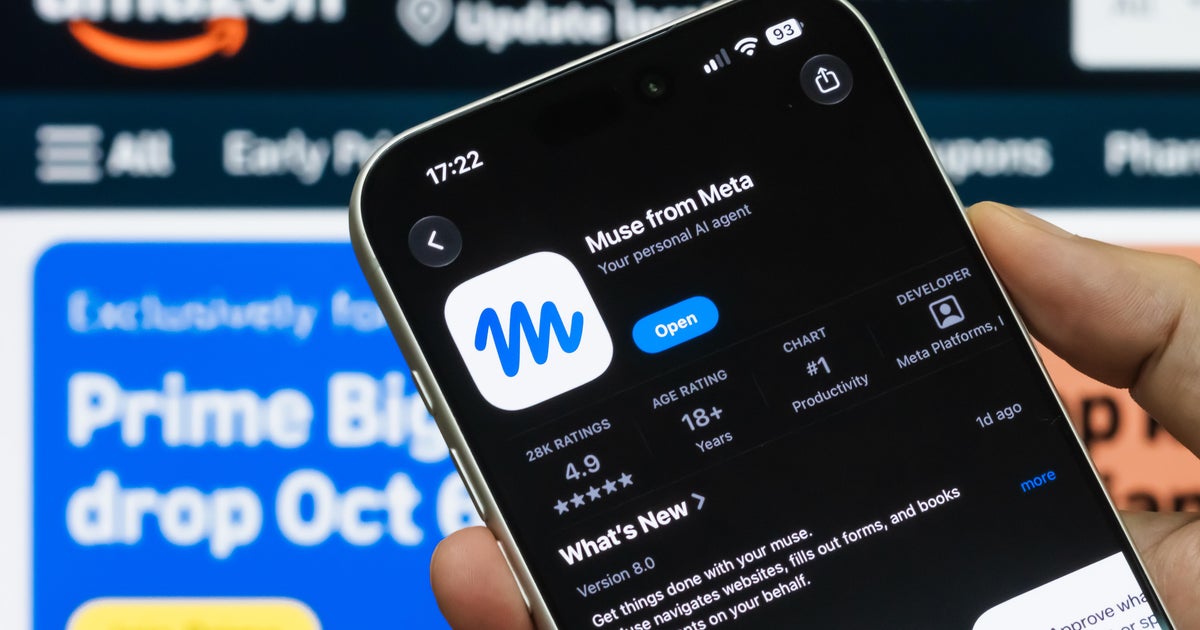
Consumers are beginning to embrace the potential of personal artificial intelligence, with many placing their confidence in Muse, Meta's latest AI assistant. The app has quickly climbed to the top of the Apple App Store rankings, surpassing the widely-used ChatGPT, reflecting a growing trend of individuals relying on AI to enhance their shopping experiences and save them both time and money, despite wider concerns about AI's implications.
Neil Saunders, the managing director and retail analyst at GlobalData Retail, highlighted the excitement surrounding Muse, which he believes signifies a shift towards more proactive shopping experiences. He anticipates that as consumers seek to simplify tedious tasks—like comparing prices across various platforms and locating products—they will increasingly turn to AI shopping assistants like Muse.
While Saunders hesitates to declare this as a definitive turning point, he acknowledges that it represents a significant phase in the evolving relationship between AI applications and consumers, as he shared with CBS News.
Research from IBM indicates that 41% of shoppers currently utilize AI assistants for product research, with 31% leveraging them to hunt for discounts. Since Muse's launch just two weeks ago, it has reportedly garnered over 2.5 million downloads, according to data shared by Sensor Tower. In comparison, OpenAI's ChatGPT app achieved 3.1 million downloads during the same timeframe, while Anthropopi’s Claude managed about 200,000 downloads.
Further emphasizing Muse's relevance, Amazon recently informed CBS News that it has prohibited the app from operating on its site due to concerns regarding security and user experience.
The landscape of online search is changing. For a long time, consumers used AI mainly as an advanced search engine. However, Meta is positioning Muse as a practical tool designed to assist users with various everyday tasks, aiming to enhance convenience in their lives.
John Mercer, head of global research at Coresight, noted that if Muse continues to gain traction, it may surpass Claude in popularity and become one of the leading AI tools among users. Unlike conventional chatbots, Muse's capabilities extend to executing tasks on users' behalf, such as booking travel, organizing email, and monitoring price changes. This not only means consumers can save time but also aids them in unearthing the best deals.
Mercer described this advancement as a "natural evolution from search" functionality. A recent survey by Coresight involving over 1,000 consumers found that 30% of participants expressed interest in using an AI tool to compare prices while holiday shopping, with the same percentage willing to use such tools to discover deals or promotional codes.
Saunders explained that agentic commerce aims to curate and display personalized selections for users, effectively minimizing the effort required to browse multiple websites for comparisons.
While Muse is already causing a stir, Saunders cautions that a wider acceptance of AI shopping agents is likely to take some time. Reports of AI-related mishaps have raised concerns, making consumers hesitant to trust these agents with purchasing decisions.
"There's still a level of apprehension surrounding the idea of allowing AI agents to manage purchases on their behalf," he remarked.