The rapid advancement of artificial intelligence (AI) relies heavily on the use of compact chips, some of which can fit in a person's palm. Major tech powerhouses, including Microsoft, require substantial quantities of these chips to maintain a competitive edge in the evolving landscape of AI technologies.
However, an investigation by The Guardian has uncovered a notable gap between Microsoft’s reported AI capacities and the actual number of high-performance AI chips currently operating in its data centers. Microsoft's goal was to have 1.8 million AI chips active in its facilities worldwide by the end of 2024. Fast-forward nearly two years, amidst a staggering $280 billion expansion, and internal documents reveal that the company has only managed to deploy 2.2 million chips. This figure falls significantly short of what many analysts had anticipated.
The ongoing global AI competition demands extensive development of data centers, which utilize costly chips. The disparity in chip numbers raises questions about the operational status of Microsoft’s latest data centers or whether they are lacking the necessary chips to function effectively.
Nvidia, a leader in chip manufacturing, plays a pivotal role in the surge of data center development. The details of Nvidia's supply chain are closely guarded secrets, and the company rarely discloses how many chips it sells or to whom, making it challenging to gauge industry growth accurately.
Microsoft has claimed that it has developed its AI infrastructure at an unprecedented pace, as outlined by CEO Satya Nadella, who announced plans to double the company's global data center presence by mid-2027. Since 2022, Microsoft has invested around $280 billion into the construction of these facilities, including over $41 billion in the last quarter alone. Nevertheless, determining the exact number of data centers established through this investment remains elusive.
Monitoring public announcements regarding energy consumption, one can estimate the operational data center capacity based on available electricity. Microsoft states that it has increased its data center capacity by 5 gigawatts (GW) over the past two years. It claims to have hundreds of data centers spread across five continents. While this amount of energy is impressive—equivalent to four times the size of Europe’s largest data center park—how this capacity relates specifically to AI operations is still uncertain.
Recent presentations from Microsoft indicate the potential for 10 GW of total capacity. However, it is unclear whether all these facilities are designated for AI; some may serve other cloud services. The focus on AI infrastructure over recent years has been significant, yet the number of chips warranted by this capacity raises further questions.
Experts such as Shaolei Ren from the University of California, Riverside, highlighted discrepancies in Microsoft’s sustainability reports, suggesting the actual AI capacity could be nearer to 1.2 GW. If true, this would imply a need for around 4 million AI chips, contrasting with Microsoft’s installed base.
Even analysts familiar with Nvidia's ecosystem expressed surprise at the lower-than-expected chip figures attributed to Microsoft, considering their public statements. In response to The Guardian's findings, Microsoft disputed the accuracy of the reported figures without clarifying the nature of the discrepancies.
Amid ongoing confusion, a connection to Microsoft's partnership with OpenAI might explain some variations in data center deployment that may not be fully accounted for in the latest reports.
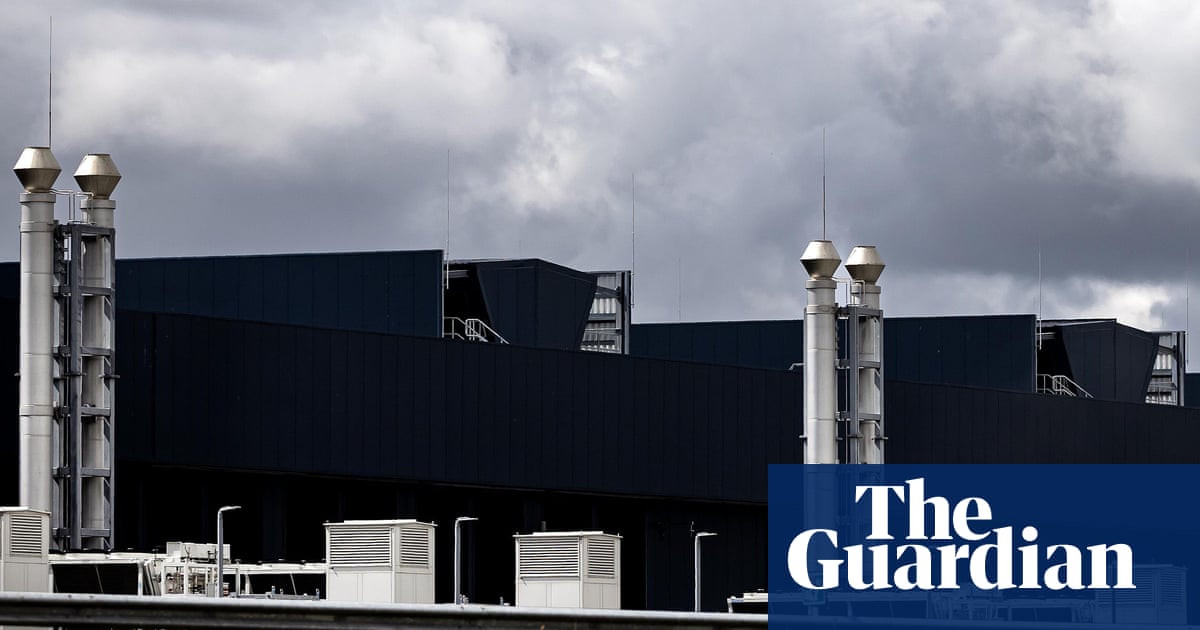
Moreover, projects such as Microsoft's Fairwater data centers in Wisconsin and Georgia seem to be lagging in operational readiness. Although Nadella claimed in April that the Wisconsin site was about to go live, satellite footage indicates that only portions of the center are fully functioning, raising concerns about the project's overall progress.
Furthermore, internal documents suggest that Microsoft's inventory of Nvidia’s latest chips is less than anticipated, despite Nvidia CEO Jensen Huang announcing substantial demand from leading tech companies, including Microsoft. The shortfall in advanced chips raises the question of whether they are simply not deployed or if there are other logistical issues preventing them from going online.
Nadella has noted that the primary challenge lies in securing enough electrical power and ensuring proximity to power sources. As he pointed out in a recent podcast, without a sufficient infrastructure in place, chips could end up sitting idle in inventory, unable to be utilized effectively.
Microsoft representatives responded to inquiries by stating their infrastructure has been built over decades to meet the surging demand for AI and cloud services, combining various chips to operate at scale without disclosing specifics about chip volume.
In the broader context, technology companies typically express their AI capacity in terms of power output. For a meaningful estimate of chip quantities within a data center, one would need to factor in the power each chip consumes. For example, using a single H100 chip which requires 700 watts, a hypothetical data center with 10 GW of capacity could support around 12 million chips.
While this estimation remains hypothetical, it does indicate the complexities behind calculating chip quantities from power capacities, considering factors like server configurations, cooling systems, and the operational efficiency of the data centers involved.