The healthcare sector is inundated with information, but the real challenge lies in effectively delivering the right information to the appropriate individuals at the right moment.
Every day, healthcare providers, insurance plans, and patients navigate a complex web of systems that involve various organizations and teams. While crucial information resides within the healthcare ecosystem, accessing, sharing, and utilizing it often requires significant administrative effort.
This ongoing struggle is pushing healthcare leaders to move away from merely experimenting with artificial intelligence (AI) toward a more pressing consideration: How can AI enhance operational efficiency in healthcare?
Across the industry, healthcare systems, insurers, and organizations are actively evaluating and deploying AI-based solutions. The next significant opportunity lies in translating these investments into tangible improvements that streamline operations, elevate user experiences, and mitigate unnecessary expenses throughout the healthcare landscape.
To achieve this, a broader perspective is needed, emphasizing workflow optimization rather than focusing solely on individual tools.
Transforming workflows as a key opportunity
Many of the obstacles faced in healthcare are not due to inadequate information but rather stem from disjointed processes. Healthcare providers invest time managing administrative tasks, sourcing information, and navigating systems not designed for cohesion. Patients encounter similar frustrations, manifested as delays, repetitive requests, and uncertainty about their care paths—all results of fragmented workflows.
Numerous processes in healthcare remain convoluted, manual, and challenging to navigate. These workflows frequently involve multiple reviews, administrative steps, and transitions, creating friction for providers, insurers, and patients. The goal should not merely be to digitize these functions, but to fundamentally redesign them.
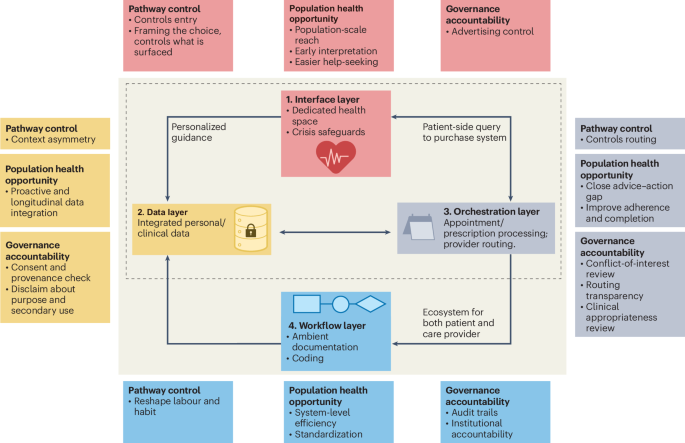
When utilized responsibly, artificial intelligence holds the potential to alleviate these issues, but its benefits are best realized when integrated into comprehensive systems, rather than applied to isolated tasks.
Conventional AI can uncover patterns, generate insights, and provide recommendations. Emerging AI technologies can help coordinate actions across workflows, consolidating information and activities that previously necessitated numerous systems, teams, and manual exchanges.
The aim is not just automating processes; rather, it is about creating a more seamless workflow in healthcare.
Shifting beyond trial and error
Healthcare organizations have accelerated their transition from AI exploration to practical application. Today, leaders in healthcare are honing in on areas where AI can deliver measurable benefits:
- Can AI contribute to lowering administrative workload? - Can it enhance the exchange of information? - Can it help in minimizing unnecessary delays? - Can it foster improved experiences for both patients and healthcare providers?
These inquiries are driving a new phase of AI adoption focused on operational excellence.
Early AI initiatives often targeted specific use cases. The current challenge is to expand these capabilities across healthcare operations, fostering enhanced experiences, reducing friction, and generating measurable results.
At Elevance Health, AI is part of a broader strategy to streamline healthcare, making it more integrated and navigable. The company has invested over $1 billion in digital and AI-driven innovations aimed at achieving these objectives.
Mitigating administrative burdens in healthcare
One of the enduring challenges in healthcare is the extensive administrative effort required to transfer information between organizations.
Throughout the industry, efforts are underway to cut down on tasks that do not directly enhance patient care while improving the efficiency and accuracy of information exchange and reducing unnecessary administrative expenses.
Providers, insurers, and patients frequently encounter similar issues from different vantage points. Providers spend considerable time gathering data and completing administrative requirements, while patients experience delays and uncertainties. Health plans strive to manage information flow among various stakeholders.
Improved connectivity across systems can enhance experiences for everyone involved. For instance, through its Health OS platform, Elevance Health aims to facilitate better data sharing and lessen administrative burdens across the healthcare ecosystem. This initiative has led to a reduction of about 68% in information-related denials within major health systems and has eliminated the need for peer-to-peer reviews. Each avoided delay or redundant task contributes to a more efficient, cost-effective healthcare system, allowing for a greater focus on patient care.
Prior authorization is another area where healthcare organizations are examining how digital tools can enhance speed and predictability. In Elevance Health's associated health plans, most prior authorization requests submitted through digital avenues are approved almost instantly, with the majority completed within 72 hours when clinically appropriate.
Internally, automation has significantly lowered administrative burdens in areas like chart requests by as much as 43%, enabling teams to devote more time to supporting providers and patients.
Technology is not a standalone solution
The future of healthcare will not hinge solely on artificial intelligence.
It will be shaped by how organizations leverage technology to enhance coordination, simplify processes, and achieve superior outcomes.
This demands robust governance, clear accountability, and ongoing human oversight.
Clinical decision-making must remain under the purview of healthcare professionals. AI is most effective when it empowers people by streamlining routine tasks, highlighting pertinent information, and facilitating coordination among teams.
Organizations that derive the most value from AI are not necessarily the ones deploying the most tools. Rather, they are those that successfully foster a more interconnected healthcare environment.
A new era for AI
The healthcare sector has largely advanced beyond questioning whether AI can generate value.
Now, the critical focus is on how to disseminate that value throughout the healthcare system. The forthcoming chapter of AI in healthcare will emphasize integration over experimentation, prioritizing interconnected workflows that enhance collaboration among patients, providers, and health plans.