Until recently, we spoke of algorithms capable of identifying findings in medical images, prioritizing studies, or supporting physicians in diagnosis. Then came generative artificial intelligence, capable of summarizing information, drafting text, and creating content.
Now, a third stage is emerging: agentic AI. It does not merely generate a response. It can receive an objective, consult multiple sources, interpret context, execute a sequence of tasks, verify results, and escalate exceptions to a human.
In simple terms:
Traditional AI identifies or predicts.
Generative AI creates.
Agentic AI understands an objective, organizes actions, and executes a process.
Its impact on healthcare will not be limited to diagnosis. Agentic AI can also transform the vast universe of documentation surrounding each episode of care, including clinical notes, informed consent forms, referrals, laboratory results, radiology and pathology reports, nursing records, and clinical summaries.
An AI agent could receive documents from multiple sources, determine which patient they belong to, classify them, extract relevant information, identify missing data, integrate them into the appropriate medical record, and trigger alerts or follow-up tasks. It could also consult different systems to generate a preliminary draft of a clinical summary, referral, or discharge note, flag inconsistencies, and submit the result to the responsible healthcare professional for validation.
This is no longer simply about digitizing documents. It is about transforming dispersed content into contextualized, accessible, and actionable clinical information.
Autonomy Requires Governance
An AI agent operating without sufficient context can produce an answer that sounds convincing but is incorrect. If it works with fragmented, outdated, or poor-quality data, it may also automate an organization’s existing errors.
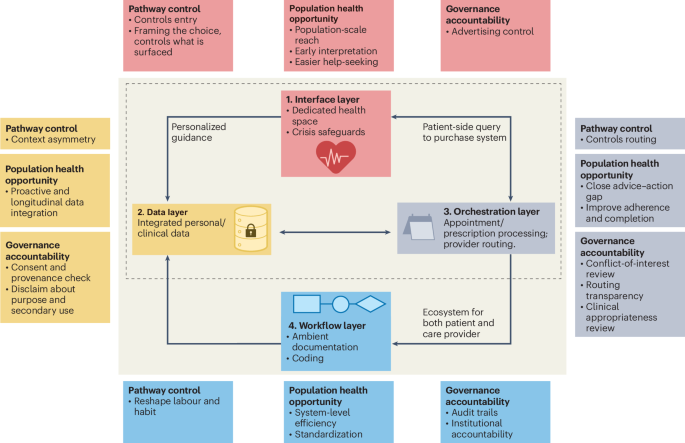
Agentic AI therefore requires interoperability and governed access to reliable information from electronic health records, PACS, RIS, laboratory systems, and document repositories. Its adoption must include clearly defined identities and permissions, traceability of every action, confidentiality safeguards, data provenance validation, human oversight proportional to risk, and mechanisms to stop, correct, or reverse automated actions.
The World Health Organization has emphasized that humans must remain in control of healthcare systems and medical decisions. In healthcare, even a seemingly administrative or documentation-related action can have clinical, legal, financial, and ethical consequences.
For Mexico and Latin America, where technological fragmentation, manual processes, and heavy administrative workloads remain significant challenges, agentic AI represents an opportunity to integrate information, reduce omissions, and give healthcare professionals more time to focus on patients.
However, the strategy should not begin by asking what artificial intelligence can do. It should begin by asking what problem it will solve, what information it will use, what actions it will be authorized to perform, and who will remain accountable for its results.
The next major transformation of AI in healthcare may not take place exclusively in front of a diagnostic image. It will also unfold across the millions of documents and data points accompanying every patient’s care journey.
Artificial intelligence can analyze, generate, and act. Responsibility, however, must remain human.
Norma Contreras is CEO of E+ Healthcare Technology Solutions and CEO of PaxeraHealth Mexico. An expert in healthcare IT, digital transformation, agentic AI, interoperability, cybersecurity, and health information governance, she has more than 25 years of experience leading strategic projects across Mexico and Latin America. She also serves as a business advisor to SMEs.