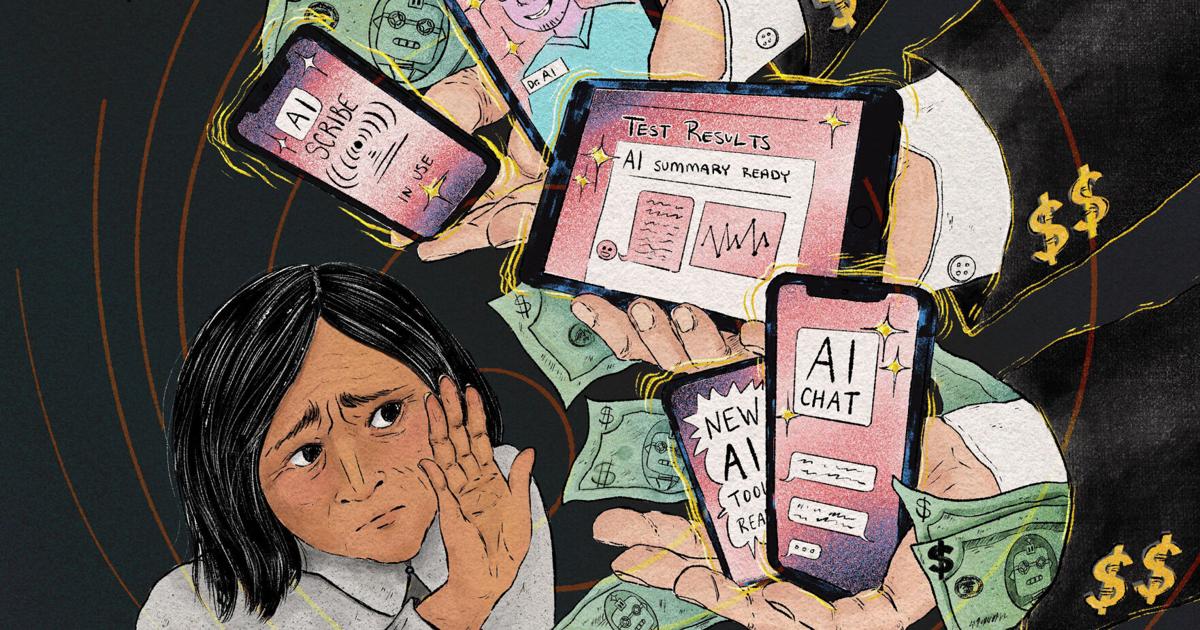
Artificial intelligence (AI) is rapidly transforming the landscape of contemporary healthcare, emerging as one of the most groundbreaking technologies in the field. Its applications span a wide array of domains, including radiology, pathology, patient triage, and drug development, with AI systems now tackling tasks that were once the exclusive purview of trained medical professionals. The next significant advancement on the horizon is the emergence of autonomous AI—capable systems that go beyond merely advising healthcare providers to actively execute clinical functions, make treatment recommendations, and, in some cases, initiate actions with minimal human intervention.
The discussion surrounding autonomous healthcare AI is increasingly becoming a pressing issue rather than a theoretical concept. In various regions, including the United States, Canada, Israel, and the European Union, regulators are working on new frameworks to oversee more autonomous healthcare systems. These initiatives underscore a growing acknowledgment that current medical device regulations do not adequately address systems that can learn, adapt, and even make decisions independently.
Transitioning from decision support to automated decision-making
At present, the majority of healthcare AI applications serve as clinical decision support tools. These systems are adept at identifying suspicious lesions in medical imaging, prioritizing patient cases, and flagging potential drug interactions, with the ultimate decision still resting on the clinician's shoulders.
Autonomous systems represent a paradigm shift in this context. Rather than just delivering information, they may suggest treatment plans, adjust medication dosages, interpret test results, or monitor patients from a distance and trigger necessary interventions. For instance, Israel's newly established healthcare AI regulatory sandbox is testing autonomous pregnancy ultrasound assessments and AI-assisted heart failure management, showcasing how swiftly the technology is evolving.
Global healthcare systems are grappling with challenges such as workforce shortages, mounting costs, and aging populations. Automation presents a potential solution by enhancing efficiency and expanding clinical capacities. However, increased autonomy also brings with it additional risks.
Addressing errors made by algorithms
While human clinicians can and do make errors, they usually comprehend their decision-making process and can elucidate their reasoning when mistakes are made. AI systems, however, operate in a fundamentally different manner.
Many advanced machine learning models function as "black boxes" that generate outputs difficult to interpret, even by their creators. If an autonomous system suggests an inappropriate treatment or fails to recognize a clinical decline, pinpointing the source of the error can prove to be quite complex.
This raises significant concerns surrounding patient safety. While a healthcare professional might catch an obvious mistake from a less experienced colleague, recognizing a subtle misjudgment generated by an algorithm that seems statistically sophisticated is considerably more challenging. Additionally, an overreliance on automation can lead to “automation bias,” where medical staff are less inclined to scrutinize machine-generated recommendations.
The effectiveness of AI is heavily contingent on the quality of the data used for its training.
Healthcare datasets often exhibit issues such as incompleteness, inconsistency, or bias towards certain demographic groups. An algorithm trained predominantly on one population may yield less accurate results when applied to others. Variations in ethnicity, socioeconomic status, geography, age, and access to healthcare all affect clinical outcomes and can influence model performance.
Such challenges are particularly pronounced when technologies developed in one country are implemented globally. An AI system validated on patient demographics specific to North America, Europe, or Israel may not meet the same standards elsewhere.
Subpar data quality can result in consistently erroneous decisions on a large scale, which poses a risk that eclipses individual human error, as algorithms can replicate the same mistake across numerous patients. Health Canada has issued guidance on machine-learning-based medical devices, emphasizing the need for proper data management, validation, transparency, and ongoing monitoring.
One of the trickiest issues regarding autonomous AI pertains to accountability. If a clinician makes a poor decision, established frameworks for responsibility exist. When it comes to autonomous AI systems that may cause patient harm, the lines of accountability become blurred.
Is the clinician liable for relying on the software? Is the hospital responsible for the deployment of the system? Is liability assigned to the software developer? What happens if the algorithm evolves post-approval?
These questions have gained urgency as regulators strive to craft frameworks that accommodate adaptive machine learning systems. The U.S. Food and Drug Administration and Health Canada have both been considering mechanisms such as predetermined change control plans to oversee future modifications while maintaining regulatory vigilance.
Moreover, healthcare is one of the most frequently targeted sectors for cyberattacks, and the introduction of autonomous AI further complicates this landscape. Such systems can be vulnerable to adversarial attacks, where malicious actors subtly manipulate inputs in ways that are undetectable to humans but can lead to erroneous outputs. An attacker might aim to disrupt diagnostic algorithms, compromise patient monitoring systems, or interfere with treatment recommendations.
As healthcare increasingly relies on interconnected technology—such as smartphones, wearable devices, cloud platforms, and remote monitoring solutions— the potential for compromise escalates. A breached autonomous clinical system could impact patient care in ways far exceeding traditional software failures.
The necessity for human involvement
The World Health Organization emphasizes that AI's primary role should be to enhance human well-being through principles of transparency, accountability, and respect for human rights. Human clinicians bring contextual understanding, ethical considerations, empathy, and a sense of responsibility—qualities that are challenging, if not impossible, to replicate in algorithms.
The task at hand is to ascertain where human input is essential, and where automation can safely improve efficiency. Insufficient oversight brings inherent risks, while excessive oversight may negate many advantages that autonomous systems have to offer.