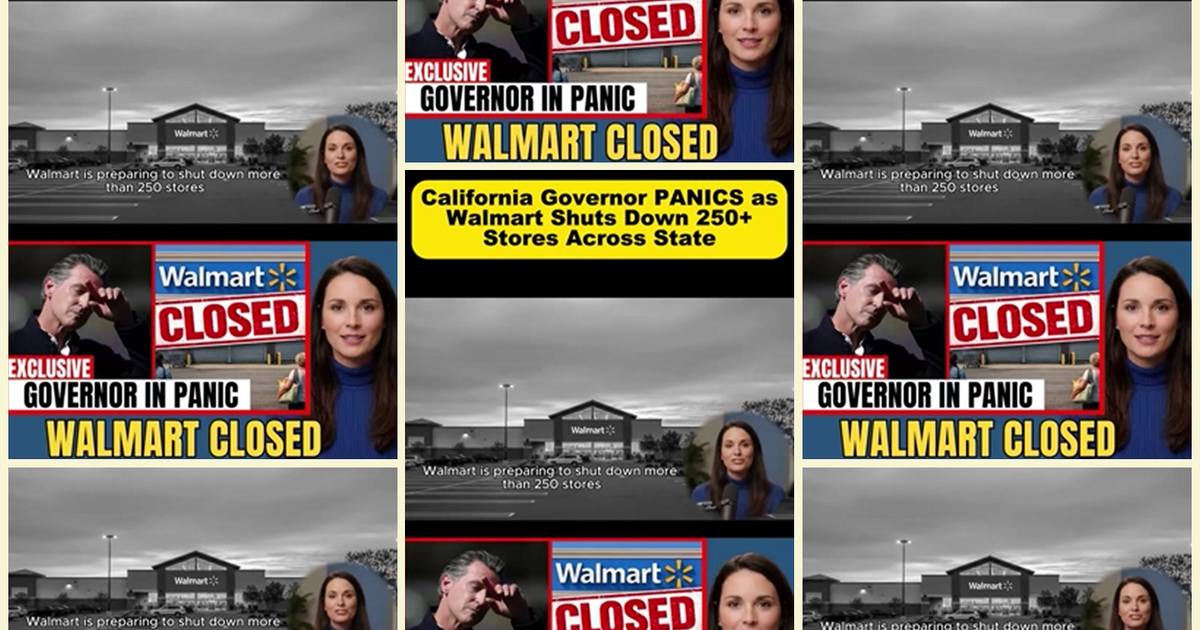
In January, former President Donald Trump shared two videos from a well-known YouTube channel, proclaiming the dramatic news that Walmart would be closing numerous stores across California. However, this information was false. The communication team for California Governor Gavin Newsom expressed greater concern over the misleading nature of these posts, not because unverified claims from Trump are uncommon, but due to the ambiguous format of the videos and their origins, as noted by two of Newsom’s staff members. They are particularly worried that the increasing prevalence of AI-generated misinformation—which seems to be targeting Newsom, a potential presidential candidate for 2028—may just be an early glimpse into the challenges ahead as both technology and the political operators using it evolve.
The YouTube channel in question, @MeganWright62, was filled with sensational AI-created content that inaccurately suggested various companies were exiting California, grocery stores were running out of supplies, and teachers were leaving the profession in large numbers. Although these videos were produced using AI without much regard for factual accuracy, they appeared polished enough that a segment of the public—and YouTube users—didn't seem to recognize or mind their artificial creation.
This account is one of countless others that Newsom’s team has actively sought to eliminate in recent months, as their efforts increasingly shift towards combating AI-generated spam in their media monitoring strategies. Much of their campaign has involved countering misleading narratives spread by AI-generated videos, including false assertions that Kroger would close a distribution center in California, as well as Costco and Shell shutting down their stores and gas stations—claims that have no basis in reality, especially since GM and Ford have not operated any factories in the state for decades.
Newsom's office reported that, since January, they have collaborated with YouTube to identify and remove over 700 accounts violating the platform’s terms of service through its “likeness protection” initiative. This new program aims to assist public figures, creators, and journalists by flagging instances where someone’s likeness is exploited without approval in deepfake content. A majority of these accounts were filled with AI-generated material that Newsom’s team characterized as misleading or outright false regarding both the governor and the perceived decline of California.
“Currently, algorithms are incentivizing falsehoods, and malicious entities are seizing the opportunity—especially those who aim to foster division in America,” stated Brandon Richards, a spokesperson for the governor, in an interview with Semafor. While he acknowledged that major tech companies like YouTube have been cooperative partners in this battle, he emphasized that the combination of bots and the widespread accessibility of potent AI tools, alongside society’s tendencies to engage in doomscrolling, significantly facilitates the dissemination of rage-inducing and misleading narratives that people tend to believe at face value.
Richards warned, “Without considerable systemic change from all platforms, this issue will persist and is likely to worsen.”