A coalition of over 20 tech giants, including Nvidia, Microsoft, and Meta, is appealing to U.S. lawmakers to refrain from imposing broad restrictions on open-weight artificial intelligence (AI) models. They argue that these models are essential for maintaining America's edge in the competitive global AI landscape.
In a joint letter issued on Friday, the companies emphasized that open AI models foster innovation, enhance cybersecurity efforts, and ensure that the U.S. remains a key player as international competitors strive to advance their AI capabilities.
"The success of our AI leadership should not be defined by the creation of a single advanced AI model, but rather by our ability to cultivate a robust, open ecosystem that permeates all sectors," the coalition wrote.
This appeal comes at a critical time as the Trump administration evaluates its stance on open-AI models, following concerns raised regarding the Chinese company Moonshot AI and its Kimi K3 model.
On Wednesday, Michael Kratsios, the Director of the White House Office of Science and Technology Policy, accused Moonshot of utilizing distillation—a process that involves training a smaller model with the results of a more complex model—to create Kimi K3 by mimicking Anthropic's Fable 5 model. This technique has emerged as a contentious issue in the race for advanced AI technology.
Treasury Secretary Scott Bessent indicated this week that potential sanctions could be imposed on companies that misuse distillation methods to misappropriate intellectual property.
While advocating for open AI development, the coalition also recognized that businesses engaging in unlawful extraction of value from proprietary models should be held accountable.
"Unlawful attempts to exploit closed models raise valid issues," the letter asserted. "Such concerns should be addressed through specific legal and commercial measures, not through broad-based restrictions that hinder vital AI innovations."
Open-weight AI models allow developers to download and modify a model's foundational parameters, providing greater accessibility compared to proprietary models, which are kept under strict control by their developers.
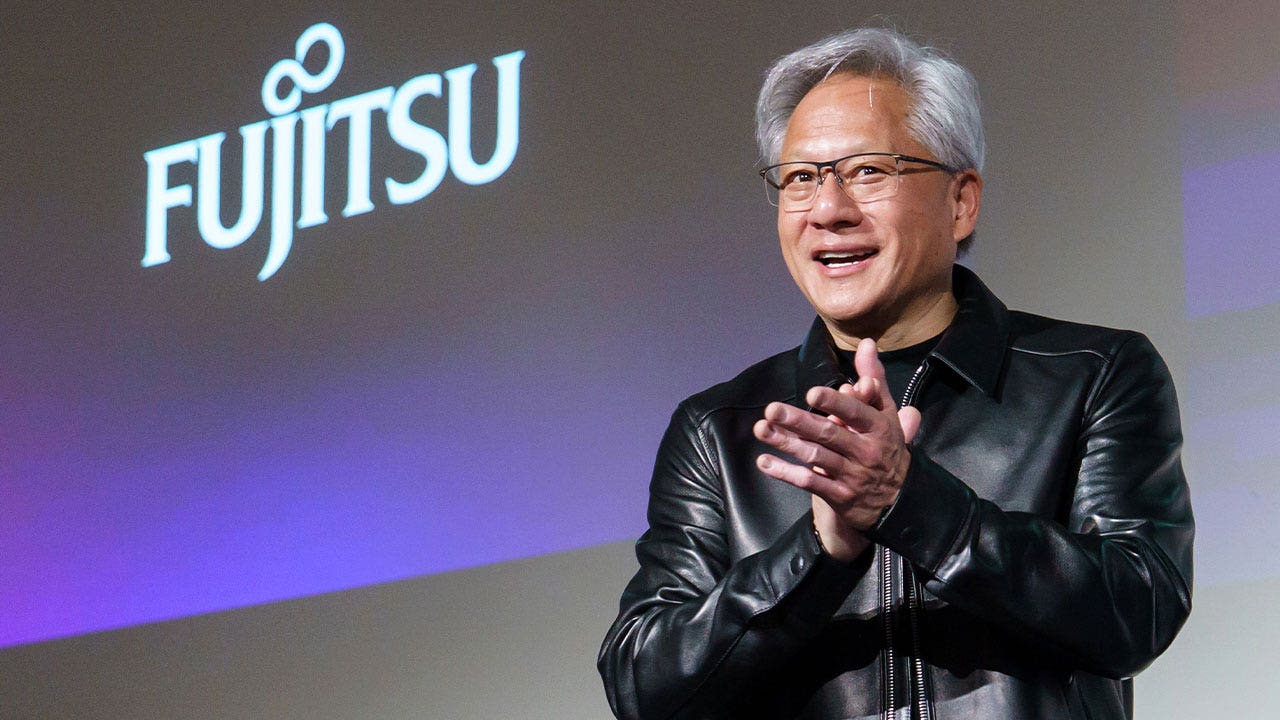
Nvidia's CEO, Jensen Huang, supported this initiative with his inaugural post on X, announcing the company's signatory to the letter.
"In my first post, I’m sharing a letter from @NVIDIA that highlights the importance of open models," Huang stated. "AI is set to transform every industry, empower each company, and be developed by every nation. Open models bolster safety and cybersecurity, promote innovation, and enhance sovereignty."
The letter garnered support from firms such as Dell Technologies, IBM, Palantir, Hugging Face, Mozilla, Mistral, as well as investment entities like Andreessen Horowitz and Y Combinator. However, notable absentees included OpenAI and Anthropic, leading developers of proprietary AI models, along with Google and Elon Musk's xAI.
This collaborative effort underlines a growing tension regarding how policymakers should reconcile national security and intellectual property issues while striving to keep the U.S. at the forefront of AI development, especially as China intensifies its investments in sophisticated AI technologies.
As of now, neither Nvidia, Anthropic, nor the White House Office of Science and Technology Policy has provided comments in response to inquiries from FOX Business.