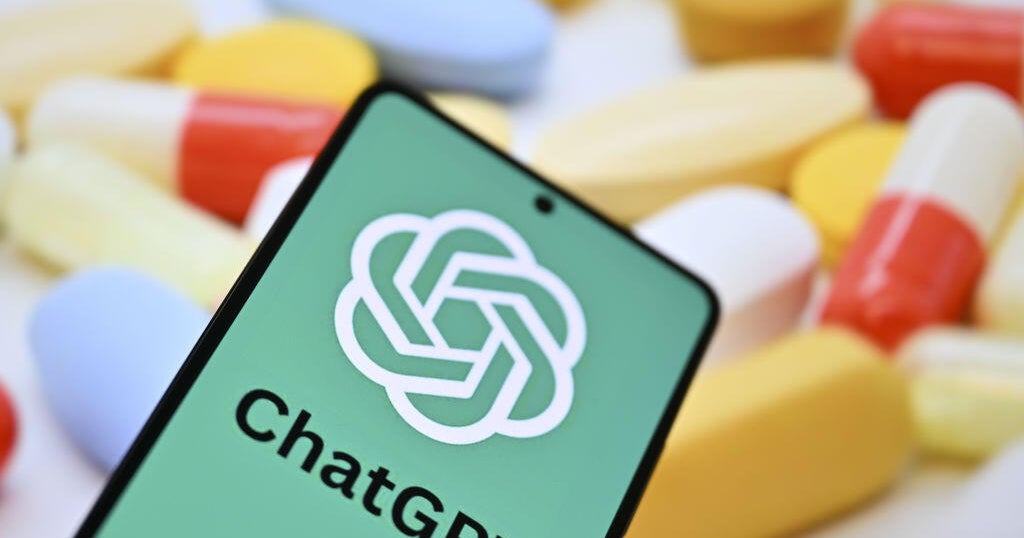
Every week, hundreds of millions of individuals seek health guidance from ChatGPT, and the platform has recently introduced a dedicated feature for these inquiries.
OpenAI has launched Health in ChatGPT, allowing users to upload their medical records, including lab results and medication lists. Users can also connect their Apple Health data to provide the platform with access to their health and fitness metrics.
In a statement released on Thursday, OpenAI explained that, with user consent, ChatGPT can utilize this connected health information to assist users in comparing new results with previous tests, summarize changes since their last medical appointment, or analyze how factors like sleep and exercise relate to their overall routines.
Currently, ChatGPT handles health-related queries from an astonishing 300 million people on a weekly basis—an indication of the challenges plaguing the U.S. healthcare system, according to Tanzeem Choudhury, Chief of Health Innovation at Cornell Tech. "Our healthcare system is broken," Choudhury stated in an interview with CBS News. "This is likely why so many people are seeking advice."
Choudhury, who has dedicated over 15 years to exploring the intersection of artificial intelligence and healthcare, believes AI could democratize access to health resources, especially for Americans facing various barriers. However, he emphasized the necessity of considering the associated risks and establishing better protective measures.
He warned that individuals relying on AI for medical information must be aware of the dangers linked to sharing personal data with a system like ChatGPT. Instances of AI generating incorrect or hazardous medical advice have been documented. A recent lawsuit revealed that a Florida man claimed ChatGPT's guidance nearly resulted in his death following a pulmonary embolism. An OpenAI representative stated that "ChatGPT is not a doctor and should never replace professional medical care, diagnosis, or treatment." Furthermore, a California teenager tragically lost his life after following ChatGPT's advice to consume what turned out to be a toxic mix of substances. In response to this alarming event, OpenAI expressed condolences and confirmed that the version responsible for the incident is no longer accessible.
In their announcement regarding Health in ChatGPT, OpenAI reiterated that while the tool can offer insights, it does not substitute for the judgment and expertise of healthcare professionals. CBS News has reached out to OpenAI seeking clarification on whether ChatGPT can detect when a user should be directed to a medical expert.
Currently, Choudhury pointed out that it is the user's responsibility to discern when to seek professional medical advice and when to disregard recommendations from a chatbot. "It relies on the user's ability to make an informed decision," she explained, noting that certain groups—such as the elderly or cognitively impaired—might struggle to comprehend the risks associated with chatbot interactions.
Aside from potential inaccuracies, users should also consider the implications of sharing sensitive personal health information with a chatbot, as noted by Vishal Misra, a Computer Science professor and Vice Dean of Computing and AI at Columbia University. "The risks that come with sharing health data with anyone apply here as well," he told CBS News. "You're disclosing something quite intimate."
Before launching Health in ChatGPT, OpenAI collaborated with medical professionals worldwide to develop realistic health scenarios and diligently test functionality. OpenAI asserts that new features include added encryption safeguards and will confirm user intentions before executing actions via connected plugins, such as sending emails. Additionally, any health information provided to ChatGPT will not be used for training its models or targeted advertising.
However, Choudhury warns of uncertainties surrounding the permanence of privacy policies and how user data might be utilized in the future, especially given AI firms' past record of altering their terms of service. The FTC has previously cautioned consumers about the potential hazards tied to data sharing.
Despite the risks, some users might find the advantages of seeking advice through ChatGPT to be worthwhile. Misra noted that he has personally used ChatGPT to monitor his own health metrics. "If approached with caution, it can offer significant benefits, including insights that a skilled doctor might overlook," he stated.
Leveraging user-provided data, AI can help track health trends over time, which can be beneficial when shared with a doctor to enhance the overall understanding of a patient’s health situation. While ChatGPT may provide valuable insights, Misra stresses the importance of treating it as a supplementary tool rather than a substitute for medical professionals. "Always consult with an actual physician before taking any action based on ChatGPT's output," he advised. "The only course of action should be to discuss it with your healthcare provider."