A group of bipartisan lawmakers announced the introduction of new legislation on Thursday that aims to bolster the protection of American artificial intelligence firms such as OpenAI and Anthropic against competition from Chinese companies.
The proposed bill, known as the Collaboration on Adversarial Threats and Security Risks Act, classifies alleged copycat operations from China as a national security concern. It seeks to create an exemption from antitrust regulations, allowing AI companies and industry associations to collaborate on strategies to address these threats. Typically, antitrust laws restrict cooperation among businesses within the same industry to prevent practices that could lead to increased consumer prices.
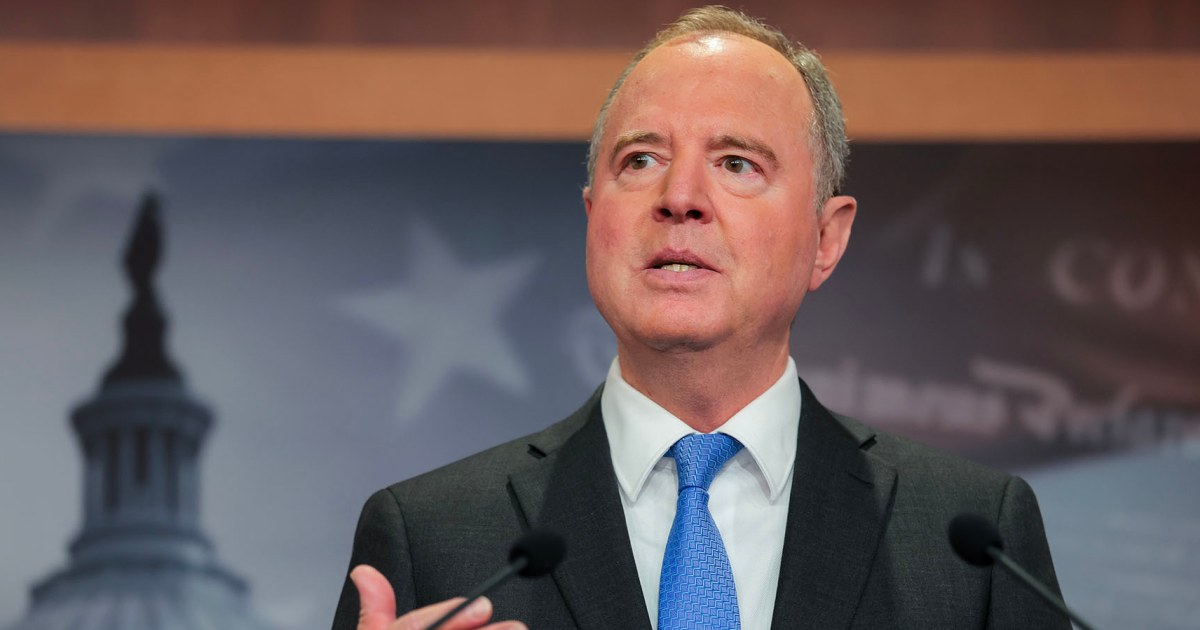
The legislation is spearheaded by Senators Adam Schiff (D-Calif.) and Jim Banks (R-Ind.), along with Representatives Bob Latta (R-Ohio) and George Whitesides (D-Calif.).
According to the lawmakers, the bill facilitates the sharing of information regarding specific security risks among AI entities, provided that these exchanges are conducted genuinely to prevent, investigate, or mitigate AI-related security threats. Furthermore, companies could coordinate efforts to delay or limit the deployment of high-risk AI models, but they would need to provide written notice beforehand as specified in the legislative summary.
The lawmakers emphasized that their proposed antitrust exemption would include strict measures to maintain competition within the AI industry. Additionally, the attorney general would have the authority to seek injunctions against any organizations that misuse this exemption.
This legislative push is part of broader U.S. efforts to shield the rapidly evolving AI sector from increasing competition from China. In recent weeks, several Chinese AI firms, such as Moonshot and Z.ai, have launched new technologies that demonstrate capabilities comparable to those of leading American AI companies.
In an interview with Fox Business, Treasury Secretary Scott Bessent hinted at potential sanctions against foreign models for allegedly “stealing from our great companies.” He reiterated this warning in a post on the platform X.
Michael Kratsios, the director of the White House Office of Science and Technology Policy, also accused Moonshot of illegally appropriating U.S. technology in a statement made on X. Moonshot has not provided a response to these claims.
American firms like Anthropic, Google, and OpenAI have raised concerns about a practice known as “distillation.” This involves inputting vast numbers of queries into a sophisticated AI model, analyzing the outcomes to effectively enhance a less advanced model, creating a lower-cost imitation in the process.
China, however, has denied these accusations, asserting that they are baseless character attacks. Liu Chang, a representative from the Chinese Embassy in Washington, affirmed China's commitment to protecting intellectual property rights and maintaining fair standards for all stakeholders in the tech sector.
U.S. lawmakers believe that the threat posed by Chinese competitors is genuine and that collaboration among AI firms is essential for counteracting it. Schiff emphasized that allowing foreign adversaries to exploit American advancements in AI could jeopardize national security.
Latta, who leads the House Energy and Commerce subcommittee on energy, noted that AI models have become critical infrastructure, much like the electric grid. He stressed the importance of ensuring that essential systems, such as hospitals and water supply networks, remain secure and reliable amidst threats from adversaries.
Antitrust laws typically prevent firms from coordinating to fix prices or monopolize markets, although Congress has previously created exemptions to address national security needs, such as during the establishment of a cybersecurity information-sharing exception in 2015.
The Justice Department also possesses the ability to grant temporary exemptions for industry coordination when deemed necessary, as demonstrated during the COVID-19 pandemic with vaccine manufacturers.
The tech community is divided over the merits of distillation, particularly as consumers face mounting expenses from leading AI companies. Some proponents argue in favor of lower-priced Chinese models, suggesting that they could lead to greater affordability in digital cognition. Others, however, recommend legal action against perceived infringement rather than seeking government intervention.
In contrast, some U.S. companies have been willing to advocate for the use of foreign AI models. For instance, Hugging Face, a software producer for AI labs, recently opted for a Chinese model to successfully analyze a cyberattack when U.S. models proved insufficient. OpenAI also disclosed in a recent blog post that one of its autonomous agents had inadvertently caused a security breach.
Clement Delangue, CEO of Hugging Face, defended the notion of distillation on X, arguing that it is a commonly accepted practice that should fall under fair use, especially when the resulting models are open-source.
In a notable instance, SpaceX CEO Elon Musk testified earlier this year regarding his lawsuit against OpenAI, revealing that his team had utilized distillation methods on OpenAI models to train its chatbot, Grok. Meanwhile, Google offers a limited distillation service that allows enterprise clients to implement smaller and cost-effective versions of its Gemini chatbot.