We've all experienced the frustration of getting a blood draw when the clinician struggles to locate our veins. Perhaps you forgot to hydrate, leaving you facing multiple needle pricks. Now, imagine if an artificial intelligence system could pinpoint the ideal spot for the needle insertion. Would you be open to relying on AI for your medical procedures? That could become a reality sooner than you think.
A team at SRI International in Princeton is working on a groundbreaking AI system designed to assist healthcare professionals during clinical tasks like blood draws, splinting, and intubation—without the need for specialized training. This research lab, known for innovations like the computer mouse and Siri, is collaborating with Mayo Clinic and the University of Florida on this technology.
The system employs smart glasses, an overhead camera, and a tablet interface to monitor every step of a procedure, verify actions, highlight mistakes, and provide instructions on the next steps.
Jason Tyan, principal investigator and program director at SRI’s Center for Vision Technologies, explains, "Currently, healthcare workers are only trained in specific procedures. They lack the ability to bridge different areas of expertise. We envision using AI to support them in various tasks."
This initiative coincides with the growing presence of AI across multiple sectors, including healthcare, while concerns regarding safety, accuracy, and transparency continue to rise.
At the demonstration, smart glasses equipped with computer vision displayed digital overlays directly onto patients in real time, providing guidance to the clinician. During the event, Tyan inquired, "Amira, how do I perform a blood draw?" The AI promptly responded with a step-by-step guide.
Although Tyan and the AI system were conversing openly for the demo, he indicated that in real medical contexts, clinicians would likely access the information discreetly through a chatbot feature or listen via the smart glasses' speakers.
During the mock blood draw, the smart glasses highlighted the exact location on a researcher’s arm with a bright pink circle, indicating where Tyan should aim.
"This innovation could have a significant positive impact on society and enhance our healthcare system," Tyan remarked.
The AI software is part of the larger Platform Accelerating Rural Access to Distributed and Integrated Medical Care (PARADIGM) program, which aims to deploy mobile medical units offering advanced services—from cancer screenings to prenatal care—in underserved areas throughout the United States.
Millions of Americans live in "healthcare deserts" where access to emergency or trauma care is severely limited. Even within New Jersey, known for its excellent healthcare system, some communities struggle to obtain necessary medical attention.
SRI recently received up to $26.5 million in funding from the Advanced Research Projects Agency for Health, a federal entity within the U.S. Department of Health and Human Services, to further develop this AI system over a five-year timeline. While the technology currently assists with tasks like blood draws and intubation, researchers aim to expand its capabilities to cover 18 different medical procedures by the project's end.
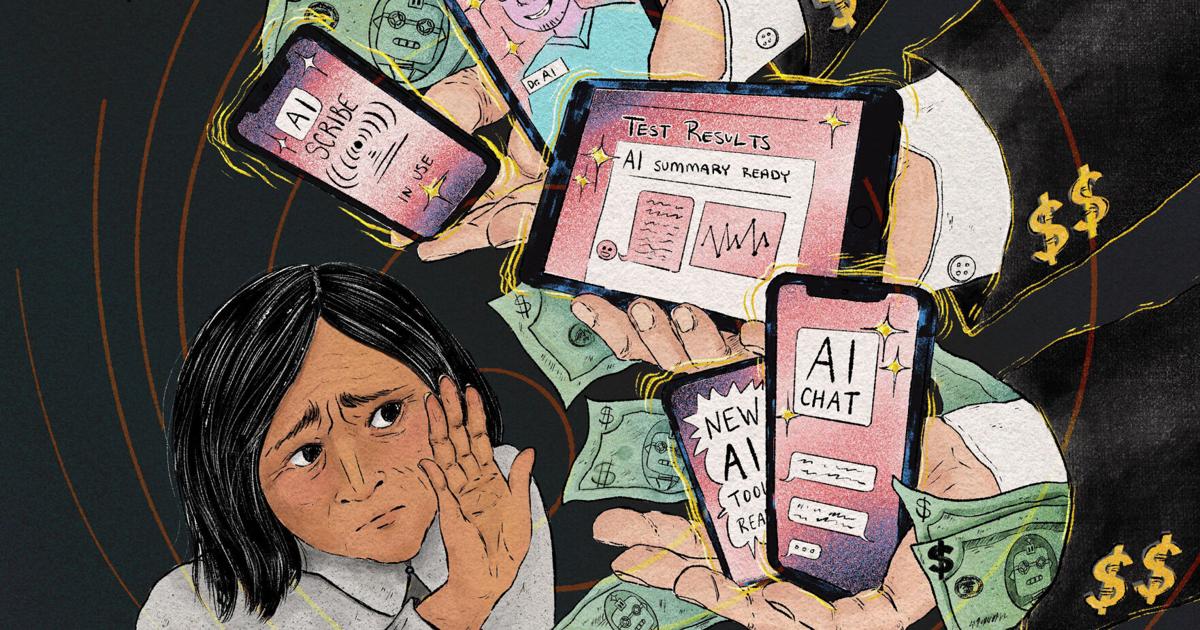
AI is becoming increasingly prevalent in various aspects of our lives, from smartphones to smart home devices; however, its role in healthcare remains contentious. Some see it as a game-changer, streamlining tasks and alleviating cognitive load, while others express concerns over job displacement, diminished critical thinking, and security vulnerabilities.
Dr. Antonina Mitrofanova, deputy director at the Rutgers Center for Biomedical Informatics and Health Artificial Intelligence, asserts that AI is a powerful tool that can process data faster than any human could, but stresses the need for strategic implementation.
Currently, AI in healthcare operates within a complex framework of federal and state regulations, with recent shifts toward a more lenient regulatory approach. Studies, including one from MIT, indicate that while AI enhances accuracy for experienced practitioners, non-experts may sometimes follow AI advice without sufficient skepticism.
"It's crucial to focus on educating the next generation about the potentials and pitfalls of AI," Mitrofanova argues, emphasizing that the technology should complement, not replace, the human touch in healthcare.
"Healthcare must remain a fundamentally human experience. AI can greatly assist, but there must always be a knowledgeable professional overseeing the process," she concluded.