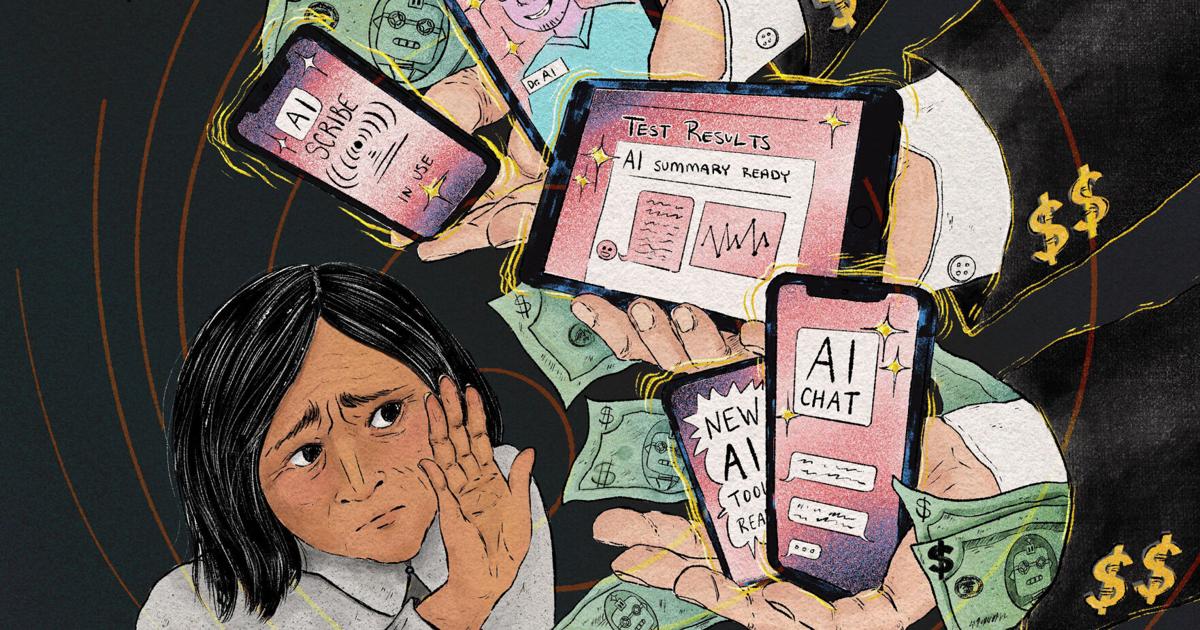
If you believe that artificial intelligence can revolutionize the healthcare landscape in the United States, Mark Cuban suggests a reevaluation of that notion. According to Cuban, while AI technology has the potential to assist healthcare professionals, it can just as easily be exploited by insurers and other middlemen to complicate and inflate costs for both physicians and patients.
In a recent post on X, Cuban expressed his concerns, stating, "For every new AI tool that we provide to help doctors navigate challenges and enhance the quality of care, there are powerful corporations deploying multiple AI systems aimed at delaying and denying necessary services."
This commentary came in response to Marc Andreessen, a fellow venture capitalist, who claimed on the same platform that "AI is already a better doctor than 99.99% of human doctors." Cuban acknowledged the promise of AI but emphasized that the real challenges stem from insurance companies, pharmacy benefit managers, and various healthcare intermediaries—entities he believes are already consuming a troubling amount of physician time while prioritizing their own financial interests.
Cuban articulated that over 25% of a doctor's time is spent battling with these corporations, which often complicate the care process and inflate costs for healthcare providers and patients alike.
The competition among AI systems in healthcare is not just theoretical; it's happening now. Cuban pointed out that large healthcare organizations are using AI to manipulate contracts and mislead stakeholders, while hospitals contract Revenue Cycle Management firms that can take as much as 10% of their revenue to counteract these very tactics.
Cuban's stance on the detrimental influence of healthcare intermediaries is well-documented. In 2022, he co-founded the Cost Plus Drug Company, aiming to reduce prescription drug prices by eliminating the need for traditional intermediaries and selling generic medications directly to consumers with clear pricing.
He likened the ongoing battle between competing AI systems to "the agentic version of Mad magazine Spy vs. Spy," where rival entities consistently seek to outsmart and undermine each other. Additionally, he highlighted that employers often lack a clear understanding of healthcare costs, making it challenging for AI to drive effective spending optimization.
Cuban suggested that, instead of integrating AI into the existing healthcare framework, businesses should empower AI agents to negotiate directly with healthcare providers, effectively bypassing insurers and other intermediaries. Without addressing the role of these middlemen, he contended that AI alone is unlikely to resolve the fundamental issues plaguing the healthcare industry.