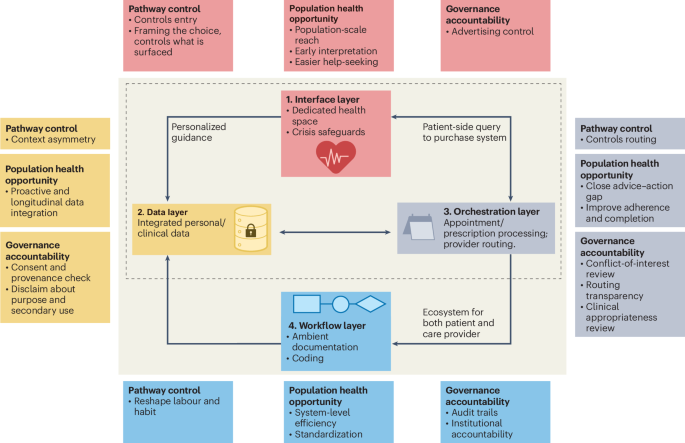
Healthcare systems are progressively channeling investments into artificial intelligence (AI) technologies, primarily targeting administrative functions. Despite encountering financial hurdles, the use of virtual care services continues to expand, although the development of digital solutions faces limitations due to budget constraints.
Recent information from Healthcare IT News, shared during the HIMSS AI in Healthcare Forum in Boston, reveals that healthcare organizations are investing in AI at rates two to three times higher than other sectors. While this spending underscores a significant commitment, experts attending the forum noted that the results achieved so far do not meet the expectations set by these investments.
According to speakers from institutions like UMass Memorial Health and Stanford Healthcare, a central issue is that many healthcare providers are focusing AI initiatives on the wrong problems. Tasks such as administrative duties, scheduling, prior authorizations, and clinical documentation are consuming most of the AI capacities. Although automating these tasks yields efficiency gains, it does not leverage AI's full potential to improve patient outcomes.
The distinction between merely automating a task and genuinely transforming a process is crucial. Automation of prior authorization workflows can save valuable staff time, while redesigning care pathways with AI decision support could significantly influence patient conditions before medical intervention occurs. Experts have emphasized the need for health systems to prioritize the latter approach with equal urgency.
However, making this transition is challenging. Effective clinical AI solutions require the buy-in of healthcare professionals, and skepticism surrounding AI persists due to trust issues. In an interview with Healthcare IT News, Jay Anders from Medicomp Systems pointed out that clinicians are often unsure of how AI arrives at its conclusions. This ambiguity complicates their ability to determine when to rely on AI-generated insights versus when to override its recommendations.
To encourage more effective integration of AI into medical practice, transparency regarding AI's reasoning is becoming a necessity rather than merely a desirable trait as health organizations seek to bring AI closer to patient care.
Furthermore, a troubling trend is emerging globally among healthcare systems. Eric Wong, digital health officer at NHG Health in Singapore, noted that many organizations are initiating AI pilot programs without first clarifying the specific challenges those initiatives are intended to address. This approach often leads to a collection of proofs of concept that demonstrate technical capabilities but fail to progress into operational phases.
Wong's comments highlight a need for greater discipline in AI deployment, suggesting that successful health systems typically begin with a clear clinical or operational question before identifying the appropriate technology rather than the reverse.
While AI technology adoption is escalating against a backdrop of rising virtual care usage in 2026, a report from Healthcare IT News indicates that many health systems are experiencing financial losses related to their digital service offerings. Although more patients are turning to telehealth and remote monitoring, fewer health organizations are achieving financial viability in these areas.
This disparity between increasing service utilization and financial sustainability points to structural challenges that technology alone cannot resolve. Current reimbursement rates for virtual services often do not align with the actual costs associated with delivering digital care, including infrastructure, platform licensing, care coordination, and the time of healthcare professionals.
For executives in health systems, developing a viable virtual care strategy in 2026 involves addressing financial factors as much as it does with technology implementation. Those who have managed to achieve profitability have generally integrated virtual care within their in-person workflows, utilizing digital interactions to reduce preventable high-cost encounters instead of treating telehealth as a separate revenue stream.
In the realm of revenue cycle management, AI is showcasing tangible financial benefits. Healthcare IT News highlighted First Choice Neurology, where Dr. Ernesto Alonso noted that AI is easing the cognitive load on clinical staff while speeding up collections. The direct relationship between quality documentation, coding accuracy, and revenue capture means that improvements through AI can yield noticeable impacts on financial performance in a relatively short time frame.
As a result, revenue cycle management represents one of the more advanced applications of AI in healthcare, even though it falls into the automation category that experts warn should not be seen as the ultimate goal. For many healthcare organizations, it serves as a foundational entry point, fostering internal confidence and technological infrastructure necessary for more ambitious clinical AI applications.
Looking ahead, insights from the HIMSS AI in Healthcare Forum and the evolving financial landscape of virtual care indicate that the healthcare sector may be entering a phase of consolidation in its digital transformation efforts. Organizations that have implemented widespread AI solutions in recent years are now under pressure to demonstrate that their investments lead to meaningful outcomes rather than simply activity metrics.
This mounting pressure is steering conversations towards governance, clinician adoption, and quantifiable clinical results on the AI front, while on the virtual care side, it emphasizes the need for integrated strategies and improved reimbursement models. Additionally, the CDC is working concurrently, with Matthew Ritchey from its Office of Public Health Data, Surveillance and Technology outlining initiatives aimed at establishing a secure public health data ecosystem. This framework would enable clinicians and local agencies to access more timely and actionable information, thereby enhancing the effectiveness of AI tools at the population health level.