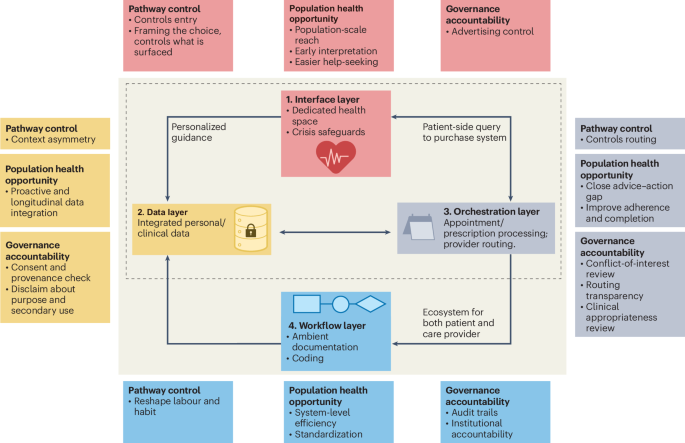
Healthcare organizations are currently grappling with obstacles in the implementation of artificial intelligence solutions, which are primarily stemming from issues related to data quality rather than the AI technologies themselves. Chief Information Officers (CIOs) from various hospitals have reported that the fragmentation of data and inadequate governance practices are hindering the scalability of AI initiatives. This situation underlines the pressing need for improved data management and governance in the realm of healthcare AI.
According to insights from Healthcare IT News, the primary hurdle to widespread AI adoption in health systems by 2026 is not the sophistication of the technology but rather the inconsistencies and disorganization of the underlying data. Many healthcare facilities that are transitioning from controlled pilot programs to more expansive implementations are encountering problems with data that is disjointed and poorly regulated, leading to outputs that lack reliability for healthcare providers.
This situation presents a significant concern for procurement teams. When evaluating AI vendors, focusing solely on the accuracy of their models without assessing the organization's data preparedness can lead to misguided decisions. Commentary from Dr. Jaime Bland, CEO of Aquila Health, suggests that the discrepancies in source data—often characterized by being inconsistent and poorly labeled—are fundamental issues that must be addressed.
The challenge becomes particularly pronounced during the scaling phase. While pilots can utilize clean, curated datasets, broader deployments cannot leverage such controlled environments. As the complete spectrum of an organization’s data is integrated into a production system, governance faults can escalate rapidly.
The areas where healthcare providers are initiating their AI efforts, as noted by HIMSS CEO Hal Wolf during discussions at the HIMSS AI in Healthcare Forum, include clinical documentation and supply chain management. These domains present verifiable outputs and allow for error identification before patient impact, making efficiency improvements quantifiable. Although direct care delivery AI is on the horizon, most health systems are not yet prepared for such an implementation.
This strategic sequencing reflects a calculated approach to risk management. Automating documentation alleviates the administrative workload on clinicians without placing AI directly in clinical decision-making loops. In the supply chain context, AI can refine procurement and inventory management based on well-established patterns. These initial applications enable organizations to strengthen their internal AI governance before venturing into higher-risk areas.
Mercy’s method, highlighted in Healthcare IT News, offers a practical illustration of a careful and deliberate strategy. The health system utilized product development methodologies, including human-centered design and iterative clinical validation, for a patient engagement tool instead of pursuing a widespread rollout from the outset. This phased validation approach is becoming increasingly common among serious operators.
During discussions at the HIMSS AI in Healthcare Forum, experts indicated that effective AI governance requires two essential components: established data standards and engagement from multiple stakeholders right from the beginning of any initiative. Frequently, delays occur when compliance, clinical, or operational teams are involved too late in the process, leading to stalled or reversed AI projects.
Moreover, the confidence gap in utilizing AI persists as healthcare leaders express a desire to adopt AI technologies while remaining uncertain about how to ensure the accuracy of the outputs and gain trust from clinicians and patients alike. This uncertainty will not be alleviated simply through improved vendor marketing but instead through the establishment of governance frameworks that empower operators to audit, challenge, and override AI-generated recommendations.
In a noteworthy development, India’s Health Ministry recently introduced a national health terminology service, coupled with a drug registry and a standardized LOINC code, indicating a shift toward treating foundational data standardization efforts as critical infrastructure. For enterprise health systems, this serves as a strong reminder that standardizing internal data architecture must be prioritized rather than treated as an afterthought.
In summary, this evolving landscape emphasizes the importance of sound data practices and governance in the successful integration of AI within healthcare systems. Teams must recognize these aspects as vital for ensuring that AI initiatives can thrive and deliver meaningful benefits.