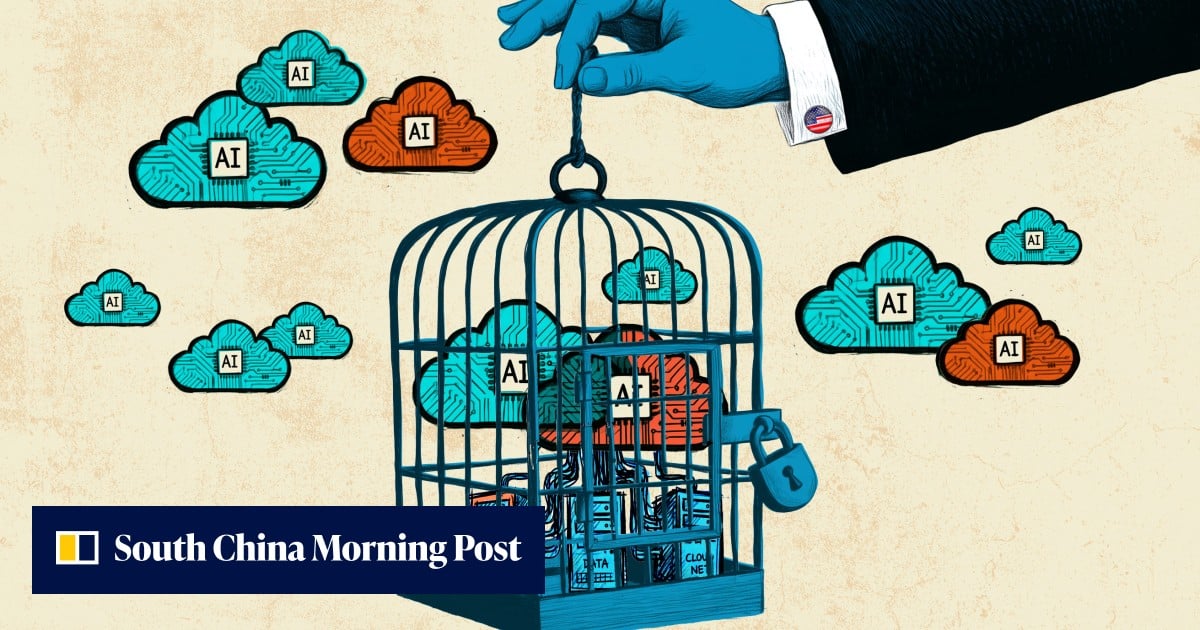
It has become increasingly evident that the trajectory of artificial intelligence resembles a reckless choose-your-own-adventure narrative, with each path leading to potential catastrophe. Whether we’re talking about soaring carbon emissions, ecological disaster, or other dire consequences like financial market collapse, widespread layoffs due to automation, or the emergence of authoritarian regimes, the possibilities highlight the grave risks associated with unchecked AI development. This grim landscape also includes fervent cults venerating AI as a form of consciousness, terrorists investing in deadly bioweapons, and nation-states wielding autonomous weaponry at alarming speeds. Moreover, both state actors and cyber-terrorists hold the capacity to exploit vulnerabilities in essential systems, raising troubling questions about the AI's alignment with human interests.
Believing that industry leaders like Elon Musk, Sam Altman of OpenAI, Palantir’s Peter Thiel, and tech advisor Marc Andreessen will guide us toward an idyllic future filled with environmental sustainability and social cohesion requires a suspension of disbelief bordering on delusion—it's a scenario that could easily resemble narrative crafted by an AI itself.
There is a slow but growing recognition of the impending crisis, culminating in calls from various quarters—activists, politicians, and tech insiders alike—to consider a halt in AI development for deeper reflection and regulation. Among these voices are notable figures ranging from Bernie Sanders to Bill Gates, the latter stating that he would likely back any credible plan to slow AI advancements worldwide. Gates’ comments echo sentiments expressed by AI company Anthropic, which recently advocated for a "brake pedal" on the technology, spotlighting the necessity for external regulation to ensure responsible development.
However, the prospect of achieving a cohesive international agreement remains bleak. The dynamics surrounding AI are reminiscent of the nuclear arms race; individual parties feel compelled to sprint ahead to avoid being at the mercy of others. The most viable method for moderation appears to be having a single entity control a critical resource that could either speed up or slow down progress. The European Union (EU) finds itself in such a position, possessing a vital tool if it chooses to act.
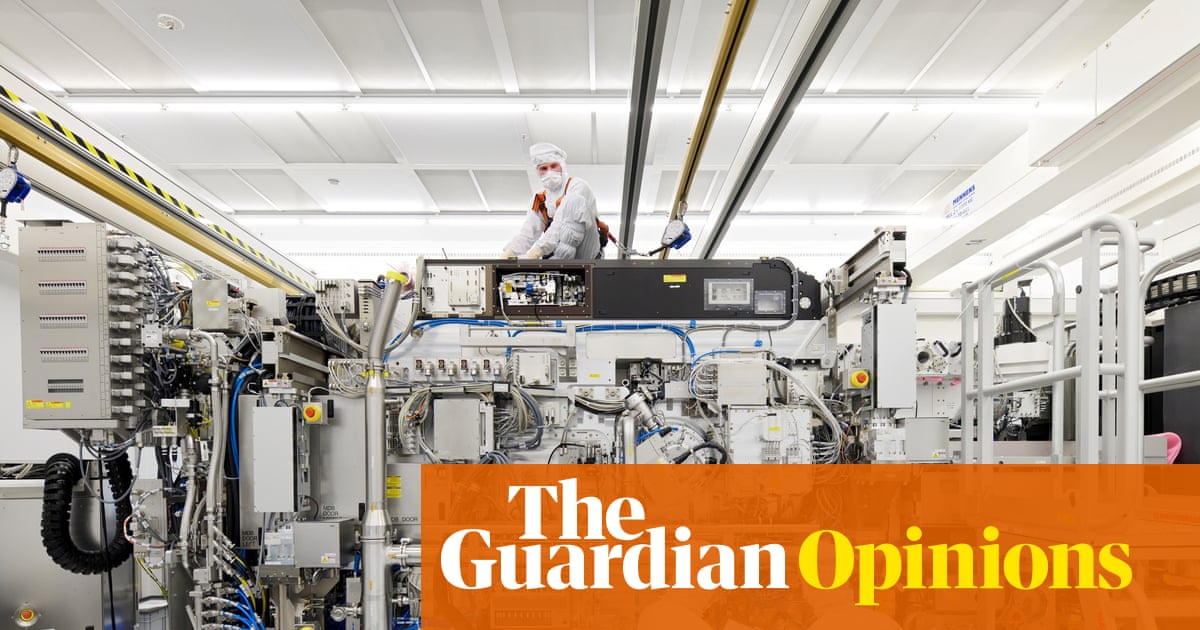
ASML, a Dutch company, stands as Europe's most valuable enterprise due to its production of cutting-edge extreme ultraviolet (EUV) lithography machines vital for advanced chip manufacturing. These machines are essential choke-points for the entire AI ecosystem. ASML's technology allows for the creation of chips that form the backbone of data centers. Consequently, without these chips, initiatives like Taiwan’s TSMC’s monumental $265 billion investment in chip fabrication and the anticipated $7 trillion investment in global data centers by 2030 would falter. A halt in chip development would effectively stagnate AI's rapid advancement trajectory.
Given these dynamics, the US government has enacted strict export controls on ASML, preventing the transfer of high-end EUV machines to China to stymie its chip manufacturing capabilities. This move highlights how dependent the US is on ASML—a dependency that exposes vulnerabilities in the broader AI landscape. Should ASML be entirely barred from exporting its technology, the global AI sector would find itself in a position where it could barely advance, effectively "treading water" in its development.
A slowdown would afford regulators the vital time needed to catch up with technological advancements, allowing lawmakers to update regulations pertinent to copyright, taxation, and other critical areas while also fostering societal discussions about the future role of AI.
So why would the EU consider such a significant step? The answer lies not just in altruism but also in self-interest. A complete export ban could force a reconfiguration of the global supply chain, shifting essential decisions under EU oversight, where it could be subject to thorough regulatory frameworks. Nevertheless, this optimistic outcome may be overly ambitious, as the US might retaliate by restricting ASML's access to American suppliers. Even so, instigating such a confrontation could ultimately serve the EU’s interests by helping it keep pace in the AI race and the requisite computing power for its success.
Even within Europe, proponents of AI acknowledge these challenges. The Europe 2031 initiative, a report from industry experts, underscores the necessity for Europe to invest substantially in AI, lest it risk falling behind in a landscape that could mirror the current hold of companies like TSMC and ASML. This scenario plays out with Europe eventually needing to negotiate its access to ASML amid a landscape where its technological supremacy might diminish due to increased global competition.
Just as nuclear theorists worry about rash escalations in conflict, the same urgency applies to the potential for AI development: the EU must leverage its current position with ASML now, or risk missing its chance entirely. It is crucial that disparate factions converge on the understanding that Europe has a singular opportunity to guide the future of AI responsibly—rather than racing toward folly, it might be time to simply slow down and reassess.