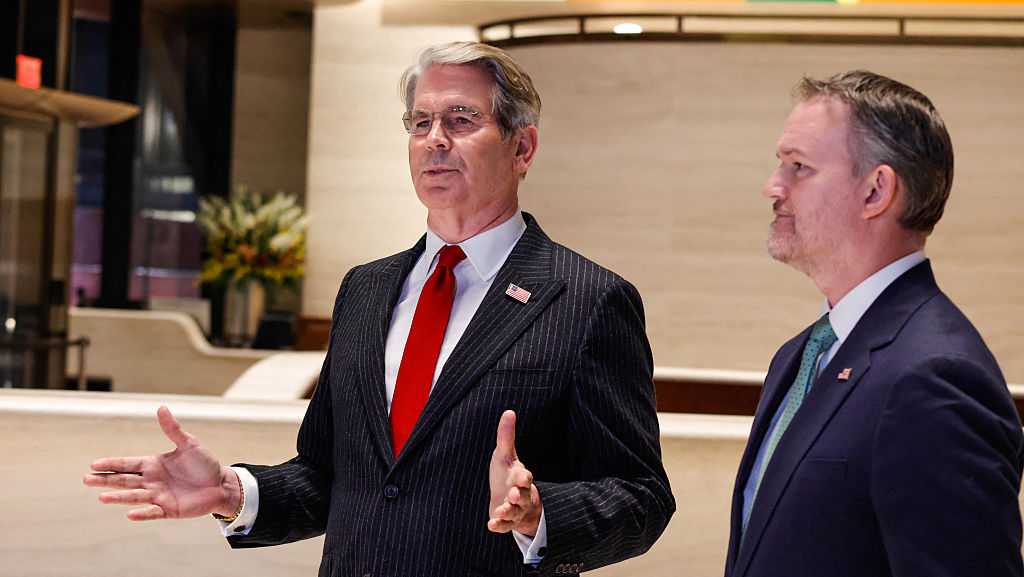
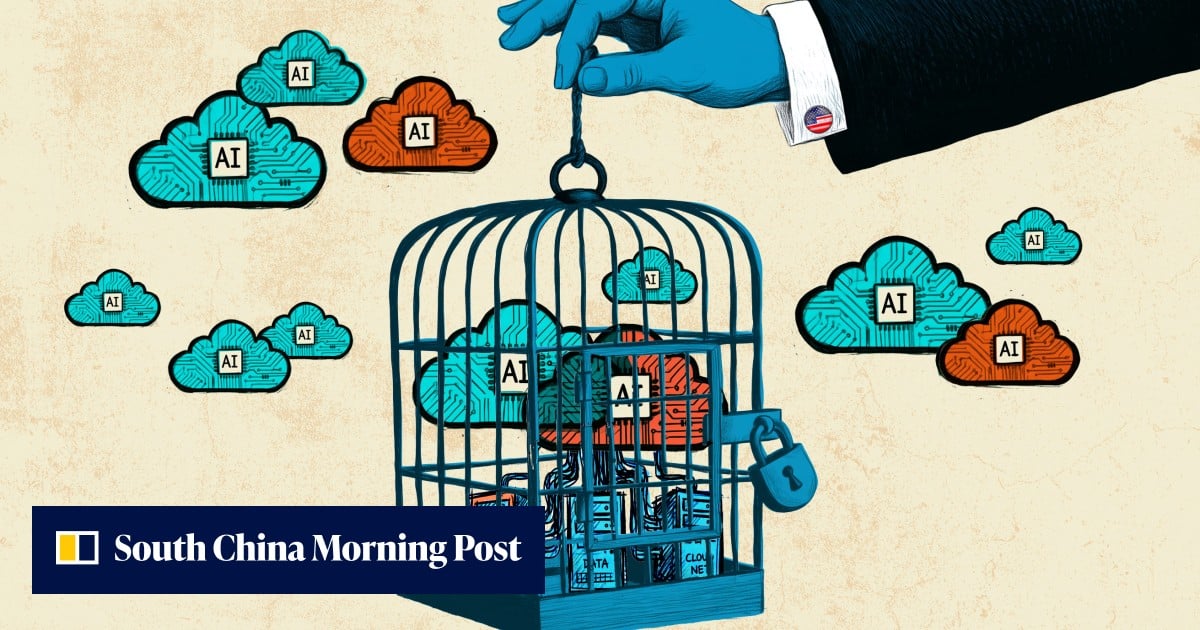
During a meeting in New York on Sunday, US Treasury Secretary Scott Bessent and Chinese Vice Premier He Lifeng wrapped up discussions focused on artificial intelligence (AI), proposing a new safety notification mechanism for consideration by US President Donald Trump and Chinese President Xi Jinping at their upcoming summit.
Bessent informed the media that the talks centered on the establishment of a US-China AI dialogue, highlighting national security issues and suggesting a notification system aimed at addressing AI-related incidents deemed significant to national security. He stated, “Just like any cross-border activity, increasing transparency between the two leading AI powers is crucial.”
The concept of potential consultations on AI development was first broached by Trump and Xi during a meeting in Beijing back in May; however, that initiative remained unformalized.
Chinese state media outlet Xinhua offered a brief acknowledgment of the discussions, indicating that both parties had engaged in “frank, in-depth, and constructive exchanges” on essential economic and trade matters, committing to implement prior agreements from earlier trade and investment discussions.
Following the negotiations held at the JPMorgan Chase headquarters, Vice Premier He and China's chief trade negotiator, Li Chenggang, did not address the press.
US Trade Representative Jamieson Greer clarified that discussions regarding US export controls on advanced AI chips and semiconductor manufacturing equipment were not part of the agenda. He emphasized that the discussions were intended to lay the groundwork for a “successful summit” between Trump and Xi scheduled for Thursday and Friday in Washington.
“These are the two foremost nations globally, in terms of both trade and AI, and cooperation is crucial. Despite the existing challenges in their relationship, which are largely evident, it is imperative they find ways to work together,” Greer remarked.
The meeting encompassed additional significant subjects, including the operationalization of a process initiated in May for identifying potential tariff reductions on non-strategic goods, referred to as the “Board of Trade.” Although Greer did not specify the products that could be considered for such cuts, he expressed a hope for a “relatively small subset” of American and Chinese goods to be traded in a balanced manner, focusing on non-sensitive items.
Possible candidates among Chinese exports could include “consumer goods and low-tech items”, while US goods eligible for this treatment may include energy resources, agricultural products, and medical devices.
There was no mention of progress in improving access to critical minerals for US companies, despite previous commitments from Beijing to ease restrictions following last year’s US-China trade agreement.
As the discussions seem to inch toward preventing further tensions in a fragile trade relationship, which holds significant implications for the global economy, trade analyst and Ashton Intelligence founder Anna Ashton suggested that the most likely outcome might be a status quo.
Bessent and Greer did not provide updates on unresolved issues from the May meeting, such as China’s commitments to boost US agricultural purchases by $17 billion annually and to acquire over 200 Boeing aircraft.
US Representative Ro Khanna, a senior Democrat on the US House Select Committee on Strategic Competition with China, stressed the necessity for Trump and Xi to reach an agreement on AI safety. He recommended that any international accord should encompass two key principles: a ban on self-improving AI and the establishment of safeguards to prevent the misuse of AI for creating biological or nuclear weapons.
Additionally, China's Ministry of Commerce announced on Saturday that Vice Premier He would lead a delegation of Chinese companies to the US for economic and trade consultations ahead of the summit. This business delegation echoes a group of US CEOs Trump sent to Beijing in May, coinciding with Trump’s indication of openness to the idea of Chinese automakers setting up factories in the US.
On the same note, US automotive industry groups urged Trump to sustain a strong ban on Chinese vehicle sales in the US, citing national security concerns.