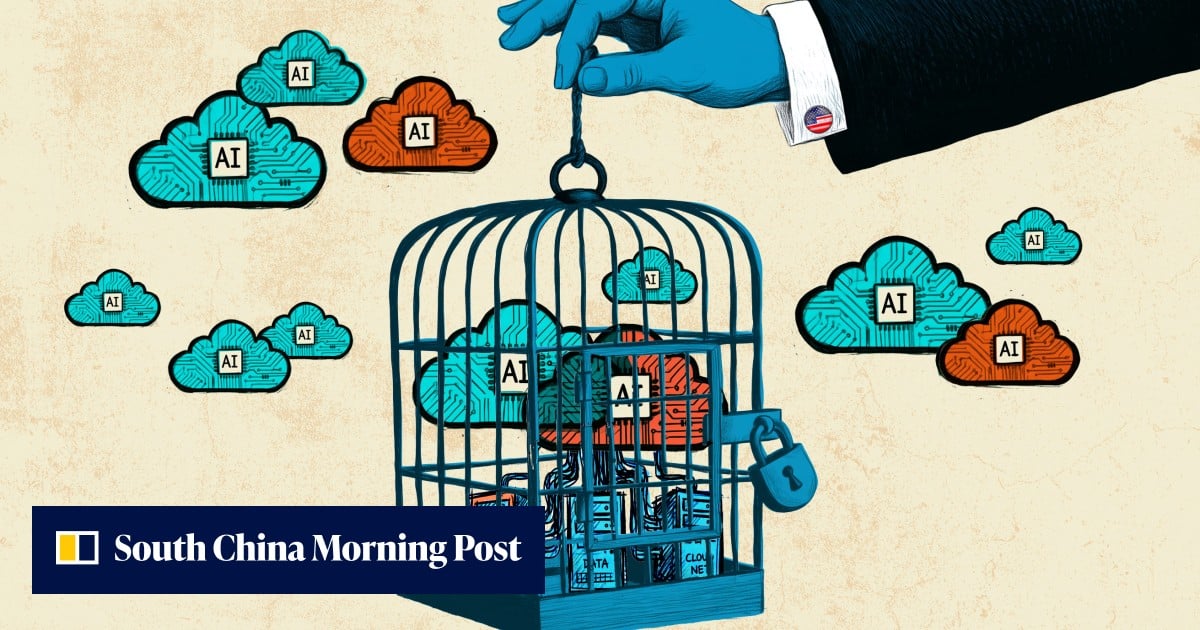
The emergence of Kimi, a free and open-source AI model recently launched by the Chinese company Moonshot, has sparked significant debate among top strategists within Donald Trump's circle. Kimi is perceived to be as capable as AI models created by leading firms like OpenAI and Anthropic, which come with hefty price tags.
The rise of Kimi, along with similar Chinese AI models, has created challenges for Trump, leading to divisions among his AI advisors. With every new release of cost-free AI models from China, American companies may find less incentive to invest in the pricier options offered by firms like OpenAI and Anthropic. This shift raises economic and political concerns for the administration, particularly considering the role AI plays in economic growth. Anton Leicht from the Carnegie Endowment recently emphasized that such models pose a potential threat to an administration that wants to avoid negative economic news, pointing out that US stock markets have already felt the impact.
In this context, Trump faces a dilemma. This situation unfolds against the backdrop of New York's recent statewide ban on new data centers, which reflects a growing skepticism toward AI companies. Many Americans might have little sympathy for established AI firms as they confront lower-priced rivals, viewing it as inappropriate for the government to intervene on their behalf.
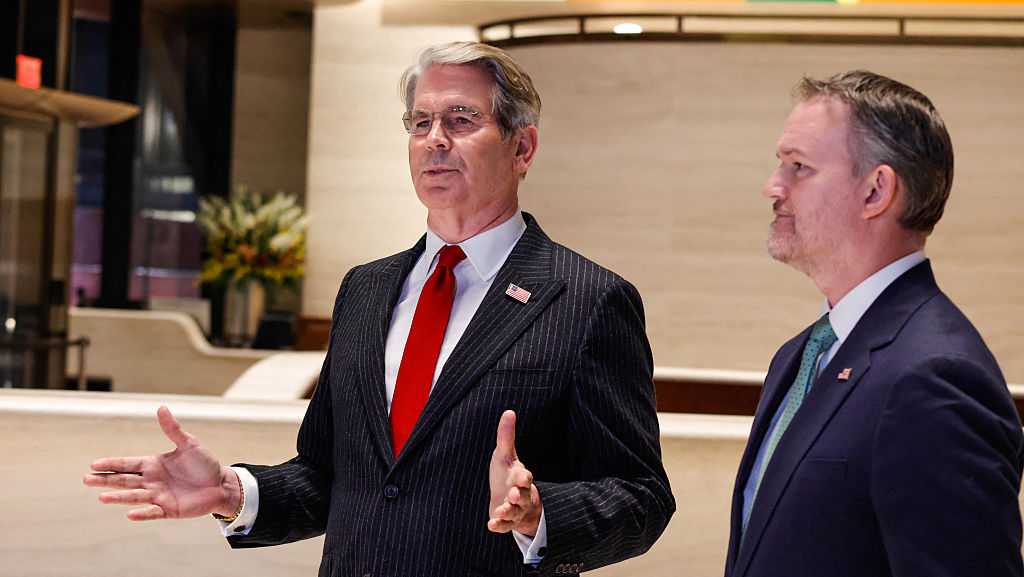
David Sacks, who previously criticized leading AI companies for seeking government assistance against their open-source competitors, noted that many Chinese models' popularity stems from their fewer usage restrictions—despite inherent state censorship issues. However, Sacks no longer holds a formal advisory role within the Trump administration, where the focus has shifted toward increasing government intervention in response to national security concerns associated with advanced AI models.
This shift is evident in the newly introduced White House review process designed to assess AI models’ security prior to their deployment. Dean Ball, a former advisor to Trump who is currently with OpenAI, expressed his criticism of this approach over the weekend, labeling it as a "de facto licensing regime." He suggested that Trump might address the challenges posed by Chinese open-source models using diplomatic means, making American companies wary of adopting Kimi's capabilities. This view drew a stern retort from Michael, a key figure at the Defense Department responsible for liaising with AI firms, who dismissed Ball's perspective as misguided, emphasizing the importance of a democratic process over any covert government agenda.
An overlooked aspect of this discussion is how Kimi achieved such advanced capabilities. Throughout the Biden administration, preventing China from acquiring top-tier semiconductors was a priority, but export restrictions have recently been relaxed. Trump’s controversial decision to permit Nvidia to sell more chips to China, along with allegations of chip smuggling, complicates the landscape further. Although China currently faces constraints in computing power, it remains unclear what specific chips were utilized by the creators of Kimi for training.
There is a possibility that Kimi's development involved a technique known as distillation, where AI models are trained using the outputs of existing models. OpenAI and Anthropic have long argued that Chinese AI entities engage in this practice and have sought governmental action to combat it. Their concerns led to a series of measures announced by the Trump administration aimed at curbing such practices.
Yet, despite these challenges, Kimi has launched and is freely available, showcasing capabilities that rival those of Anthropic's model, which the US government even classified as a national security risk. As discussions continue among Trump's advisors, it is evident that many view Kimi's rise as a critical alarm, though consensus on the appropriate response remains elusive.