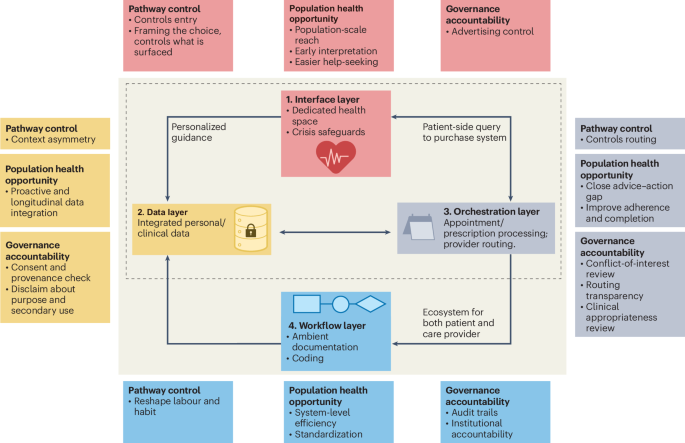
The integration of AI chatbots in the healthcare sector has seen significant growth, both in clinical settings and for patients seeking support outside of traditional medical environments. A recent survey conducted by the Pew Research Center highlights the increasing reliance on AI for diagnosis and treatment, while also addressing a prominent concern: the need for transparency in its use.
Between June 22 and June 28, the Pew Research Center surveyed 3,488 adults in the United States, revealing that approximately 25% of participants have utilized chatbots to identify symptoms. The main reasons behind choosing these AI tools include convenience and cost-effectiveness. Patients often seek out chatbots for quick access to information, clarification of a doctor’s diagnosis, interpretation of laboratory results, or to determine if in-person medical attention is necessary.
The survey results indicated that nearly half of the respondents (47%) found the health information provided by chatbots to be "extremely" helpful, while 48% considered it "somewhat" helpful. A mere 5% reported that the responses were not very beneficial or entirely unhelpful.
AI chatbots operate by mimicking human conversation, generating responses based on the extensive data they have been trained on. Users value their availability around the clock, along with the fact that many services come at no charge and do not require account creation. Nonetheless, a critical downside is that these chatbots can produce inaccurate or misleading information—an issue known as "hallucination." This creates genuine concerns when it comes to health, as these AI tools often provide replies that sound confident yet may not always align with reality.
Generative AI isn't limited to patient-facing applications; it's increasingly finding a place in medical practices as well. The survey revealed heightened concerns among Americans regarding AI's use in clinical environments compared to its application in patient interactions.
The role of AI in medical offices is evolving, with about one-third of US adults having consulted chatbots for health inquiries. Healthcare providers are also leveraging AI for administrative tasks, such as note-taking and analyzing medical examinations.
Despite the promise AI holds, transparency regarding its usage in healthcare remains paramount for patients. The survey showed a notable 72% of respondents emphasize the importance of being informed when their medical providers employ AI technologies. Furthermore, 80% expressed a desire to be notified if AI is directly involved in their care or influences medical decisions, including diagnoses and the evaluation of scans or lab reports. AI's efficiency has improved processes, with some applications significantly speeding up tasks like interpreting X-rays from an average of 11.2 days down to just 2.7 days.
However, there's a gap in public awareness, as nearly half of those surveyed (47%) are uncertain about whether AI has influenced their treatment history, highlighting a lack of understanding regarding where and how these technologies are applied.
The findings indicate that while many Americans appreciate the convenience provided by AI chatbots, they still struggle with trusting them fully. Opinions are divided on sharing personal health data with AI, as only 29% of respondents felt very comfortable doing so, compared to 26% who felt uneasy about it.
In summary, although AI's presence in healthcare is growing, the public's grasp of its role and reliability has not kept pace with this advancement, illustrating a need for better communication and education around the technology.