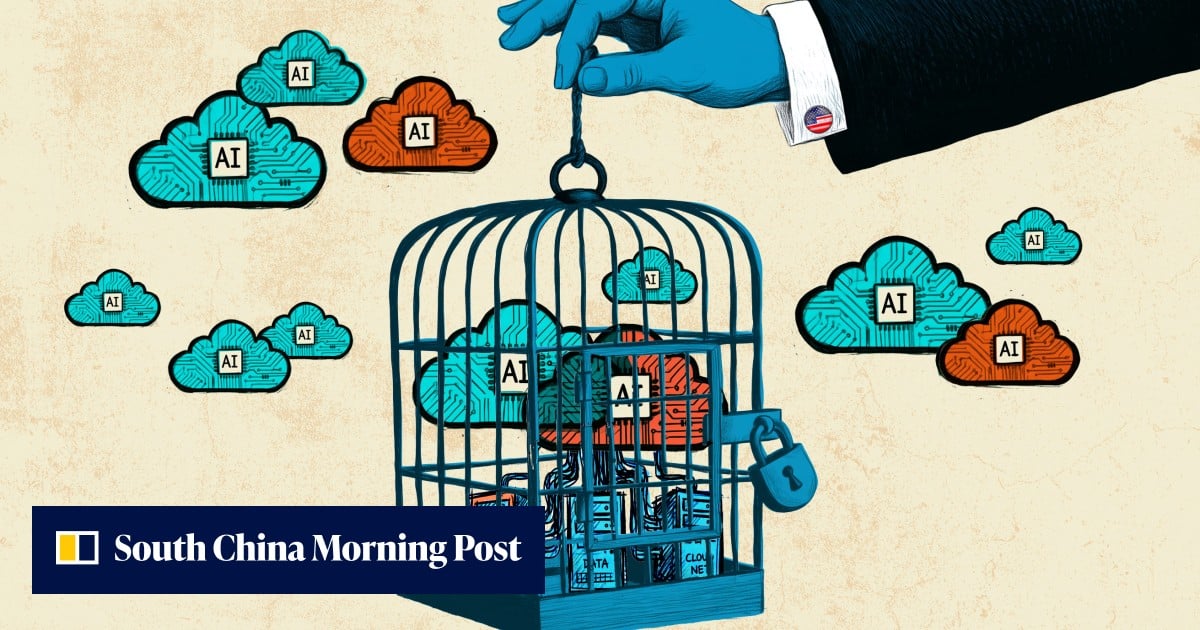
In August, job growth exceeded expectations, yet wage increases have not kept pace with recent inflation rates, raising important questions among economists. One issue emerging in discussions is whether artificial intelligence (AI) might suppress workers' wages before it leads to job losses. Recent government data, including the nonfarm payrolls report and the Bureau of Labor Statistics’ Employment Cost Index, indicates that inflation-adjusted wages fell by 0.4% year-over-year as of June. Furthermore, a longer-term trend is troubling: in the second quarter of 2026, labor's share of nonfarm business income reached only 52.8%, the lowest since records began in 1947. Researchers attribute this decline to decades of automation, potentially intensified by AI.
However, experts caution against drawing hasty conclusions. The wage growth witnessed during the COVID-19 pandemic was an anomaly driven by an exceptionally tight labor market, meaning that current wage gains are reverting to historical norms. Higher-paying sectors like technology and professional services are cutting jobs while lower-paying industries, such as hospitality and healthcare, are experiencing job growth, which lowers average wage levels. This has shifted the focus of many to job earnings trends rather than to alarming predictions about mass unemployment recently shared by figures like Bill Gates.
New research from Apollo Global Management's chief economist, Torsten Slok, along with co-author Sania Edlich, offers evidence that AI could indeed be leading to slower wage growth. They found that workers in jobs significantly affected by AI saw real wages increase 6.7 percentage points more slowly after 2023 compared to those in less-affected roles. Nonetheless, the study found no notable impact on employment levels. The authors argue that firms may be benefiting from AI-driven productivity gains by compressing wages instead of reducing their workforce.
Despite the study’s illuminating findings, labor market experts are cautious about its implications due to the limited data. Ben Zipperer, a senior economist at the Economic Policy Institute, suggests that while AI is likely affecting the demand for particular jobs—and could be driving wages down—Apollo's findings are based on a relatively small sample size, which may lead to exaggerated conclusions about AI's negative impact.
Zipperer also discussed the shifts in job demand post-pandemic, noting that the decline in hiring within tech sectors was due to an adjustment after initial over-hiring, not merely AI's influence. This normalization phase could partly explain the current patterns in wage growth and employment figures.
Although Apollo's research accounted for various occupations and annual labor market trends, its authors stressed the preliminary nature of their findings, based on a limited selection of Bureau of Labor Statistics data. They emphasized a shift towards measuring labor market impacts through direct observations of AI adoption rather than theoretical predictions.
MIT economist Daron Acemoglu pointed out that the limited availability of AI models relevant to specific occupations skews data regarding employment and wage impacts. He noted that while there is no substantial evidence so far indicating significant wage effects linked to AI, many anticipate that such effects may become noticeable, particularly in entry-level jobs. Given the structure of the U.S. labor market, he theorizes that changes in wages may outpace job losses as AI continues to develop.
Acemoglu's insights underscore his stance on the evolving nature of the labor market under the influence of automation technologies. He warned that as AI becomes more applicable to a wider range of tasks and industries, its impact on wages and employment will likely amplify.
Moreover, the terminology surrounding "AI exposure" has been criticized for being constricting. David Autor, a labor economist at MIT, argues that merely knowing an occupation is at risk from AI does not provide insight into the outcomes for those jobs—whether employment rates will rise or fall or how wages will adjust. His research on roles such as accounting clerks and inventory clerks, despite both facing similar technological challenges, revealed divergent outcomes: accounting clerks saw significant wage increases, whereas inventory clerks faced wage declines but increased employment. This suggests that AI and automation could lead to complex outcomes that defy standard narratives about job loss and wage pressures.
Through these ongoing analyses and discussions, it's clear that while AI will undeniably shape the future of work, the specific effects on wages and employment remain nuanced and call for further examination.