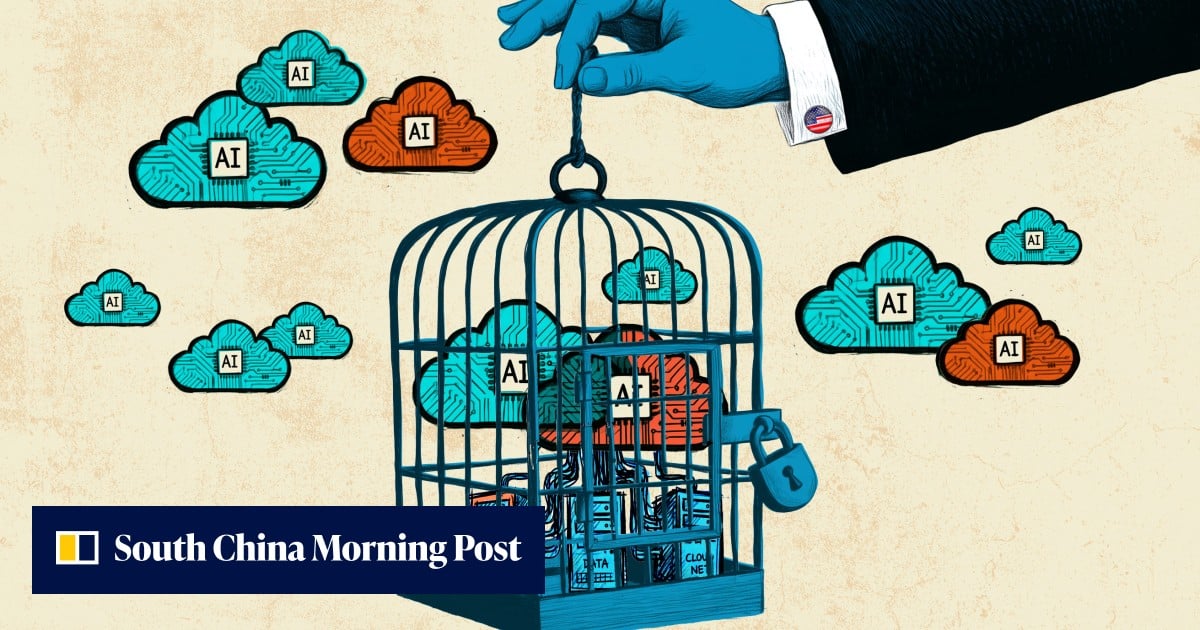
Concerns about the national debt have long revolved around the idea that as it swells, the federal government could absorb vast amounts of capital, leaving businesses without the necessary funds for growth. Currently, the United States finds itself grappling with a staggering $40 trillion in debt, a federal budget deficit poised to hit $2 trillion in this fiscal year, and annual costs for servicing that debt amounting to approximately $1 trillion.
This situation places significant pressure on the Treasury Department to source funds from the bond market, a critical avenue for financing large corporations. However, companies in the artificial intelligence (AI) sector continue to thrive, effectively raising substantial amounts of debt to invest in chip acquisitions, data center construction, and other vital infrastructure.
Notably, Treasury Secretary Scott Bessent has remarked on the remarkable enthusiasm within AI firms for issuing debt, seemingly undeterred by the costs involved. He pointed out that a portion of this corporate issuance appears to be yield-agnostic, with companies believing the returns on their AI investments will far outweigh their borrowing expenses.
Throughout the first seven months of the year, the issuance of U.S. investment-grade corporate bonds reached approximately $1.7 trillion, reflecting a 27% increase compared to the same timeframe in the previous year, and it's projected to surpass $2 trillion for the first time, according to Wall Street expert Ed Yardeni.
Typically, such a surge in corporate debt would necessitate higher yields to attract buyers. However, due to unprecedented demand for AI-related bonds, yield spreads have remained tight, showing minimal increase for additional risk premiums. Yardeni explained that this phenomenon has led to a rise in Treasury yields themselves, rather than higher corporate borrowing costs compared to Treasuries. Essentially, capital directed toward corporate bonds diverts funds from Treasuries, necessitating an adjustment in Treasury yields to maintain market balance. This dynamic exemplifies a classic crowding-out effect, linked directly to the AI boom.
As yields climb, there is a risk of creating a feedback loop where escalating debt-servicing costs exacerbate budget deficits, further inflating the national debt and pushing yields even higher. It's crucial to note that the increase in Treasury yields can be attributed to multiple factors beyond just the surge in AI-related debt, such as persistent federal budget deficits, rising oil prices linked to geopolitical tensions, and continued economic strength in the U.S. which fuels inflationary pressures.
Yardeni highlighted that recent data indicating capital flows from international buyers show that the net buying of U.S. corporate bonds by private foreign investors has outpaced their investments in Treasury debt over the past year.
Noteworthy figures in finance like Jurrien Timmer from Fidelity Investments have remarked on how this reverse crowding-out effect within the corporate bond sector has caught the attention of even the Treasury Secretary. The Federal Reserve Chairman, Kevin Warsh, has also acknowledged this debt surge at the Jackson Hole conference, referring to the influx of capital into various AI-related infrastructures.
As private credit continues to underpin the AI market, companies like Nvidia are also utilizing their financial strength to facilitate AI transactions, leading to a rise in what is termed "hidden borrowing," now estimated at $1.65 trillion.
However, S&P Global recently cautioned that the market may be showing signs of strain from such rapid debt accumulation, noting that hyperscalers are now facing higher premiums relative to risk-free bond yields. According to their report, market participants are becoming increasingly wary of the rising leverage among these issuers, who were previously recognized for their strong and stable cash flows.