Right-leaning legal activists, in tandem with Elon Musk's artificial intelligence firm, are launching significant challenges against a fundamental aspect of legal enforcement in the United States: the ability of private individuals, local governments, and organizations to file lawsuits for violations of key laws.
These activists, backed by the Trump administration, argue that the Constitution endows the president and federal agencies with substantial authority over enforcement of federal laws. They assert that Congress overstepped by allowing citizen lawsuits, which play a role in matters like environmental protection and campaign finance.
Environmental advocates warn that dismantling this crucial, decades-long mechanism could have dire consequences. Citizen lawsuits have historically held polluters accountable, resulting in significant financial penalties for environmentally harmful practices and prompting necessary actions like the removal of lead pipes in Flint, Michigan, following its water crisis.
Legal analysts note that four federal cases currently in progress, including one recently filed, are advancing at a time when a conservative Supreme Court may be more inclined to support those opposing citizen suits. The challenge for these opponents lies in winning initial federal cases and creating legal discrepancies among the country’s appellate courts, which could encourage the Supreme Court to consider a nationwide ruling.
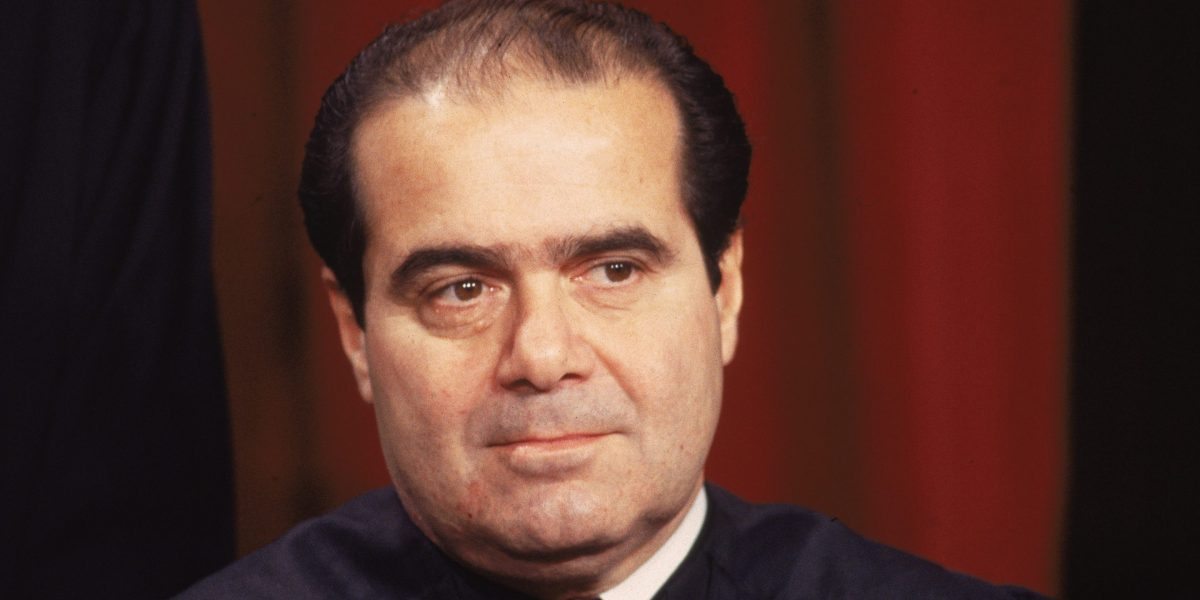
Richard Lazarus, a Harvard law professor with extensive experience in environmental legislation, remarked that the potential for Supreme Court intervention has been anticipated by many in the legal community for nearly three decades. He referenced earlier remarks from former Justice Anthony Kennedy, who highlighted the complex issues regarding executive power and citizen suits. The late Justice Antonin Scalia also noted in his dissent that citizen suits effectively allow private individuals to enforce laws, although he stopped short of declaring them unconstitutional.
With the current Supreme Court tilting more linearly with Scalia's views, Lazarus observed that individuals and organizations who previously lost under his dissent now hope for more favorable outcomes.
A central point in the debate over citizen suits pertains to the question of who, the government or private citizens, is responsible for imposing fines and enforcing laws. To initiate a citizen suit, individuals must notify the government in advance, which retains the authority to halt the suit if it takes appropriate action. However, the government’s options are limited, and the private citizen can remain involved in the case. These lawsuits can compel compliance with legal standards and ensure fines collected are directed to the U.S. Treasury.
In response to the rise of challenges to citizen suits, prominent law firms and organizations have ramped up their efforts. This past summer, the Pacific Legal Foundation, a conservative organization with a history of success in the Supreme Court, identified a routine citizen lawsuit in Tennessee as a means for broader constitutional scrutiny.
They represented Springfield, a town north of Nashville, in a legal fight against claims from Tennessee Riverkeeper that it allowed excessive sewage discharge into a nearby creek, a breach of the Clean Water Act. This citizen suit represented the thirty-first case filed by the Riverkeeper group in Tennessee since 2010. The Pacific Legal Foundation argued that the ongoing use of citizen suits results in undue burdens on individuals and local governments, with unaccountable activists driving these actions.
Sean Radomski, an attorney with Pacific Legal, insisted that accountability is best maintained when government entities wield enforcement power. While he is not opposed to all citizen lawsuits, he contends those that dictate government action or lead to fines directed at the Treasury are problematic. In contrast, he noted that civil rights lawsuits providing direct compensation to affected individuals would remain untouched.
Elon Musk's artificial intelligence company, xAI, has also entered the fray. The company has put forth similar arguments in its legal battle against a lawsuit from the NAACP, which alleges that xAI operated gas turbines near Memphis without the required permits, posing a pollution threat to nearby residents, predominantly Black communities. The NAACP has requested a halt on the turbines until the legal requirements are met.
The Trump administration has intervened to support Musk’s position, arguing that suspending operations at the facility would jeopardize national security, particularly as it supplies power to the Department of War. The Department of Justice has contended that the suit should be dismissed, asserting that enforcing the law must consider conflicting interests, including national security.
Laura Thoms, the enforcement director at Earthjustice, which is representing the NAACP, critiqued the government's stance, suggesting it improperly prioritizes corporate interests over legal accountability.
The ramifications of altering the law governing citizen suits could be profound during a critical moment. These lawsuits were embedded in foundational environmental legislation to address federal resource constraints in tackling pollution and to manage politically sensitive cases where the government itself could be the violator. Advocates argue that citizen lawsuits are imperative in light of the current administration’s rollback of environmental protections and reduced enforcement capacity.
Additionally, funding cuts in state budgets exacerbate enforcement challenges, potentially leading to increased corruption if the president can selectively waive laws for personal gain.
Thoms warned that while communities in states with strong legal protections might remain unaffected, others could become "sacrifice zones" where residents have minimal recourse against pollution. Notably, these areas often comprise low-income and majority-minority neighborhoods.
Many legal experts are skeptical of the challengers’ assertions that a powerful president should unilaterally decide enforcement priorities. They point to historical instances where enforcement responsibility has been shared with private citizens, a claim the challengers dispute.
David Adelman, a law professor at the University of Texas at Austin, noted that prior to the current conservative Supreme Court makeup, he would have dismissed the challengers’ chances as negligible. Yet he acknowledged that this court has shown a propensity to support robust executive control over federal law implementation, making the challengers’ success less implausible.