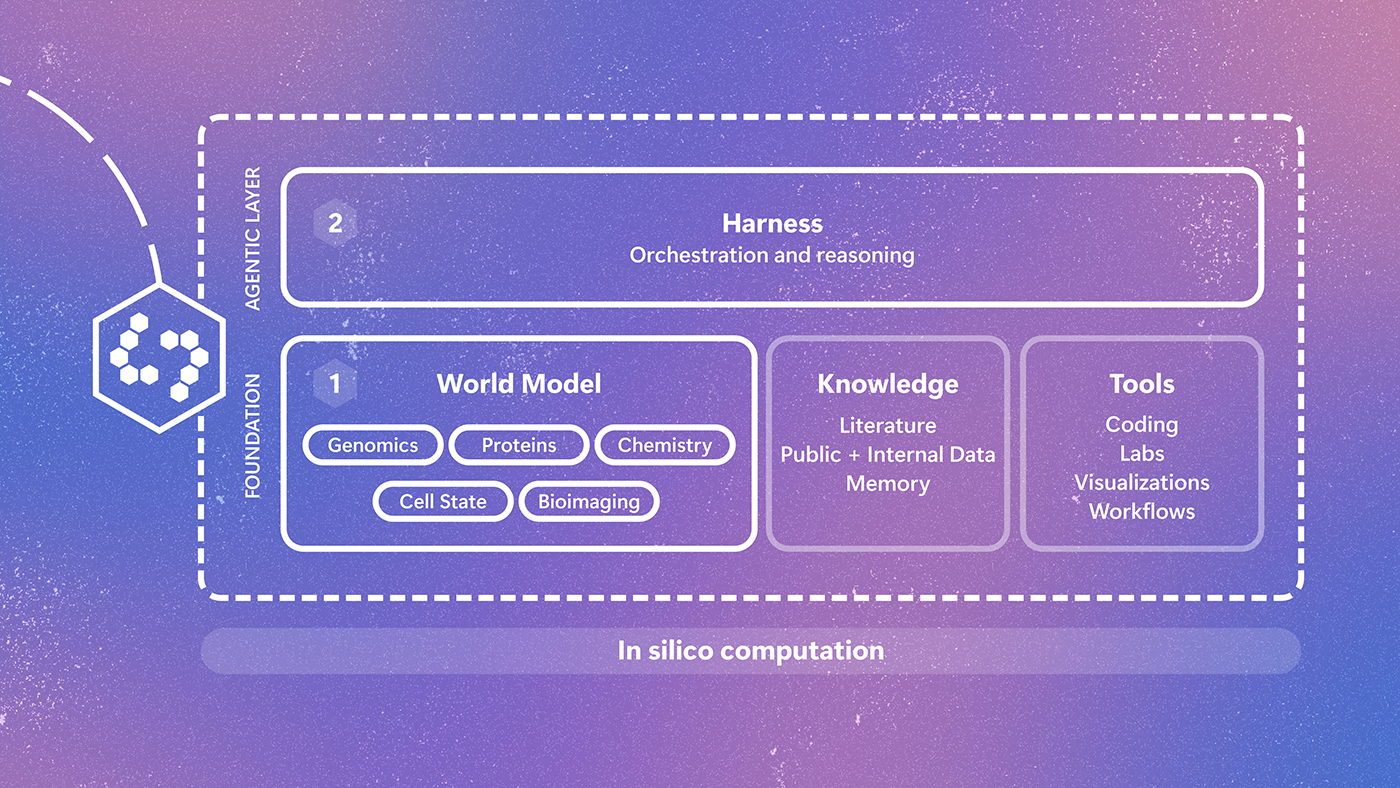
Quine is an innovative research initiative aimed at developing a comprehensive multimodal model of biology, designed to connect various scientific models, tools, literature, and researchers in an interactive framework. In partnership with the Broad Institute of MIT and Harvard, this system has already been utilized to prioritize compounds that may facilitate therapeutic changes in tumor states, leading to the validation of several promising candidates in multiple laboratory assays.
The program offers the Quine Fellows program, which invites a select group of scientists to leverage the system to expedite their research while providing valuable scientific feedback. While Quine is a research-focused technology intended solely for experimental purposes and not for clinical or medical applications, it is acknowledged that its results may be incomplete or require validation from qualified experts. As the technology advances, broader access to Quine may be through platforms such as Microsoft Discovery.
For over 20 years, Microsoft Research has been at the crossroads of computation and biology, exploring various fields such as immunology, virology, genomics, and more. This extensive research has led to foundational advancements that have influenced clinical practices, from diagnosing rare diseases to detecting cancer biomarkers.
A significant revelation from this body of research is that biological processes do not conform neatly to the boundaries set by traditional models. Interactions between genes, proteins, and cells are complex, and scientific inquiries often evolve based on experimental findings. Therefore, addressing the most challenging biological questions requires systems that can integrate knowledge from various scales and modalities, reason through evidence, and adapt continuously as science progresses.
Quine embodies this vision by bridging the gaps in biology, offering a world model that integrates scientific tools and researchers into a cohesive system. This framework allows for a loop of inquiry, where questions lead to proposals, experimental designs, and outcomes that refine both the scientist's understanding and the underlying model.
Despite advancements in experimental methodologies and increased throughput in wet labs, the complexity of biological systems imposes inherent limitations on experimentation. The process of understanding biology is often slow due to the time-intensive nature of experiments and the intricate interactions that must be explored. However, breakthroughs in large-scale machine learning and the rise of general-purpose models provide a promising alternative. These advanced systems can now synthesize information from diverse domains, reason at a high level, and aid in tackling complex biological problems, showing remarkable adaptability to the unique aspects of biology.
The question arose: what would be required to create a comprehensive model of biology? Such a model would represent a biological system's state, predict its evolution in response to interventions, and reason about the effects of those interventions over time. Instead of replacing traditional experiments, this computational approach would allow prior exploration to optimize resource allocation in laboratory settings. The goal is to create a dynamic feedback loop where scientists, models, and experiments contribute to rapid advances in knowledge.
Quine marks the initial stride toward this comprehensive vision. It consists of a biological world model and a harness that connects different scientific resources and teams engaged in research. Central to Quine is a model capable of learning shared representations across various biological scales and modalities—like genetics, cellular functions, and imaging data. By jointly training on these diverse aspects, Quine captures interrelationships that would otherwise be missed in siloed investigations, enhancing both understanding and predictive power across different biological contexts.
For instance, in the study of pancreatic ductal adenocarcinoma (PDAC), Quine has been instrumental in investigating whether non-genetic features, particularly cellular state, can serve as effective therapeutic targets. Collaborating with researchers from the Broad Institute, the team utilized Quine to assess and prioritize numerous compounds based on their potential to transition tumor cells into therapeutically relevant states. This approach led to significant findings, such as identifying compounds that not only shifted cell states as anticipated but also revealed unexpected patterns, enriching the understanding of pancreatic cancer cell dynamics.
Looking to the future, ongoing efforts will integrate new RNA datasets to enhance the model's ability to predict complex transitions and provide confidence levels to help researchers identify the most viable hypotheses for experimental validation. This iterative feedback system is precisely what Quine aims to facilitate, where each round of experimentation refines the biological understanding and informs future model training.
As Quine continues to evolve, its integration into ongoing scientific initiatives is key. The system serves as a foundation for creating innovative workflows that enhance research efficiency across various domains, from cancer research to protein engineering. By welcoming contributions from the broader scientific community through the Quine Fellows program, the initiative seeks diverse insights to guide its future development.
Approaching this with a sense of responsibility, Microsoft emphasizes the importance of safety and ethical considerations in AI and biology advancements. The initial rollout will focus on the Quine Fellows program and select collaborations, with careful oversight ensuring responsible progression as the technology matures.
Ultimately, the most crucial measure of Quine's success will be its real-world application in scientific practice. It aims to streamline the journey from inquiry to discovery, allowing scientists to remain at the forefront of research while enabling faster breakthroughs. The true heroes of this narrative are the researchers and their experiments that drive scientific discovery forward.


