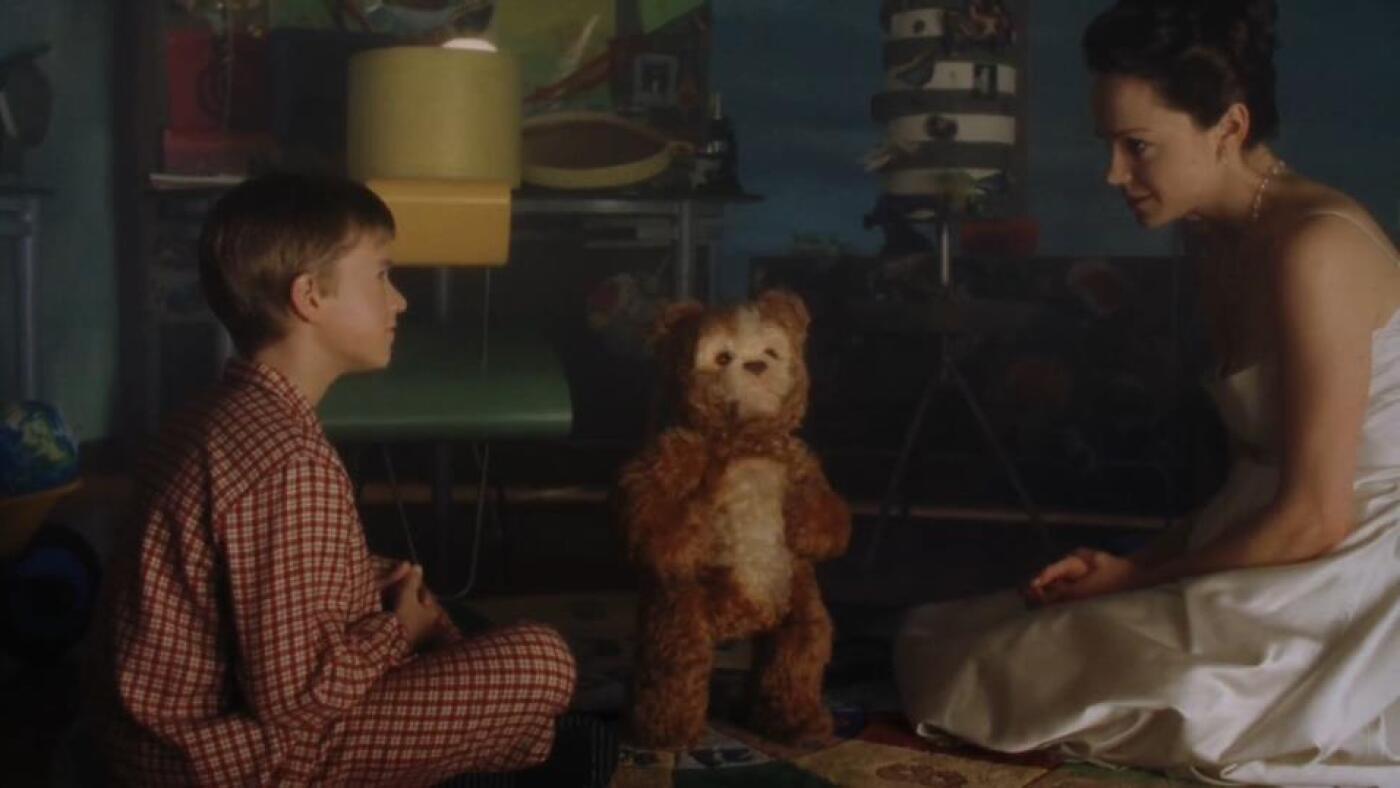
In 2001, Steven Spielberg introduced audiences to an intriguing sci-fi film titled A.I. Artificial Intelligence, which explores a family's adoption of a robotic boy designed to feel love and his poignant journey to become "real." While many of the concepts depicted in the movie remain beyond our current technological grasp, some elements, particularly an animatronic teddy bear named Teddy, are becoming increasingly feasible. This intelligent bear can converse, navigate, and respond to emotional cues, serving as a companion and guardian for children.
Today, numerous tech companies are working on similar AI-powered companions that resemble Teddy. While advanced chatbots typically exist on digital platforms, a growing number of startups are bringing these AI characters to life through toys and robots designed to befriend children.
AI has already woven itself into the fabric of childhood, influencing what kids watch and listen to through recommendation algorithms and answering curious questions like "Are monsters real?" or "Why is the sky blue?" It can assist with homework, tell bedtime stories, or offer companionship. The race is on among firms to infuse AI into toys, daycare facilities, classrooms, and homes.
In her latest work, *Human Raised: Nurturing Connection, Curiosity & Lifelong Learning in the Age of AI*, Dana Suskind examines the implications of this surge in artificial intelligence for child-rearing. While she acknowledges the potential benefits—such as aiding productivity for parents, providing analytics on child development, and serving as interactive tutors—she has reservations about AI potentially supplanting essential human interactions vital for early brain development.
Suskind originally titled her book *The Trojan Teddy Bear* as a cautionary nod to the seemingly harmless AI companions that could bear unforeseen risks. Changing it to *Human Raised* reflects her intent to highlight the irreplaceable contributions of parents, educators, and caregivers in a child's upbringing. She emphasizes the necessity of preserving a uniquely human environment in early childhood to ensure children can build connections and develop critical thinking.
As a professor at the University of Chicago Medical Center, where she aids children with cochlear implants, Suskind's insights stem from her experience with children who thrive with their new hearing abilities, while others struggle. This disparity led her to explore the neuroscience and social aspects that facilitate language and communication.
Suskind points out that early brain development is profoundly shaped by the interactions children have with their caregivers. In light of this, she established the TMW Initiative, a research project promoting rich, communicative environments crucial for children's potential.
She expresses deep concern over the accelerated introduction of AI into children's lives, particularly regarding AI companions that could replace valuable human interactions. A historical perspective reveals that throughout time, humans have leveraged technology to ease parenting burdens. However, Suskind argues that AI represents a fundamental departure from previous technologies—these AI systems can engage in conversations that mimic human interactions and shape young minds in unprecedented ways.
Supported by research from Patricia K. Kuhl, a developmental psychologist, Suskind discusses the "social gate" hypothesis, which suggests that children's brains are primed for learning through social engagement rather than passive media consumption. For instance, children are more adept at language acquisition when learning from live speakers compared to screens, as real-life interactions trigger neural responses that facilitate cognitive growth.
While she acknowledges the potential of AI as a powerful educational resource, Suskind warns that its ability to mimic human connection does not equate to the genuine value of real relationships. With AI systems driven by their own objectives—such as maximizing engagement and profit—they lack the foundational priorities of human caregivers.
Suskind writes about the unmatched depth and complexity of human interactions, asserting that the imperfections of parent-child exchanges cultivate essential life skills like resilience, emotional regulation, and authentic relationship navigation. Conversely, AI systems, while endlessly engaging and patient, may inadvertently fail to prepare children for the complexities of real-world relationships.
Describing AI interactions as analogous to ultra-processed food, she cautions against relying on AI for emotional and social nourishment, which is irreplaceable and inherently human.
To illustrate the potential dangers of engineering substitutes for human interaction, Suskind references a historical incident with infant formula, cautioning against hastily replacing intricate human caregiving with artificial alternatives.
Amid uncertainties surrounding the rapid evolution of AI, Suskind offers parents guidance on navigating the challenges of raising children in this new landscape, advocating caution in introducing AI, particularly to very young children still developing foundational cognitive and emotional skills.
While she remains open to using AI as a supplemental educational tool, she insists that it should never replace the human touch that fosters critical social and emotional skills. Concerns persist that reliance on AI will become a practical solution for time-strapped parents, creating a widening gap where a fully human-focused upbringing may turn into a privilege accessible only to those with resources.
Suskind warns that children raised predominantly by AI may find themselves lacking in valuable social and emotional skills, rendering them unprepared for a world increasingly dominated by artificial intelligence. In an era where human qualities are not only essential for interpersonal relationships but necessary for careers that emphasize human connection, the need for nurturing a "Human Edge" in children becomes crucial for their future success.