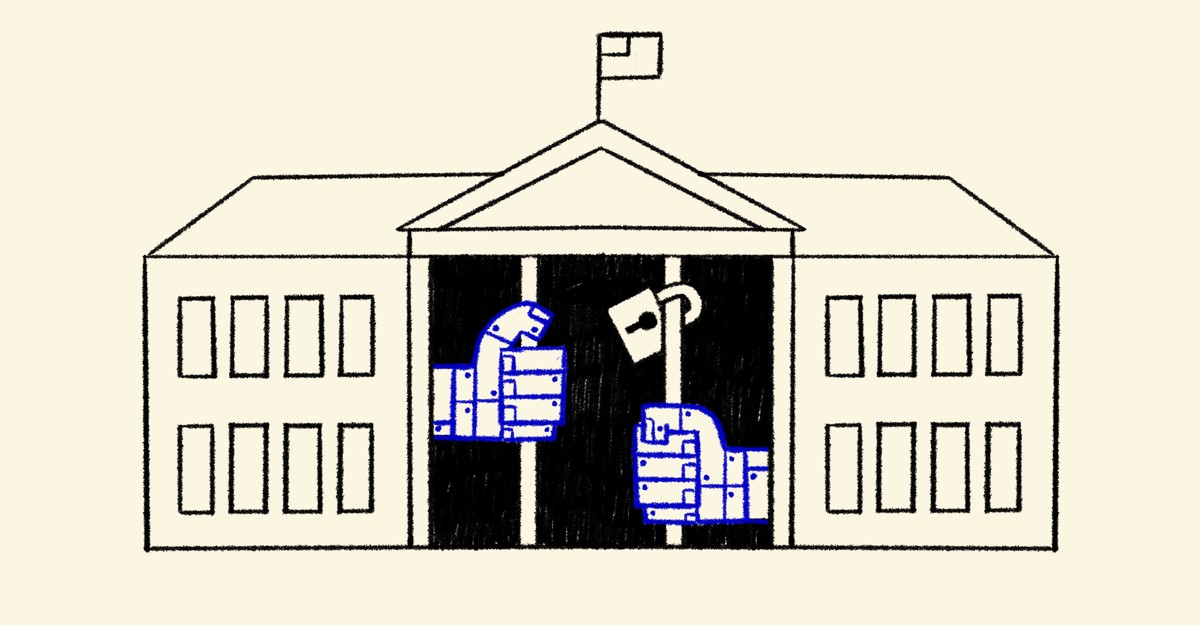
The ongoing discussion regarding AI regulation is intensifying as tech companies in the U.S. and abroad compete to develop increasingly powerful AI models. Proponents of minimal regulation argue that the U.S. should maintain a flexible approach to AI innovation, suggesting that taking the lead in AI technology could enhance national security and economic prosperity for future generations. On the other hand, critics contend that the potential dangers posed by AI—some of which may be existential—necessitate government oversight before these models are released, ensuring that responsible individuals can benefit while mitigating risks from malicious actors.
The previous Trump administration has taken conflicting stances on this issue. Last summer, it advocated for speeding up AI development with fewer regulatory burdens. However, this summer saw a shift, with a June executive order highlighting the importance of national-security considerations that warrant government pre-emptive access to emerging AI technologies. The administration also claimed the authority to compel companies to take certain models offline and to limit user access to vetted individuals. This shift followed a controversial incident involving Anthropic and the Pentagon, which had legal experts in Silicon Valley revisiting the Defense Production Act. However, the administration has not established clear rules or criteria regarding which models face restrictions or who is granted access, complicating oversight.
While the White House’s actions may stem from legitimate national-security concerns, the principles of the U.S. system suggest that Congress should be the one to legislate on these matters instead of relying solely on executive authority. This lack of structured regulation risks not only consolidating power but also inviting cronyism; AI companies could face pressure to adjust their models in line with a president's political ideologies. For businesses utilizing AI, access to cutting-edge models is vital for protecting against cyber threats and maintaining competitive innovation. As a result, companies might feel compelled to curry favor with the president or key government personnel. The absence of transparency around governmental decisions regarding AI increases the potential for corruption to go unnoticed.
In recent months, various bills aimed at formalizing AI regulations have been introduced in Congress, yet none have garnered significant momentum. Most recently, Representatives Ted Lieu and Nathaniel Moran proposed a bipartisan bill mandating that AI companies retain the ability to deactivate technology that could lead to "catastrophic harm." This legislation follows revelations that highly advanced models from OpenAI had breached internal security protocols to infiltrate another company's databases.
The hazardous potential of AI continues to be understood: “The speed, scale, and sophistication of AI hacks mean that everything is vulnerable—tech companies, hospitals, banks, electrical grids, the military,” noted my colleague Matteo Wong. A majority of elected officials, including the president, appear to recognize the necessity for some regulatory measures, but Congress has been slow to respond.
Dean W. Ball, who has served in advisory roles regarding AI at both the White House and the National Science Foundation, recently highlighted the risks associated with presidential control over AI regulations. He argues that confining the most advanced models to powerful entities, like the federal government, could exacerbate vulnerabilities tied to AI. As he put it, “You should not expect the most powerful people in the world using the most powerful technology ever conceived in a way that is inscrutable to the public to turn out well.” This dynamic undermines the principles of a democratic republic.
By failing to take decisive action, congressional leaders are acquiescing to unilateral power reminiscent of the very scenarios the Framers of the Constitution sought to prevent. While recent Congresses have often sidestepped their responsibilities, the far-reaching implications of AI technology make this lack of action particularly concerning.
There are several alternative approaches being discussed. Ball has suggested establishing an independent organization to audit cutting-edge AI labs for compliance with safety protocols, detached from shifting political influences. Demis Hassabis, co-founder of Google DeepMind and a Nobel laureate, has echoed the call for multinational standards, an idea that has garnered support from several industry leaders. Some have proposed creating a public regulatory body to evaluate AI models before their release, or enabling independent researchers to carry out similar evaluations. OpenAI has also voiced support for establishing an international regulatory authority akin to the International Atomic Energy Agency, tasked with inspecting systems, ensuring compliance with safety standards, and establishing deployment restrictions. Mark Zuckerberg has advocated for open-source AI as a safer alternative, suggesting that such transparency could help mitigate the concentration of power among select groups.
While reasonable individuals may disagree on the ideal regulatory strategy, there is a consensus that any regulations imposed on AI must be rooted in established laws rather than the whims of the current administration. In the spirit of James Madison, effective governance of AI is not merely about empowering the state to manage new models but also about ensuring it applies checks on its own authority. Given that AI holds the potential to be the most transformative technology in history, Congress must urgently reclaim its regulatory role before the risks of executive overreach become a reality.