Approximately two years ago, education entrepreneur Boris But experienced what he describes as a “penny-drop moment.” He realized, much like many others in China, that his business needed to adopt artificial intelligence to avoid being left behind in an increasingly AI-driven world.
His clientele, affluent parents eager to send their children abroad for studies, began arriving at his office equipped with information and opinions sourced not from traditional education firms but from chatbots.
In light of this trend, he embarked on creating his own AI study tool, affirming his belief that the best approach was to collaborate with technology rather than resist it.
China's progress in AI research and development is second only to the United States. The two nations are engaged in a fierce rivalry as advancements in AI capabilities escalate.
Experts generally recognize that cutting-edge AI models from the US still outpace those of their Chinese counterparts, yet recent sentiments from Silicon Valley have been notably bleak. Many industry insiders have voiced concerns regarding the dangers posed by the potential “loss of control” over advanced AI systems.
Last Saturday, Dario Amodei, CEO of Anthropic, proposed the concept of a “global pacing of the frontier,” suggesting that cooperation with China would be necessary for this to succeed. However, Lian Jye Su from the tech research firm Omdia remarked that China is unlikely to agree to a slowdown dictated by US interests.
For the Chinese government, AI development is seen as a crucial aspect of national sovereignty; Beijing is keen to maintain its momentum in closing the gap with US technology. Su noted that such calls for a slowdown are perceived as an attempt to solidify a US advantage.
Amodei explicitly mentioned China in his argument, stating that preserving democratic nations' leadership in AI technology over authoritarian regimes is vital. He advocated for continued restrictions on advanced chip and machinery exports to China, which some critics argue already reflect a unilateral strategy of “pacing.”
In response, the Chinese foreign ministry criticized Amodei's assertions, claiming that “fearmongering, confrontation, and fierce competition will only hinder global AI governance.”
Nevertheless, some analysts told the Guardian it would be unwise to interpret the foreign ministry's statement as a dismissal of the critical concerns raised in Amodei's essay.
This week, China introduced the third version of its AI safety governance framework, detailing an outline of the AI risk landscape and suggested responses, according to Gabriel Wagner, a researcher at a Beijing-based AI safety consulting firm. This update includes considerations of the risks posed by autonomous agents, cybersecurity threats from advanced models, and the challenging issue of self-improving AI.
Wagner pointed out that there may be more overlap between Amodei’s views and those of the Chinese government than one might expect. This stands in stark contrast to US President Donald Trump's recent remarks, where he dismissed concerns over AI's potential to threaten humanity as a “hoax.”
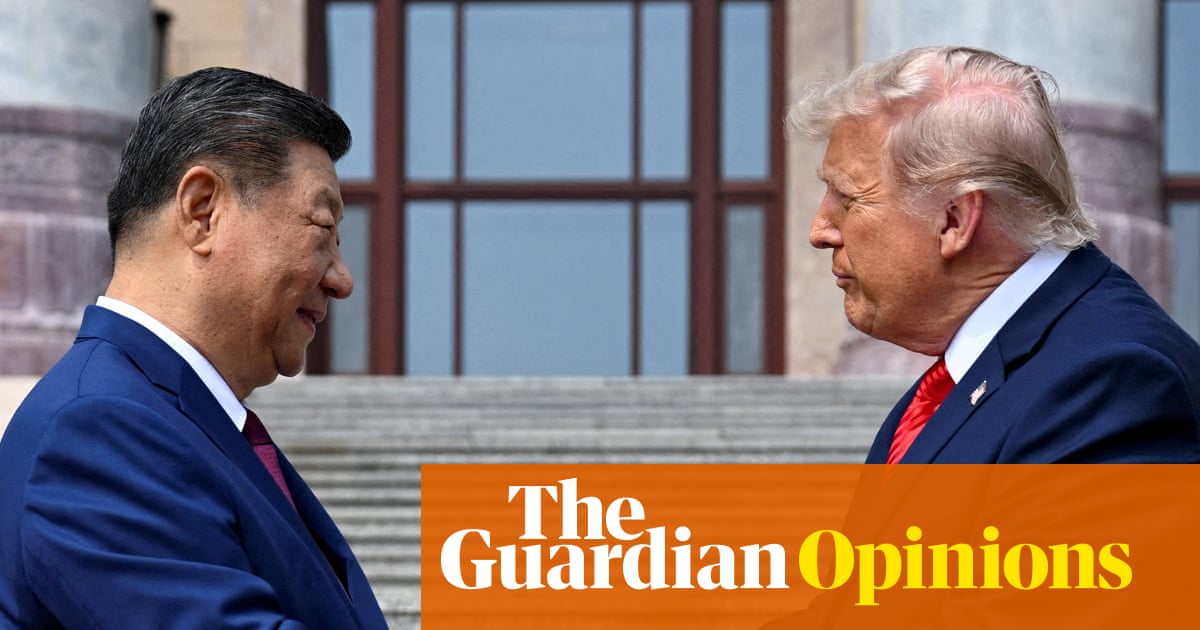
Trump is set to meet with Chinese President Xi Jinping in Washington next week, with AI likely to feature prominently on the agenda, though analysts are doubtful that any significant breakthroughs will occur.
The Chinese Communist Party is highly attuned to threats against its political stability and has taken a proactive stance to guide the development of AI within government-imposed limits. With centralized control over crucial infrastructure and commerce, China appears better positioned than the US to manage any potential AI crises, according to Omdia's Su.
Yet, analysts also highlight that Chinese firms engage in less voluntary monitoring and evaluation compared to their American counterparts, as noted by Leia Wang from the Carnegie Endowment for International Peace (CEIP). Neither government seems adequately prepared for significant loss-of-control scenarios.
However, Wang highlighted that China’s regulatory approach is adaptive, often quickly updating measures in response to emerging challenges. Since 2022, China has maintained an algorithm registry, but the recent warnings about autonomous agents indicate a shift from merely controlling AI outputs to managing AI behavior.
This year, Beijing also enacted national regulations targeting the reduction of emotional dependence on companion AI systems. Simultaneously, there is a strong governmental push for AI integration across the economy, as outlined in the latest Five-Year Plan. Local governments are incentivizing businesses with funding and favorable rent agreements to foster technological advancements.
Amid this environment, factories in China’s vast manufacturing sector are encouraged to modernize operations through AI integration. A representative from Black Lake Technologies, an industrial agent platform collaborating with 40,000 factories worldwide, acknowledged that while safety and controllability remain pressing issues, companies primarily prioritize AI reliability in their operations.
Daily life in China is already deeply intertwined with digital technology, and an approach that often places less emphasis on data privacy has facilitated rapid AI adoption. A notable example is the digital health service A-fu, which provides AI-powered chatbot consultations from top doctors and has recently garnered 150 million users.
According to Ni Tao, founding editor of the tech website yangtzeer.com, the prevailing perspective is that most people view AI as a practical tool rather than a looming threat. While there are genuine concerns regarding job displacement and misinformation, this anxiety coexists with a robust belief in the necessity for China to excel in AI development rather than fall behind.