The Federal Aviation Administration (FAA) is aiming to overhaul the country’s airspace system, and Alaska Airlines is providing a practical example of how this can be achieved.
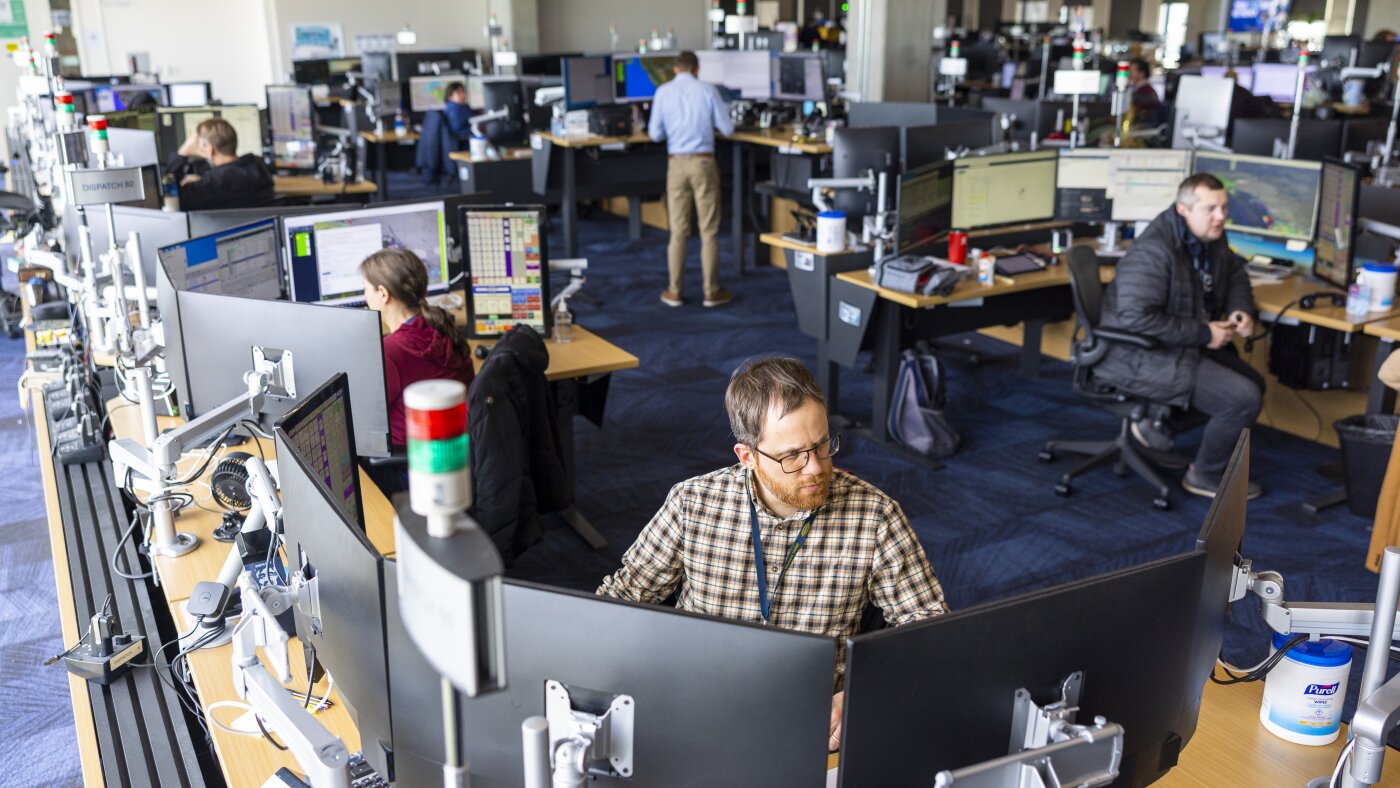
Daily, Alaska Airlines conducts approximately 1,500 flights, all coordinated from “The Hub,” a dispatching center located on the sixth floor of an office structure near Seattle-Tacoma International Airport. Inside this bustling control room, dispatchers utilize up to five flat-screen monitors to keep tabs on real-time air traffic data, weather conditions, and upper-level wind patterns.
To assist these dispatchers in managing this complex stream of information, Alaska employs a software tool called Flyways AI. "It compiles all that data," said Alek Mead, a manager in the Network Operations Center at Alaska. "It helps us analyze various options, explore different strategies, and ultimately choose the safest and most efficient flight paths."
Seeking to enhance its operational efficiency, Alaska collaborated with Air Space Intelligence, a small tech startup. The FAA has since chosen the same company as a partner for a significant modernization project aimed at revamping the entire U.S. airspace.
The FAA's vision involves adopting advanced technologies, including artificial intelligence, to optimize airspace usage across the nation. Flyways exemplifies how these innovations could be implemented in real-time scenarios.
Alaska was the pioneer airline to adopt Flyways in 2021, empowering dispatchers to tackle tasks previously deemed too difficult for a single individual. "While it doesn’t determine the specific routes or waypoints for a flight, it offers suggestions for more efficient options," noted Capt. Bret Peyton, the managing director of network operations control at Alaska. This capability has led to significant improvements: the airline claims it has saved tens of thousands of flight hours and approximately one million gallons of fuel annually due to the efficiencies introduced by Flyways.
This innovative system processes data related to air traffic, wind, weather, and other relevant factors, enabling it to predict flight conditions before they unfold.
"It represents a significant shift in operational behavior," said Phillip Buckendorf, CEO and co-founder of Air Space Intelligence, during a podcast discussion last year. The collaboration with Alaska helped develop Flyways from its inception, and the company has now expanded its work to other major airlines like Delta and United, in addition to partnerships with the U.S. Army and Air Force.
Buckendorf acknowledges the challenges faced in integrating this new predictive technology into a workforce accustomed to decision-making based on static displays throughout their careers.
The FAA is optimistic that using predictive analytics could enhance the entire airspace system’s functionality. At a recent industry conference, Bryan Bedford, the FAA's administrator, highlighted the transformative potential of AI for air traffic management. He pointed out that while safety in U.S. airspace is currently ensured by air traffic controllers maintaining separation between aircraft, the existing system’s efficiency leaves much to be desired.
"We observe a system that is severely misaligned," Bedford remarked. "None of our facilities have a complete view of the national airspace as a whole."
He believes that with the application of predictive analytics, the FAA can proactively identify and mitigate congestion and bottlenecks by making minor adjustments to flight schedules and routes. In a substantial push for modernization, the FAA has recently awarded an $875 million contract to Air Space Intelligence to develop the SMART system (Strategic Management of Airspace, Routes, and Trajectories).
This initiative also aligns with a broader aim initiated during the Trump administration to enhance the air traffic control system. FAA officials emphasize that the intent is to assist air traffic controllers, not to replace them.
Nonetheless, there are critics who question whether this technology can effectively scale to optimize the U.S. airspace, recognized as the most complex and busiest globally.
Even at Alaska Airlines, there was initial skepticism among dispatchers regarding Flyways. Peyton noted, “It took some time to convince the dispatch team that it was truly a decision-making support tool, not a system that would autonomously generate erratic decisions. However, once they witnessed the immediate and tangible results, their skepticism quickly faded.”