In 1999, Bill Gates stated, “Power comes not from knowledge kept but from knowledge shared,” a notion that resonates deeply as we advance into an age driven by artificial intelligence. OpenAI CEO Sam Altman was just starting his teenage years at that time. This wisdom contrasts starkly with the prevalent mindset within many corporations, where proprietary knowledge can act as a currency, a concept explored by academics Catherine Connelly and David Zweig as “knowledge hiding.” As we ponder the evolution of workplace dynamics in the AI era, one must consider whether this secretive approach will endure.
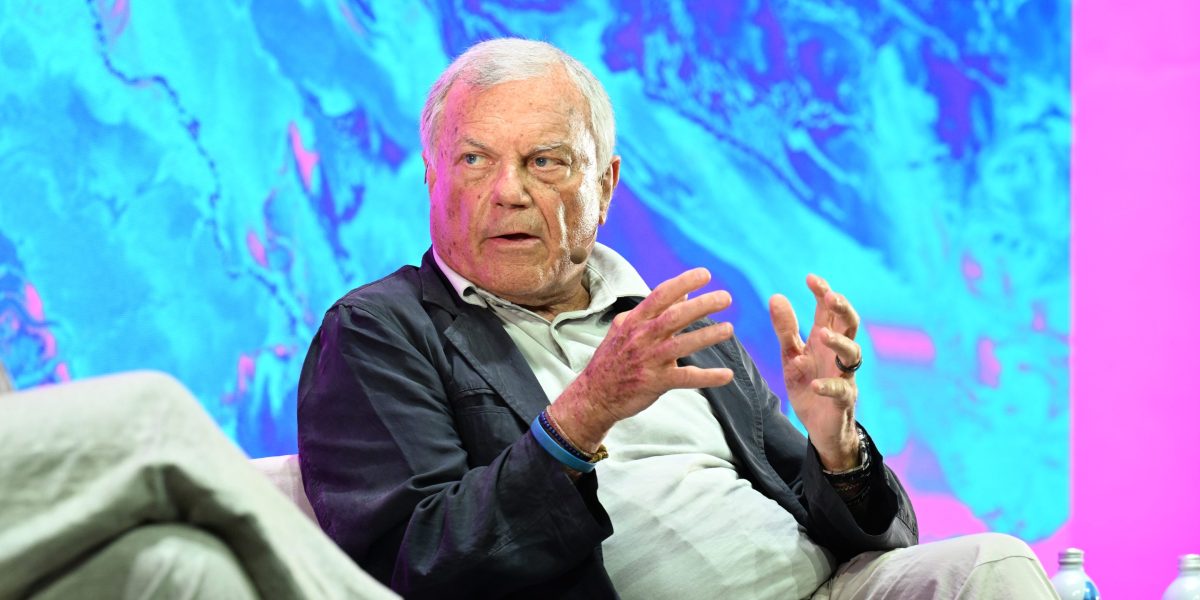
Sir Martin Sorrell, the visionary founder of the digital media company S4 Capital and former CEO of WPP, one of the largest advertising firms, offers a perspective molded by decades in the industry. Now in his 80s, Sorrell exudes a calm assurance when discussing technological evolution, recalling how faxes once revolutionized communication.
Sorrell articulates a compelling viewpoint regarding AI: “The most fascinating area in the development of AI is what I call the democratization of knowledge,” he explains. He believes AI has the power to flatten organizational hierarchies. Within complex, multi-branded companies, information control can create power centers. However, when knowledge is accessible to all, it shifts the game entirely. “Those who are willing to share will emerge as the real leaders,” he asserts.
As we approach 2024, Altman has projected that up to 95% of marketing jobs, particularly in content creation and campaign management, could be supplanted by AI. Despite this stark prediction, Sorrell maintains a more nuanced view. “I don’t believe 95% will be eliminated, but there will be significant changes,” he says, emphasizing the inefficiencies still prevalent in the industry. Many marketing processes remain labor-intensive, but AI's ability to streamline production means agencies will need to adapt their business models to focus on cost-effectiveness.
He draws a comparison to asset management, where automated processes dominate. “Do you think people like Larry Fink still rely on manual spreadsheets?” Sorrell questions. “No, everything's automated.” He points out that while the advertising field employs a significant number of young professionals engaged in manual labor, this approach is untenable in a fast-paced, algorithm-driven environment.
In discussing AI's burgeoning role, Sorrell highlights its acceptance in traditionally cautious industries like automotive. “AI can do remarkable things now,” he states, urging industry players to embrace new technology rather than resist it.
Acknowledging the growing public concerns surrounding AI—spanning issues of security, privacy, and job displacement—Sorrell reflects on past experiences, recalling a conversation with the principal of a leading tech university in Mexico. The principal noted the transformative impact of the internet on rural education, granting unprecedented access to resources. Sorrell likens the potential of AI to an enhanced version of the internet, emphasizing that “the marginal cost of information is virtually zero,” allowing for innovations previously unimaginable.
The transformation in work habits is inevitable, as Sorrell believes the COVID-19 pandemic ushered in an era of remote work that has redefined where and how we operate. Young employees entering the labor market have adapted to flexible work environments, yet this shift brings challenges for management.
Sorrell relays an anecdote about a business leader overseeing a Gen Z workforce, who candidly described the struggle in adapting to remote management dynamics. “It’s much more complex to manage dispersed teams than to oversee a traditional office-based workforce,” he notes. This discomfort may explain the push from some companies, like JPMorgan Chase and WPP, to bring employees back to physical offices.
Reflecting on the future, Sorrell recalls John Maynard Keynes’ 1930s essay, “Economic Possibilities for our Grandchildren,” which posited that the challenge ahead would be how society manages leisure time. Today, Elon Musk’s vision echoes similar themes, predicting an "age of abundance" through increased productivity driven by AI.
Sorrell, who has a background in economics, believes Keynes’ insights warrant revisiting, arguing that the revolutionary changes ushered in by AI could finally pave the way for what many have deemed a 15-hour workweek.