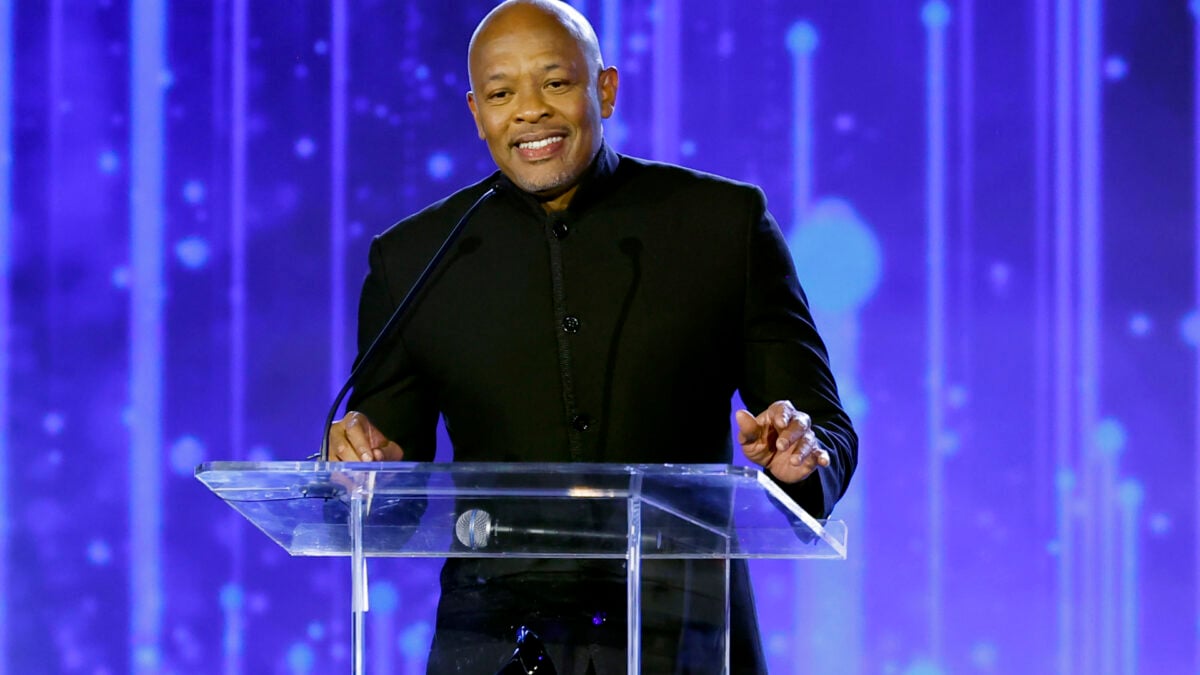
Dr. Dre, the influential rapper and acclaimed seven-time Grammy-winning producer known for classics like Tupac’s “California Love” and Eminem’s “The Real Slim Shady,” is an advocate for leveraging artificial intelligence in music creation.
In a recent conversation with the New York Times, Dr. Dre, along with Jimmy Iovine, the co-founder of Interscope Records, explored the rapidly growing role of AI in music production. Dr. Dre dismissed concerns about AI as a threat, suggesting that apprehension mainly stems from those who struggle with creativity. “I don’t view it as a looming threat. The only individuals who see it as such are those who find it difficult to innovate,” he shared. He drew a parallel to past technological advancements, stating, “It’s reminiscent of the resistance people had against drum machines or synthesizers when they first emerged.”
The popularity of AI-driven music creation tools has surged over the past year. In an effort to address the mounting criticism surrounding AI-generated tracks that claim authenticity, both Spotify and Apple Music are set to categorize AI “artists” on their platforms in the coming weeks. This initiative represents a dual narrative: the growing acceptance of AI as a legitimate tool in song production and the concern over misleading consumers. Additionally, Spotify is collaborating with Universal Music Group to develop a feature that enables users to create AI-generated covers, with plans to monetarily capitalize on this new functionality.
Many, including Dr. Dre, view AI as a beneficial technological resource that can streamline music production processes by reducing time and expenses traditionally shouldered by producers or human collaborators. However, there are significant concerns regarding the potential ramifications of widespread AI integration, including job automation, potential copyright infringements, and the risk of producing uninspired, formulaic music.
Iovine expressed optimism about the technology, stating he doesn’t see any negative aspects. “There will definitely be some subpar music, but that’s a reality we already face,” he said. “When talented creatives harness AI in the studio, they’re likely to produce superior records.”
Dr. Dre noted that he employs AI as a means to experiment with his creative output. He also mentioned that many industry peers share his views but may hesitate to openly acknowledge their use of AI. Iovine referred to them as “closet AI producers,” highlighting Timbaland as another major figure embracing AI in production.
The discussion surrounding AI extends beyond the music industry, affecting various creative fields, including writing and visual arts. The surge in generative AI technology is prompting similar debates among writers, filmmakers, and visual artists. Some, like directors Martin Scorsese and Steven Soderbergh, along with actress Reese Witherspoon, have shown support for integrating AI in filmmaking, while others remain resistant. For instance, Guillermo Del Toro expressed a strong aversion to using generative AI, stating he would prefer death over such practices. Seth Rogen also criticized the mindset of using AI for scriptwriting, arguing that genuine writing requires a personal connection to the process. “If your first instinct is to rely on AI rather than engage in the craft, perhaps writing is not for you,” Rogen stated in May.