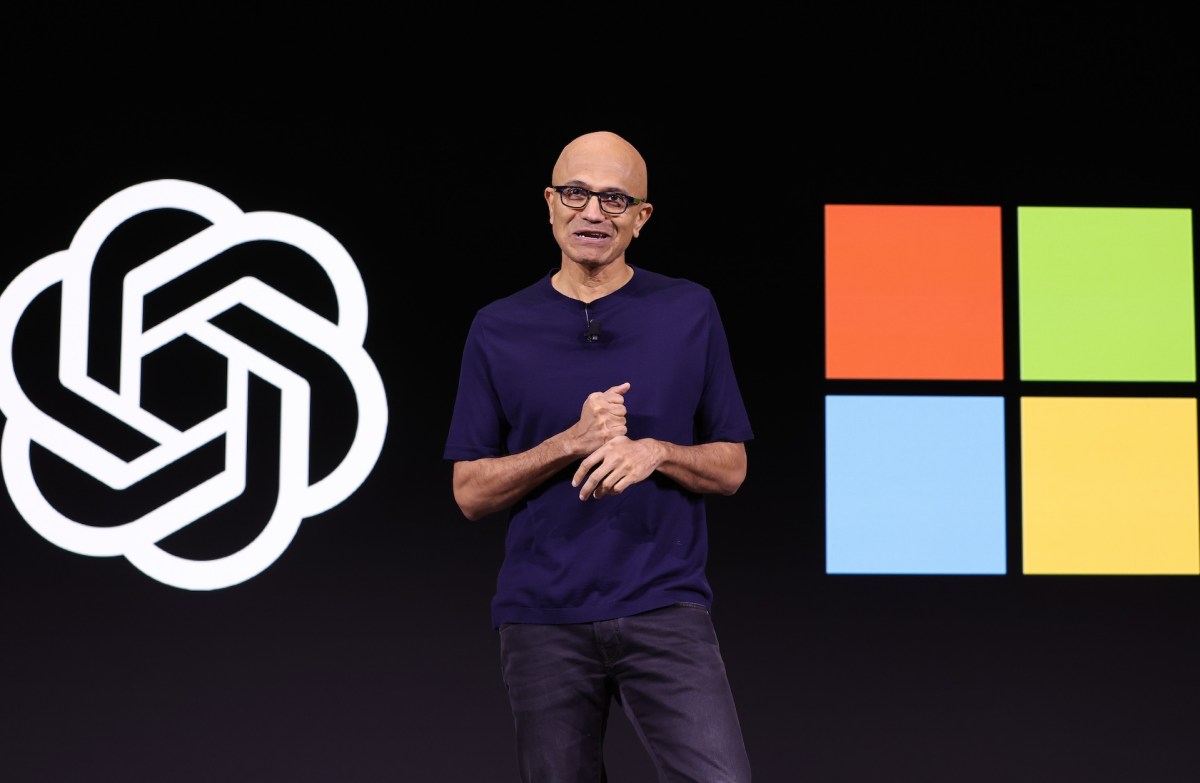
In the midst of ongoing discussions regarding the potential pitfalls of artificial intelligence, a particular concern has arisen that is troubling many technology enthusiasts in Silicon Valley. This anxiety centers on the behavior of major AI companies that offer proprietary models, with fears that these organizations may be acting like Trojan horses.
The issue arises as businesses, including startups, rely on AI solutions from institutions such as OpenAI and Anthropic. This dependence allows these firms to obtain sensitive corporate data, which could enable them to become competitors to their own clientele. High-profile voices, from venture capital investors like Jason Calacanis to Palantir CEO Alex Karp, have raised alarms over this trend.
Recently, Microsoft CEO Satya Nadella added his voice to these concerns in an unexpected blog post. He cautions that businesses, referred to as "buyers" in his view, are paying a double price for AI services. They not only incur costs for token usage, but they also unwittingly share invaluable data that is necessary to maximize the models' utility.
Nadella points out that the more a company wants a model to excel, the greater the need to input proprietary knowledge. He elaborates that enterprises are effectively providing the models with deep insights into their operations.
He emphasizes that these models absorb “exhaust” data—everything from user prompts to the tools utilized and most critically, user corrections when the model makes mistakes. Each correction transforms into institutional intelligence, which is knowledge generation that competitors cannot acquire through standard means, yet this crucial information is being surrendered.
The CEO suggests that if AI companies can freely gather data from the internet for training, it is only fair for businesses to have the right to analyze and learn from these models in return. He describes “distillation”—the process of leveraging a model's outputs to gain insights for developing a more cost-effective model—as a necessary practice. Earlier this year, Anthropic raised concerns over Chinese open-source models that used thousands of prompts to enhance their own systems, advocating for tighter export regulations.
Nadella argues it is unfair for those creating models to train on unrestricted data while imposing limitations on enterprises that seek to distill insights from those same models. He particularly scrutinizes the tendency of model providers to claim ownership over data generated from customer interactions and usage.
To address these issues, Nadella proposes a solution that reflects the perspective of a major cloud service provider. He advocates for businesses to retain ownership of their data—including prompts and feedback—by developing their own "proprietary learning environments" in the cloud, potentially using Microsoft’s Azure infrastructure. He also encourages the integration of “orchestration layers,” which would allow companies to seamlessly transition between different AI models instead of being tethered to a single provider. The emergence of AI "gateways" that facilitate this process has become increasingly prevalent.
Although Nadella does not explicitly mention the concept of open source, there is a clear implication in his advice. Many larger firms, which maintain their own data centers along with using cloud solutions, are moving toward deploying open-source models on-site. Idit Levine, CEO and founder of Solo.io—a company specializing in networking and security that aids enterprises in managing AI systems—notes that her clients are increasingly contemplating whether they could implement open-source models on their premises, realizing these options could deliver up to 90% of the capabilities of proprietary solutions at a significantly lower cost. “They recognize the benefits of control,” she tells TechCrunch.
Solo.io was recently chosen to provide the technology for the Linux Foundation’s Agentgateway initiative, and her client roster includes major companies such as T-Mobile, ADP, and SAP. She anticipates that the trend of adopting on-premise open-source models will represent the next substantial shift in enterprise AI applications.
Levine's sentiment is echoed elsewhere; companies like Vercel—known for building and hosting websites while also offering AI model-switching capabilities—and OpenRouter—a service that directs requests to various AI models—are also witnessing a rise in interest in open-source models. In fact, open models made up 29% of the traffic routed through Vercel's gateway last month.
With Nadella, leading Microsoft—a significant investor in both OpenAI and Anthropic—expressing concerns regarding the use of proprietary models, it seems probable that this trend will continue to gain momentum. “In consuming intelligence, you are creating intelligence. And what you create should belong to you,” Nadella concludes.