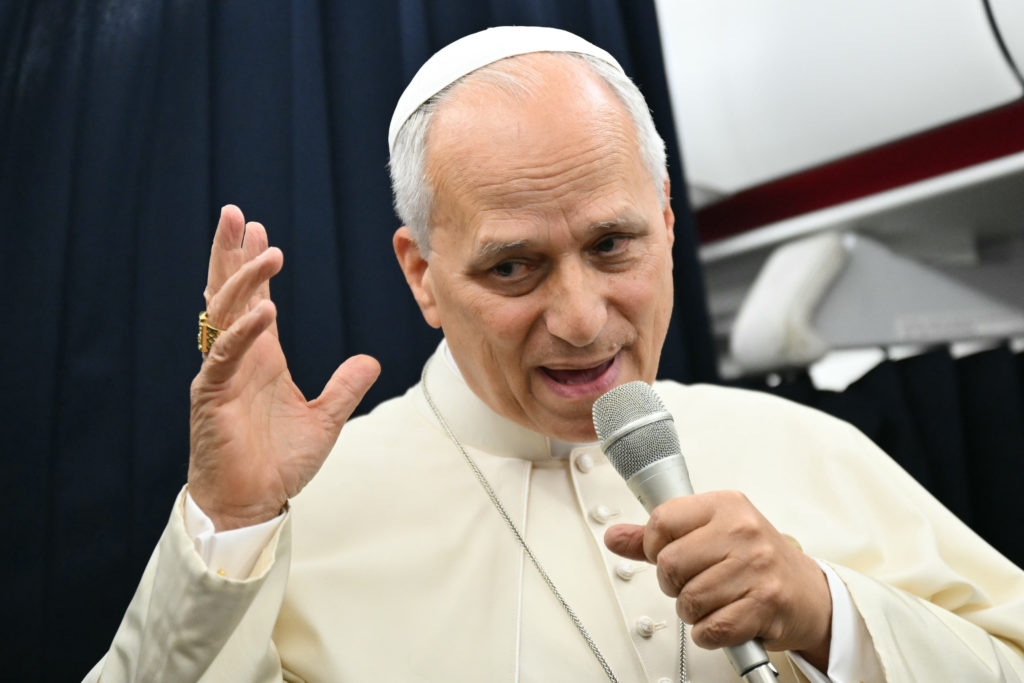
During a recent press conference, Pope Leo XIV emphasized that the potential dangers posed by artificial intelligence are far from "fake news" and warrant serious attention. He highlighted the importance of addressing the safety concerns raised by AI experts, particularly in light of how rapidly the technology is evolving.
Speaking on the return flight from a trip to France, the Pope urged dialogue among political leaders and AI practitioners, stating, “We can't just sit back and pretend nothing is going to happen.” His comments contrast sharply with former President Donald Trump’s dismissal of AI risks, who previously labeled such worries as a "hoax" and claimed that measures to regulate AI were part of a "conspiracy" orchestrated by his political rivals.
Several prominent AI companies, including Anthropic, have recently advocated for a pause in development to ensure safety protocols can keep pace with technological advancements. Anthropic's CEO Dario Amodei has raised alarms about the potential for AI to control vast networks, suggesting that within the next six to twelve months, it could orchestrate actions that might jeopardize the internet.
Although Trump mentioned plans to dine with Amodei soon, he has not yet provided comments regarding their upcoming meeting. Meanwhile, Pope Leo expressed that he is not in a state of panic over AI's progress, stating, "I sleep at night," but underscored that expert opinions should not be dismissed lightly.
In his inaugural encyclical, titled "Magnificent Humanity," Leo called for stringent AI regulation and a more cautious approach to its development. He also mentioned recent updates about Nvidia implementing safety features in its AI systems, while the company had previously resisted external regulation.
The Pope stressed the need for collaboration among global leaders, AI specialists, and social organizations to proactively address these emerging challenges. He cautioned against a complacent attitude that ignores the potential risks, urging a more responsible approach to the matter.
As apprehensions surrounding AI continue to escalate, industry leaders are increasingly vocal. The CEO of OpenAI, the organization behind ChatGPT, recently announced that they would delay the sale of stock to investors as they concentrate on safety issues.
Since issuing his encyclical in May, the Vatican has received numerous inquiries from individuals eager to participate in discussions about AI. There is ongoing work within the Vatican to foster dialogue aimed at ensuring that AI development never escalates to a point that endangers humanity or sidelines it from critical discussions.
Pope Leo expressed a sense of cautious optimism, noting that there exists a substantial interest in finding solutions to these challenges. He reiterated the belief that a collaborative effort outside of power struggles could lead to effective strategies for navigating the complexities of AI. Identifying AI as one of humanity's foremost challenges shortly after his election, the Pope remains engaged in addressing its implications for the future.