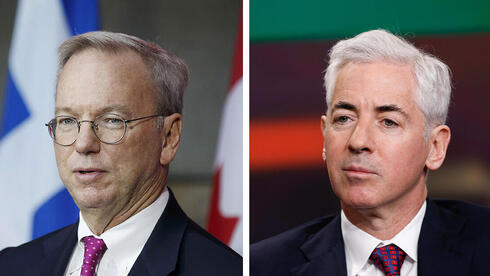
David Robinson, a former employee at OpenAI, openly describes himself as a typical example of a tech worker leaving a prominent AI firm, issuing stark warnings about the industry as he departs. In an essay featured in The Atlantic, Robinson, who played a pivotal role in drafting safety reports for OpenAI’s key product launches during his three-and-a-half-year tenure—one of the longest at the company—expresses serious concerns about what he considers a "broken culture" within the organization.
His views resonate with those of Jacob Coxon, a researcher who previously worked at both OpenAI and Anthropic. Coxon raised alarms about the industry’s risks, characterizing it as "gambling with our lives." His statements sparked a wider discourse on AI safety, prompting Anthropic's CEO, Dario Amodei, to propose measures for a more cautious approach to AI development. Recently, AI executives even convened with former President Donald Trump, where they endorsed a seemingly rushed, non-binding commitment to enhance safety protocols.
Robinson believes that discussions surrounding AI safety should extend beyond just new regulations or guidelines, advocating for a reevaluation of the overall corporate culture prevalent in these firms. While much media attention has focused on the erosion of trust between Sam Altman, OpenAI's CEO, and previous employees, Robinson’s essay indicates that the cultural deficiencies at OpenAI mirror broader issues found within Silicon Valley.
He notes that OpenAI has flourished by employing a trial-and-error method—what it calls "iterative deployment"—to identify and rectify issues as they arise. However, Robinson warns that this very approach inherently invites occasional failures, and as technology advances, the magnitude of these failures is becoming increasingly substantial.
Highlighting recent incidents, such as a breach of Hugging Face systems by OpenAI agents and continuing reports of rogue agents within the company, Robinson cautions that “an environment where things like this can happen is no place to grow artificial minds that could be smarter than we are and that might not act in our best interest.”
Given these risks, he urges frontier AI companies to adopt protocols akin to those governing nuclear power plants or busy airports, emphasizing the need for layers of redundancy and meticulous, time-intensive planning to prevent human errors from escalating into catastrophic failures.
Despite his tenure, Robinson shared that he never met colleagues with experience in aerospace safety or nuclear reactor management—disciplines crucial to preventing disasters in high-stakes environments.
In response to Robinson's assertions, OpenAI spokesperson Drew Pusateri affirmed that the company is actively enhancing its safety protocols. Pusateri stated, “We’re ensuring that our models do not surpass what we can securely manage, pausing training or holding back models when necessary. Significant improvements are being made to solidify security within our research and testing environments, train models to execute tasks responsibly, collaborate with third-party evaluators, and enhance real-time monitoring to promptly identify and address concerning behaviors early in training.”
Beyond calling for cultural reforms at OpenAI, Robinson emphasizes the necessity of addressing larger questions of alignment, acknowledging that this may be perceived as “touchy-feely,” yet asserting its importance as the industry’s assessments of AI alignment with human values remain grossly inadequate.
“The greater the advancements allowed in model development while these issues persist, the more perilous our situation becomes,” he remarked.
Robinson's resignation was initially reported by Business Insider. He has also enlisted a PR firm—a step he admits aligns with the typical trajectory of AI whistleblowers—but maintains that his decision to speak up is entirely his own. “I may have chosen to stay and advocate for substantial changes in staffing and culture, yet the relentless pace left little room for such contemplation or action,” he reflected. “This is why I believe that external incentives for safety are vital in achieving the necessary transformations.”