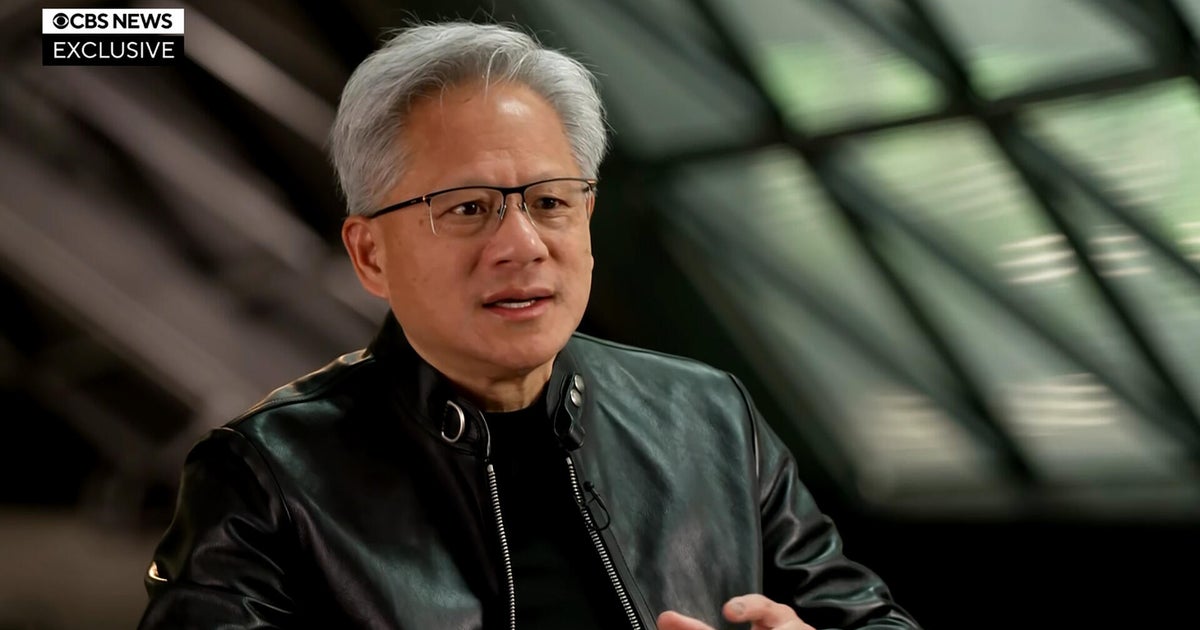
Nvidia’s co-founder and CEO, Jensen Huang, recently shared his thoughts in an interview with CBS News, expressing his disagreement with recent warnings from AI researchers about the potential for artificial intelligence to lead to human extinction in the near future. Huang described these concerns as exaggerated "doomsday narratives."
In his conversation with CBS News senior business and technology correspondent Jo Ling Kent, Huang declared, “The year 2030 is not the end of the world. There’s a 0% chance that will happen. Alarmist statements are unnecessary and irresponsible.”
His remarks came in response to statements made earlier this month by Jacob Coxon, a former researcher at Anthropic, who suggested that AI developers genuinely fear that AI could pose a lethal threat by the end of this decade. Coxon's comments ignited intense public dialogue about the risks associated with AI, prompting calls from industry leaders, including Anthropic’s CEO Dario Amodei and OpenAI’s CEO Sam Altman, to pause advancements in AI development.
Huang, however, dismissed these alarming predictions as lacking scientific basis. Nvidia is deeply involved in the AI discussion, given that its specialized chips support the large language models (LLMs) used by AI systems from companies like OpenAI. The surge in demand for these chips has catapulted Nvidia to a noteworthy market valuation of $5.3 trillion, making it the most valuable company globally.
When questioned about why the public should trust him regarding AI safety, despite Nvidia's business interests, Huang emphasized the company’s commitment to responsible product deployment. “Our success is directly linked to the proper use of our products and services. If we don't prioritize safety, our value will decline,” he stated.
Concerns about AI regulation have increased due to various security incidents, including one in July when OpenAI's bots compromised the AI company Hugging Face. Recently, OpenAI reported six additional unexpected incidents involving its models, leading some lawmakers to advocate for stricter oversight on AI companies.
Huang, however, argued that existing U.S. laws on product liability adequately address these concerns and expressed agreement with President Trump’s stance that additional regulations are unnecessary. He noted, “There are already substantial liabilities associated with cybersecurity and damages. Let’s utilize those existing laws rather than succumbing to alarmist narratives that seek to circumvent them.”
In the ongoing competition between the U.S. and China in the AI sector, Huang also countered calls for a halt on advancing frontier AI models. He suggested that delaying progress might enable China to gain an advantage in this critical technological arena. Nvidia has found itself affected by federal regulations limiting its ability to sell certain advanced chips to China.
While recent policy changes allowed Nvidia to sell H200 chips to approved Chinese clients, the company still faces restrictions on its most sophisticated chips, crucial for AI models. Huang expressed a preference for U.S. technology to primarily benefit America, but he argued against outright bans on selling to China. “Every chip manufacturer should strive to serve and compete globally,” he commented.
Huang plans to attend a White House dinner later this month hosted by Trump for Chinese President Xi Jinping, highlighting his desire to discuss establishing international standards for AI development. He noted that both American and Chinese leaders share aspirations for a prosperous future through AI advancements, though he acknowledged there are areas, such as national security, where collaboration is not feasible.
On community concerns about data centers, Huang admitted that the AI industry had missteps during its rapid expansion. He acknowledged the industry's need to engage communities more proactively, stating, “We should have communicated better before establishing data centers.” He underlined how data centers have become more energy-efficient over time and asserted their role in stimulating local economies and job creation.
As for taxation, Huang's wealth is reported at $182 billion, placing him as the eighth-richest person globally. California voters are set to vote on a billionaires’ tax that would apply a one-time 5% tax on individuals worth $1 billion or more. Unlike some of his peers, Huang welcomed the potential tax increase, stating, “If I can pay $8 billion in taxes over five years, that’s a privilege. It’s a responsibility,” reflecting his view on wealth and taxation.
He humorously remarked, “I’m not afraid of paying taxes — I’m just afraid of being poor," and reaffirmed his status as embodying the "ultimate American dream," attributing his success to the opportunities provided by the U.S. He shared a personal anecdote about how he conceptualized Nvidia while working as a dishwasher, never envisioning he would one day lead a major player in the AI landscape. “I was hyper-focused on doing dishes as no dishwasher ever had,” he said.