In the past hundred years, oil and gas have driven global economies, but Turner Caldwell is confident that the next century will be powered by metals.
“We're entering a metals-centric economy,” explained Caldwell, who is the CEO and cofounder of Mariana Minerals, a startup focusing on software for the mining industry. “Lithium and copper will be crucial, but our scope will extend beyond these. We are also targeting aluminum, which is vital for lightweight alloys, and plays a significant role in the electrification of our economy. Furthermore, we are exploring magnesium, nickel, cobalt, manganese, uranium, and rare earth elements. The advantage of the software infrastructure we're developing is its adaptability for all the metals that modern industries rely upon.”
Metals form the invisible bedrock of our economy and daily lives. For instance, power grids and electric motors heavily depend on copper, while lithium is essential for electric vehicle batteries. Aluminum is integral for constructing power lines, aircraft, and automobiles. Even steel, which underpins your current building, and lesser-known metals like germanium are vital for the chips that power your smartphone.
However, the supply chain for these critical resources is under threat: China controls the global mining arena, managing up to 90% of the processing for essential minerals (with rare earth magnets, critical for smartphones and military applications, peaking at 92%). The United States finds itself in a precarious position, often termed a chokehold regarding critical minerals, a situation that has unfolded over decades due to Chinese price-cutting strategies and a decline in U.S. industrial capabilities. This has led to a high-risk supply chain, where even fundamental minerals like copper and lithium can see volatile price spikes.
“Our aim is to bring down the costs of these essential materials in the long run,” said Caldwell. “This strategy will ensure that everything using them can operate as efficiently as possible, unlocking the potential for industries like AI that have captured much attention.”
Caldwell established Mariana in 2024 alongside cofounders Baker Tilney and Juan Lozano, following nearly a decade of experience in factory design and construction at Tesla. The San Francisco-based company is emerging as a notable innovator in the historic mining sector during a critical geopolitical era. Recently, Mariana secured $310 million in Series B funding, led by Khosla Ventures, with participation from notable investors like Andreessen Horowitz and Breakthrough Energy Ventures. To date, Mariana has raised a total of $400 million and boasts a valuation of $1.5 billion.
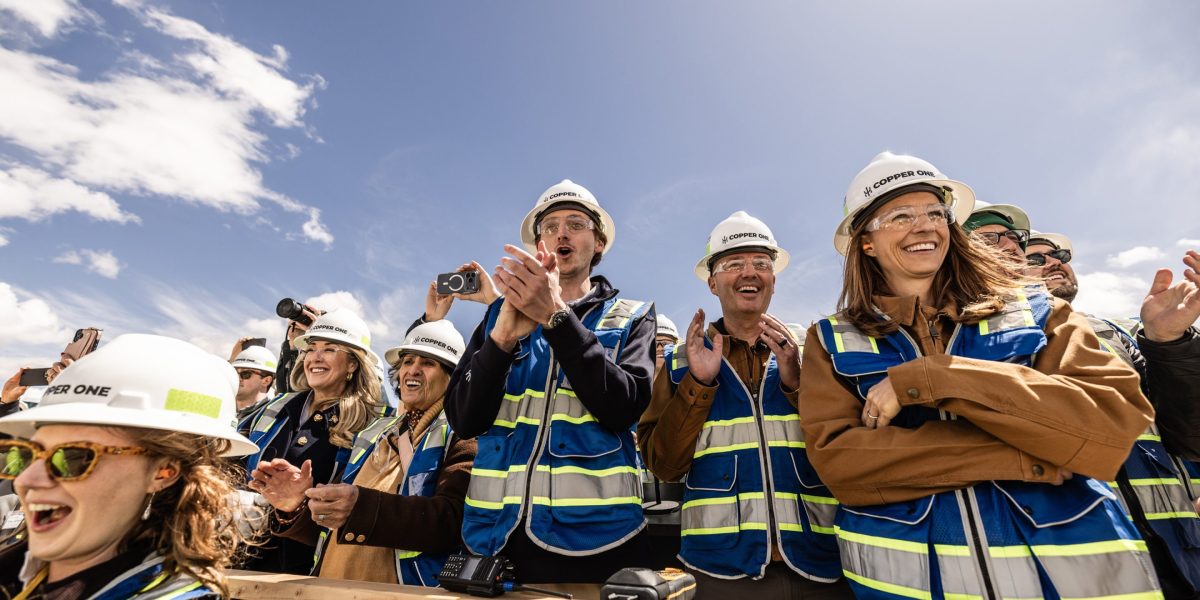
This funding supports the mines operated by Mariana: Copper One in Utah and Lithium One in Texas. The names reflect their functions: Copper One is a former idle copper mine that Mariana revived in 2025, ramping it back up using autonomous software, and aims to produce 50,000 metric tons of refined copper annually. Meanwhile, Lithium One commenced construction in 2025 and is expected to begin commercial production in 2027.
Mariana finds itself in competition with massive legacy mining companies like Standard Lithium and BHP Group. However, the startup believes the surging demand for metals, particularly driven by the AI boom, creates a need for efficient, software-oriented mining operations that are crucial for the industry.
“The AI revolution is fundamentally dependent on extracting large quantities of minerals and metals,” emphasized Travis Kalanick, the former Uber founder who now leads the physical AI and robotics firm Atoms. “Everything from data centers and chips to the electrical grid, robots, electric vehicles, and defense systems starts with copper and other vital minerals. So, how critical is this? A country cannot lead in the AI era without a strong domestic supply chain.”
Taking Kalanick’s perspective into account, copper is particularly important as a bottleneck for electrification, especially with the rising demands on America’s aging electrical grid from AI-enabled data centers.
“The modern economy is fundamentally about electrification,” said Caldwell. “This holds true whether you’re looking at AI infrastructure, renewable energy storage, initiatives to boost domestic manufacturing, or the electrification of transportation across land, sea, and air. All these sectors will be closely tied to how much electricity we can produce as a nation and a species.”
Given the importance of electricity, copper's price volatility poses a significant threat to the future of American industry.
“If copper prices begin to soar—and we’ve already observed increases—everyone downstream of these metals will experience cost pressures,” Caldwell warned. “This will stall our progress in modernizing the global economy.”
And copper is just one of many critical metals that play a role in shaping our complex future.