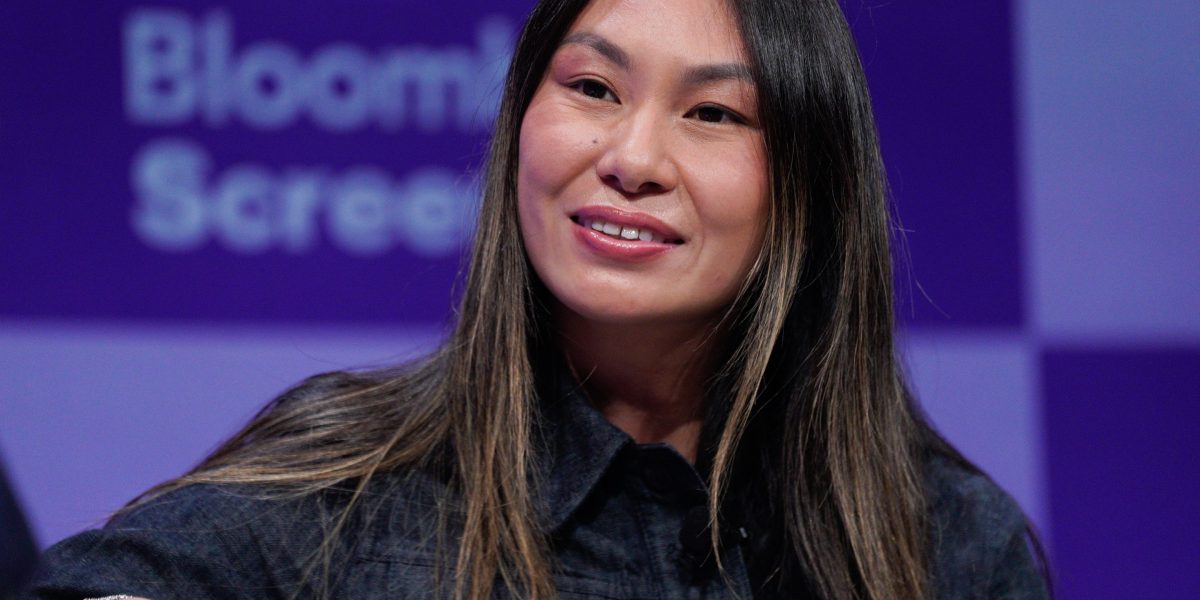
Lucy Guo exemplifies the relentless drive that characterizes Silicon Valley's startup scene. By the time she reached 30, she had already become a billionaire, thanks in part to selling her company Scale AI to Meta. However, she brings a critical perspective to the promise of AI and autonomy in the workplace, suggesting that for many, these advancements have increased their workloads rather than alleviated them.
In a recent interview on the Fortune Daily Show, Guo remarked on the demands of being constantly alert for AI agents to function effectively. She shared a striking example: “I think it was last week I worked a 26-hour day because I refused to go to sleep,” underscoring how the culture of nonstop work can take its toll.
Since her departure from Scale AI in 2018, Guo has been actively investing in startups through her venture capital firm, Backend Capital. Among her investments is a recently acquired company that became part of Anthropic, where she secured a significant shareholding. Additionally, she took the helm of Passes, a platform designed for monetizing content creators, which she launched in 2022.
Guo’s insights point to a complex reality regarding the integration of AI in the workforce. While developers and other professionals can leverage AI to enhance productivity, preliminary studies suggest that such advancements may lead them to shoulder greater responsibilities. Research conducted by UC Berkeley on a 200-person tech company over eight months revealed that employees not only worked at an accelerated pace but also embraced a wider range of tasks and extended their hours—often without directive.
Moreover, there remains an ongoing debate about whether enhanced speed translates into high-quality outputs.
Despite utilizing AI in her ventures, Guo emphasizes the indispensable value of human talent. She advocates for recognizing individuals with complementary skills when building a team. Reflecting on her own journey, Guo, who described herself as an average computer science student at Carnegie Mellon University—one of the premier institutions for programming—asserts that her foundational knowledge allows her to spot exceptional engineers.
“The people in a company make the company,” she affirmed.
Guo has been immersed in AI long before the current wave of generative AI innovations. She co-founded Scale AI in 2016 alongside Alexandr Wang, now Meta's chief AI officer, and retained enough equity after leaving that it contributed to her billionaire status.
At one point, this status also earned her the title of the youngest self-made woman billionaire worldwide, a title she recently lost to Luana Lopes Lara, cofounder of Kalshi. However, Guo remains unfazed by this shift, viewing it as a positive indication of progress for women in business. “I think it’s a really good sign when this title is taken away because that means that, like, women are winning,” she noted.


