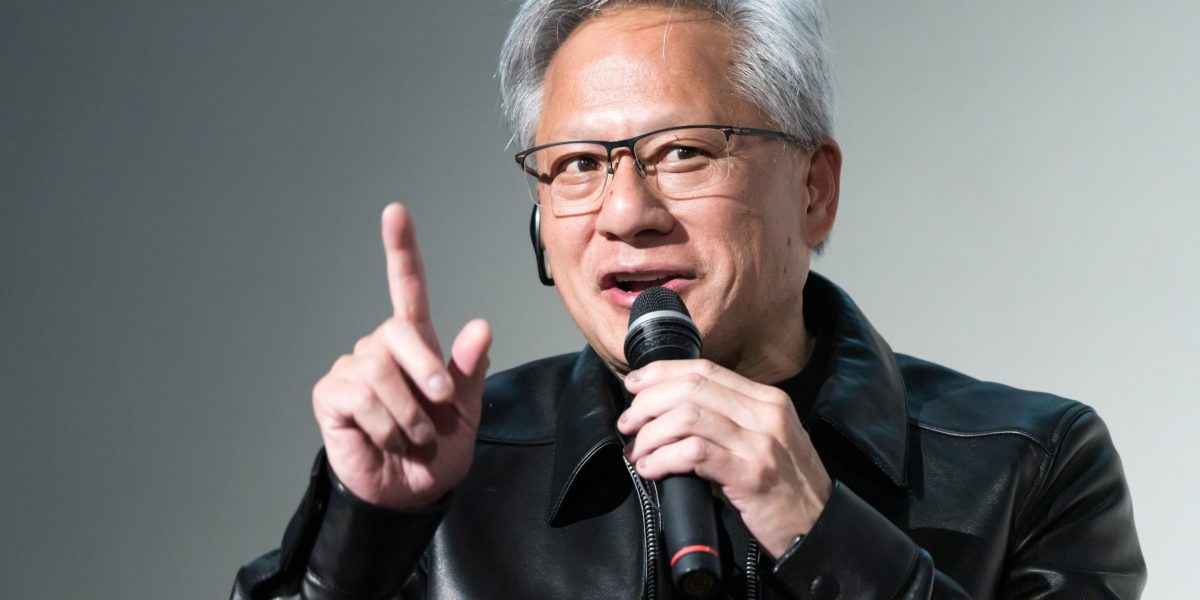
On Friday, Jensen Huang, CEO of Nvidia, took to X for the first time to share an open letter backed by 25 prominent companies, including giants like Microsoft and Palantir. The letter cautions the U.S. government against imposing stringent regulations on technology, reminiscent of concerns surrounding open-source software backlash in the 1980s.
The signatories contend that open-weight AI models are essential for maintaining American leadership in the tech field. Huang expressed genuine concern over potential setbacks, emphasizing the importance of both closed and open models. He stated, “Open models bolster safety, enhance cybersecurity, propel innovation, and support national sovereignty.”
Huang drew a compelling analogy between the current discussions about open-weight AI and the historical evolution of open-source software, which eventually became critical to the internet's infrastructure despite initial doubts. He urged that open AI models should thrive without facing “premature restrictions.”
The letter boasts signatures from key industry players such as Meta, Hugging Face, Andreessen Horowitz, Perplexity, and IBM, and presents three main arguments. First, open models democratize economic opportunities for startups and academic institutions. Second, they foster competition by preventing monopolization of technology. Finally, they enhance security by allowing a broader pool of researchers to examine code and remedy vulnerabilities, as opposed to relying on a few closed systems that may represent significant risk.
Additionally, the letter defends the practice of distillation, which involves training one model using the outputs from another, arguing that it is a valid research method distinct from intellectual theft, despite ongoing debates on the subject.
According to the letter, "Software from the open-source community powers the majority of the internet" and serves as the backbone for operations among major technology firms, the U.S. military, and federal agencies involved in vital tasks like scientific inquiry and cybersecurity. It states that open-source initiatives did more than reduce software costs; they established a shared pool of knowledge that has enabled generations of American engineers and entrepreneurs to assert their independence.
This message comes amid discussions in Washington regarding restrictions on Chinese open-weight models, particularly Moonshot AI’s Kimi K3, released on July 16 and recognized as one of the most advanced models globally. White House advisor Michael Kratsios has accused Moonshot of utilizing distillation techniques to replicate a U.S. model for Kimi K3, intensifying debates around the distillation process.
Just prior to Huang's post, Chinese President Xi Jinping made a significant appearance at the World AI Conference in Shanghai on July 17, where he positioned China as a proponent of openness. He called for global cooperation over unilateral control while urging nations to resist overreaching national security measures in AI — a comment perceived by analysts as a critique of U.S. export policies. Xi also highlighted a "people-centered" strategy while extending offers such as 5,000 AI training slots to developing nations in Africa, Latin America, Asia, and BRICS countries to prevent disparities in AI access.
Moreover, a day before Xi's address, 29 countries, including Russia, Pakistan, and Brazil, signed an agreement in Shanghai to establish the World Artificial Intelligence Cooperation Organization (WAICO). This body is designed to counter U.S.-led AI governance and was attended by UN Secretary-General António Guterres, sparking debates on whether the tech landscape is dividing into competing factions.
This sequence of events presents a challenge for the U.S. coalition as Xi occupies the same rhetorical space of "pro-openness, anti-restriction" that Huang's letter seeks to claim for American interests, albeit from a rival perspective. Huang's previous commendations of Chinese models — stating that "China will win the AI race" and labeling their open models as "excellent" — positions him closer to Beijing’s narrative than the more aggressive stance adopted by other tech leaders such as OpenAI and Anthropic, both of whom are noticeably absent from the open-weights letter and have cautioned Washington about the implications of powerful Chinese open models.
For this report, Fortune utilized generative AI for research purposes, and an editor subsequently validated the information prior to publication.


