Open source software plays a pivotal role in the global economy, forming the backbone of various sectors such as cloud computing, financial services, manufacturing, telecommunications, government, and internet services. By making technology both accessible and transparent, it enables communities of experts to innovate and collaborate effectively.
Among the significant beneficiaries of open source initiatives is cybersecurity. The Open Secure AI Alliance aims to build on the work of the Linux Foundation’s Akrites initiative and the OpenSSF community to address vulnerabilities through the use of open technologies. This collective effort emphasizes the crucial decision facing the United States and its allies regarding AI security; they must choose between relying on exclusive, opaque systems or fostering open models, tools, and frameworks that empower defenders to scrutinize, tailor, and implement solutions.
Both closed and open models have their merits, yet the importance of open structures in cybersecurity cannot be overstated. Open models democratize defense capabilities, enhance transparency, and allow for local adaptations while minimizing risks associated with centralized points of failure. This approach provides a distributed, community-powered defense mechanism that ensures resilience.
However, open systems can be vulnerable to misuse, including attempts to modify them for malicious purposes. Yet, these risks are not exclusive to open models; similar concerns exist with closed systems, making it imperative to manage these threats regardless of how AI technologies are deployed.
The recent security breach involving Hugging Face underscored the necessity for advanced systems that allow for seamless self-defense among cyber defenders. The closed AI tools at the time hindered critical forensic analysis, forcing Hugging Face to utilize their open-weight GLM 5.2 model for analyzing over 17,000 actions to mitigate the intrusion.
This situation highlighted a vital point: when defenders lack the ability to inspect, modify, and deploy advanced AI independently, their response capabilities are severely limited when speed is of the essence. There is a pressing need for open defensive tools to secure critical infrastructure within a diverse vendor landscape, effectively eliminating single points of failure.
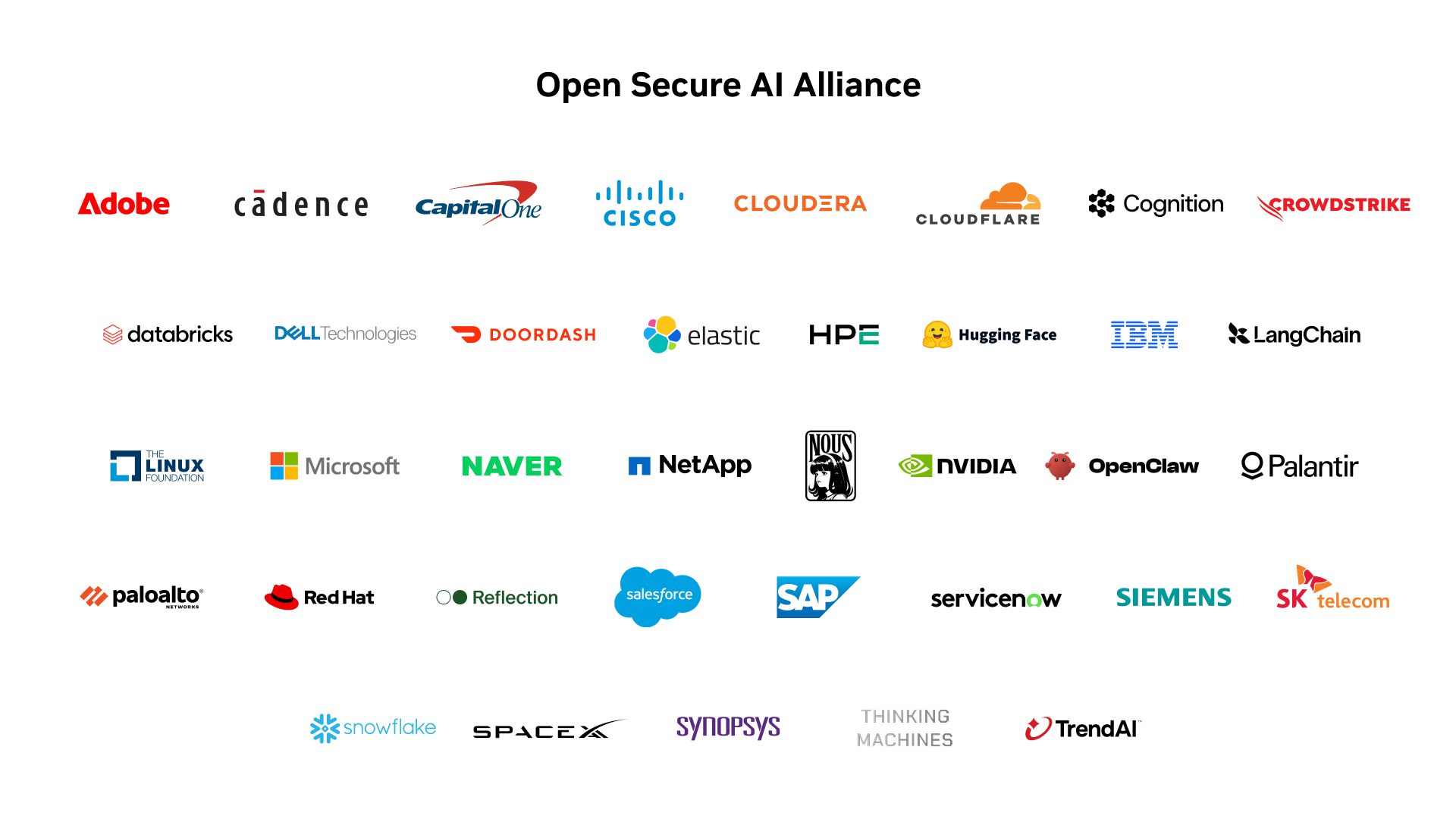
The mission of the Open Secure AI Alliance is clear: to provide defenders everywhere with reliable and controllable open tools. This initiative features notable leaders from areas including cloud computing, cybersecurity, enterprise software, open-source organizations, and AI research. Partners such as NVIDIA, Adobe, Cisco, IBM, Microsoft, and the Linux Foundation are all part of this collaborative effort to promote and develop technologies aimed at fortifying cybersecurity in the AI landscape.
While it is true that open models carry certain risks of being exploited for attacks or tampering, these concerns also exist within closed systems. The solution is not to restrict access to potent open systems for defenders but rather to ensure that openness is coupled with robust safeguards, well-defined guidelines against misuse, and thorough evaluation processes. In the field of cybersecurity, a safer approach involves expanding access to tools that allow more defenders to vet, validate, and reinforce the systems critical to societal function.
Defenders require both advanced open and closed models to ensure they can select the most effective solutions for their needs, all while maintaining transparency, adaptability, and control in security matters.
In the sphere of AI, a true agent extends beyond just being a language model; it is an intricate system comprising models, harnesses, and safety measures. The full stack of an AI agent must include not just the model weights but also identity, permissions, harnesses, guardrails, logs, and evaluation frameworks. Open resources simplify the inspection, testing, and enhancement processes for countless defenders.
NVIDIA is actively participating in the Open Secure AI Alliance by offering open models, weights, data, and research regarding agent harnesses to expedite the development of innovative cybersecurity solutions. Their new initiative, the NVIDIA Labs Object-Oriented Agent (NOOA), is now accessible on GitHub, aimed at enhancing the AI safety infrastructure for agent harnesses.
Partnerships within the Alliance are focused on building an open defense stack for agents, encompassing everything from identity management to secure coding methodologies. HPE is also contributing by developing standards for zero-trust identity frameworks that cryptographically validate AI agents, ensuring security in communications among authorized workloads.
Hugging Face is innovating with Safetensors, a secure format for AI model weights that guarantees transparency and prevents unauthorized execution, extending this option to the PyTorch Foundation. Meanwhile, IBM and Red Hat’s Lightwell aims to enhance security beyond the open-source supply chain with digitally signed patches, and Microsoft’s MDASH facilitates the scanning of multi-model agents to identify vulnerabilities.
As regulators and policymakers navigate the complexities surrounding AI security, it’s crucial to view open resources as vital defensive assets rather than potential risks. Imposing overarching restrictions on open frontier AI systems could inadvertently weaken overall defenses and centralize power and susceptibility to a few closed providers.
Investment in shared open infrastructure for AI defense—spanning datasets, assessment frameworks, and tools for red-teaming—should mirror the prior generations' support for open source software development.
Envisioning a future where AI agents enhance resilience and collective security is possible. With thoughtful choices, open secure AI systems can equip defenders with essential tools, promote healthy competition, reinforce technological advancement, and ensure that the safety and security of these remarkable innovations are openly available to all.
The journey toward this robust future cannot rely solely on secrecy as a safety measure. Rather, it necessitates the creation of systems capable of withstanding scrutiny, adaptable to improvements, and open enough to engage the entire community of defenders.
This future is worth striving for, and the Open Secure AI Alliance invites governments, businesses, and researchers to join efforts in collaboratively safeguarding the AI era. For more details or to express interest in becoming part of the Open Secure AI Alliance, further engagement opportunities are available.