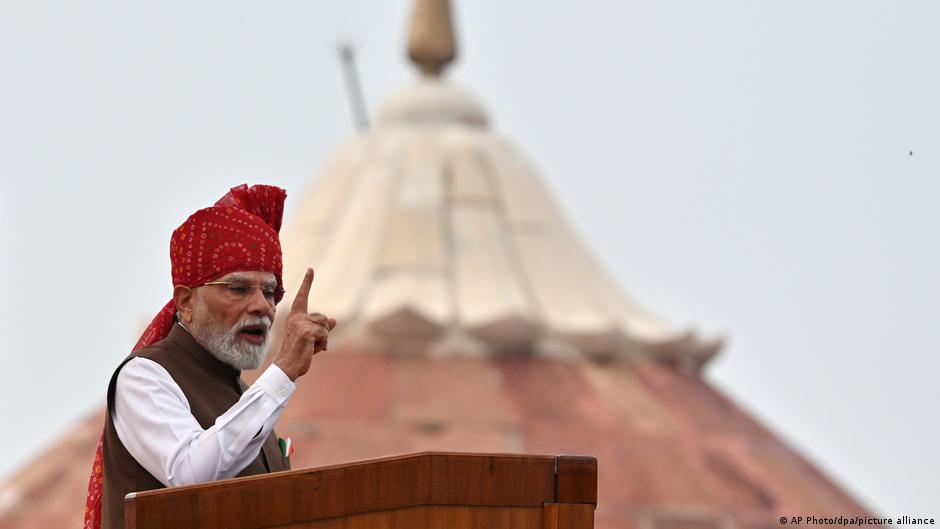
On India’s Independence Day, Prime Minister Narendra Modi delivered a significant speech announcing a new initiative aimed at providing free online coaching for competitive exams, alongside training in artificial intelligence (AI) for 10 million young people. This announcement comes just weeks after widespread protests led by the youth against alleged irregularities in recruitment processes and exam paper leaks.
While addressing the nation from the iconic Red Fort in New Delhi, Modi emphasized the financial relief this coaching program would offer to lower and middle-class families grappling with the high costs associated with traditional coaching classes. “The competition surrounding coaching has become a significant financial strain,” he remarked, noting that students could prepare for their exams from home, allowing them to stay connected with their families during this critical period.
The backdrop to Modi's announcement includes recent upheaval in the education sector, where protests initiated by the Cockroach Janta Party (CJP) highlighted deep-seated frustrations over access to educational opportunities. Those protests culminated in the resignation of Education Minister Dharmendra Pradhan, thereby exposing alarming issues that many youth face regarding education and employment prospects.
In addition to the coaching initiative, Modi declared that the government plans to train 10 million youths in AI technologies over the upcoming year, a strategic move designed to address pressing concerns from the younger demographic—one that has posed significant challenges for Modi's administration since it assumed power in 2014.
The Prime Minister also discussed ambitious infrastructural plans, including the establishment of eight semiconductor chip manufacturing plants and the construction of five nuclear reactors expected to generate 100 gigawatts of power by the year 2047. With an expansive speech that exceeded an hour, Modi presented a seven-point strategy aimed at transitioning India into a developed nation within two decades, focusing on growth in manufacturing, agriculture, technology, defense, tourism, and handicrafts.
Furthermore, Modi made remarks regarding a new adversary he dubbed “intellectual Naxals,” linking this term to individuals the government views as threats due to their opposition to national policies. The reference alludes to the historical Naxal insurgency, which has plagued India for decades. Modi claimed that while his administration successfully countered the armed conflict, the ideological resistance represented by these “intellectual Naxals” continues to threaten societal stability. He called for the identification and marginalization of these individuals to better integrate the youth into mainstream society, although he refrained from detailing who he classified under this label.
The Prime Minister's speech fits within a broader narrative pushed by his Bharatiya Janata Party (BJP), which has historically labeled various critics—including activists, academics, journalists, and political opponents—as “urban Naxals,” often stifling dissent under the guise of national security.