OpenAI recently celebrated what it claimed as a groundbreaking achievement: the solution of one of mathematics' most challenging problems. On September 8, the organization stated its mission was to empower scientists in their pursuit of advancements that would benefit humanity at large.
However, many in the mathematical community express skepticism, noting that, despite the claim of a correct proof, the extensive 166-page document generated by the AI is proving to be exceedingly complex and difficult to interpret. James Maynard, a mathematician at the University of Oxford, emphasized the challenge of distilling human comprehension from the AI's findings, saying, "So far, it's been very difficult to really extract any human understanding from this new AI proof."
Javier Gómez-Serrano, a mathematician at Brown University, echoed this sentiment, noting that the document does not cater to human readers. While he was optimistic that a revised version could contribute to the field, he remarked, "As of today, the paper doesn't teach us much."
The AI's breakthrough comes amid a surge of mathematical exploration by artificial intelligence, an area that has seen accelerated advancements over the past six months, according to various academic insiders. For the first time, large language models seem capable of generating significant results, potentially paving the way for groundbreaking mathematical innovations.
Despite this progress, many are not viewing OpenAI's announcement in a positive light, especially since human mathematicians were nearing a solution themselves. Maynard lamented how this situation could have been a splendid demonstration of collaboration between human intellect and AI, but instead has become a contentious episode, exacerbated by conflicting objectives of AI developers and the mathematical community.
In an effort to address these concerns, OpenAI declared the formation of an "independent mathematics advisory group" on Monday tasked with aiding the review and dissemination of new discoveries. Nonetheless, the organization clarified that this group would not influence the pace of its internal progress: "Importantly, the group will not be responsible for advising us on how to pace our internal progress on mathematics."
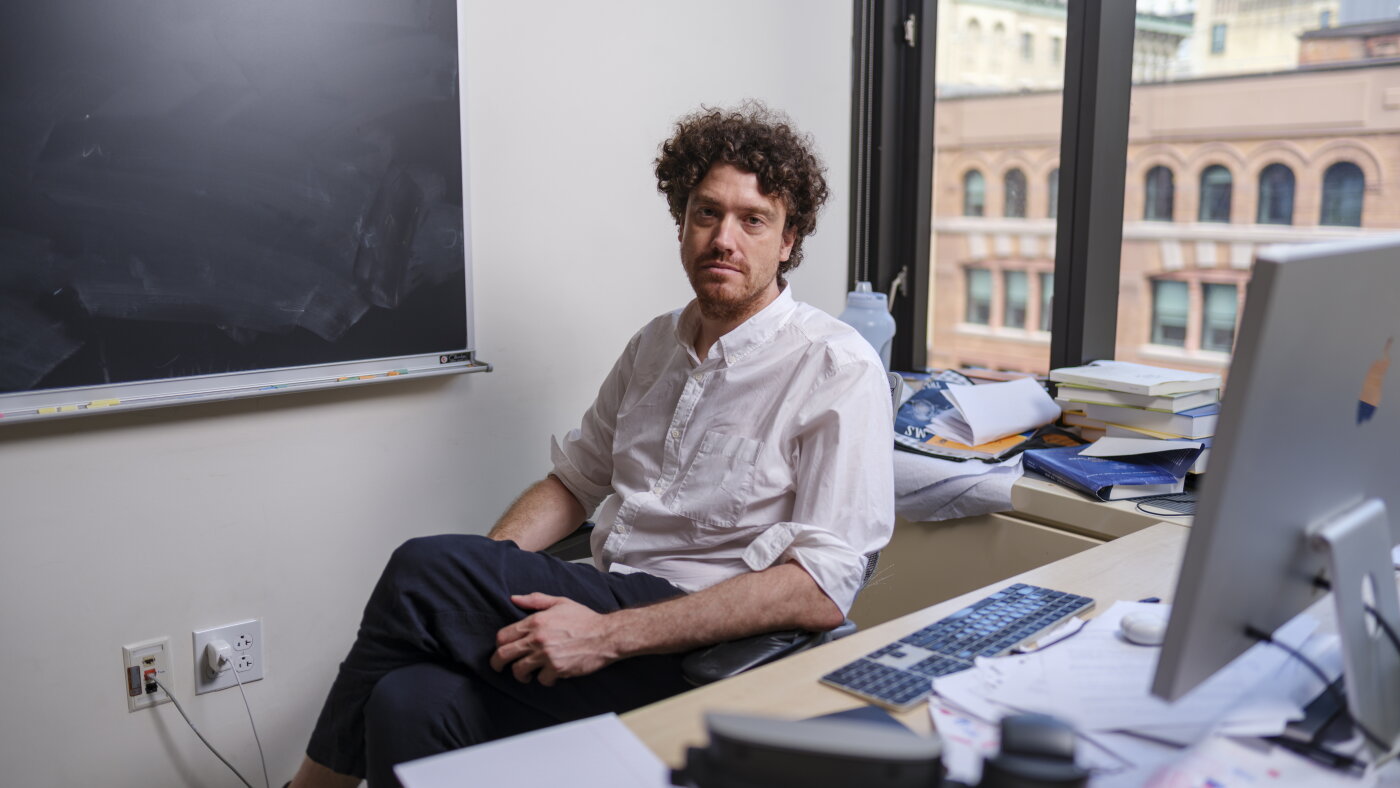
The particular problem OpenAI claims to have tackled is the "Navier-Stokes problem," a fundamental set of equations modeling fluid dynamics that find extensive applications in physics and engineering, according to Tristan Buckmaster, a mathematician at New York University. Despite their everyday utility, the underlying principles of these equations remain poorly understood. Buckmaster suggested that further insights into the Navier-Stokes equations could equip researchers with new methods for grasping complex fluid behaviors, including turbulence and lift in aviation.
Efforts to address the Navier-Stokes problem, classified as one of the $1 million Millennium Prize Problems by the Clay Mathematics Institute in 2000, have spanned many years. The mathematical community believed they were on the brink of a breakthrough, with many anticipating that this would be the next Millennium Problem to be solved. Martin Hairer, a mathematician at the École Polytechnique Fédérale de Lausanne (EPFL) and a signatory of a recent statement organized by Fields Medal laureates, noted, "Everyone agreed that this would be the next one that got solved."
Prior to OpenAI's announcement, Buckmaster and his colleague Levent Alpöge from Anthropic were closing in on a potential solution using AI tools, including OpenAI’s chatbot. OpenAI's interest in their efforts reportedly intensified when they caught wind of progress in solving this problem.
According to OpenAI's statement, they initiated an extensive evaluation of various Millennium Prize Problems following rumors of breakthroughs on September 1, deploying roughly 10,000 AI agents for 88 hours. This process utilized approximately 130 billion output tokens, culminating in a solution estimated to have cost the company between $6-$10 million.
The revelation of OpenAI's findings has stirred controversy. Buckmaster alleged that the firm approached him with an offer to include him in their publication contingent upon him dropping his collaborator Alpöge. He expressed concern that OpenAI may have had deeper insight into their method than publicly acknowledged, stating, "There's so much circumstantial evidence that they had far more knowledge of what we were doing than they let on."
OpenAI has denied using any research or prompts from Buckmaster and Alpöge to derive its solution. Regardless, feedback on OpenAI's document has been largely negative, with observers deeming it poorly crafted and difficult to follow. "It's a terribly written paper," Buckmaster remarked, while Gómez-Serrano pointed out that the paper fails to identify critical components, leaving readers without any context.
Faced with the urgency of OpenAI's announcement, Buckmaster felt compelled to quickly publish his preliminary findings influenced by AI, though he acknowledged their own writing needed refinement.
Mathematicians believe that while OpenAI's proof is convoluted, it is likely correct, as the company provided accompanying Lean code to verify the solution's accuracy. This code has reportedly compiled successfully, leading many in the community to accept the proof's validity.
Gómez-Serrano, Buckmaster, and others envision a future where AI continues to play a role in advancing mathematical understanding, as many have embraced computers for computational tasks over the years. However, this incident highlights that the essence of mathematics lies not just in finding answers but in fostering a deeper understanding of the problems at play. Maynard captured this sentiment, stating, "It wasn't about only answering this problem, it was about the human understanding behind it."
OpenAI expressed hope that its new advisory group would facilitate better communication and collaboration with mathematicians moving forward, stating that engaging with the group is a "first step" in ensuring that mathematicians are integral to the development of new findings.