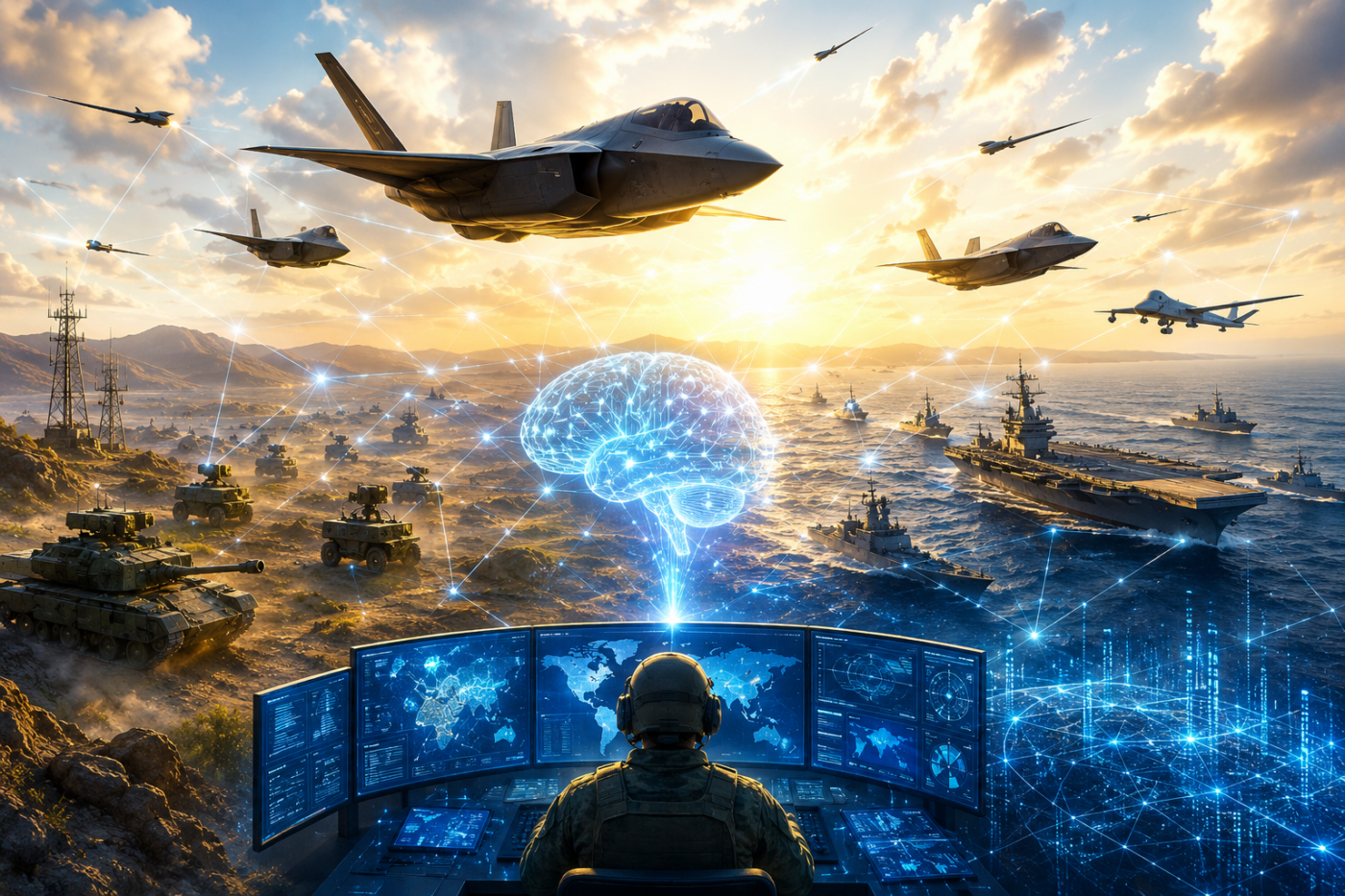
As we consider the future of conflict post-2030, three critical insights emerge about how the United States will navigate warfare:
First, military operations are expected to be dominated by artificial intelligence, particularly during the initial and most strategic encounters. Any military that insists on maintaining human oversight will likely find itself at a disadvantage. Surprisingly, if this is indeed the trajectory, professionals within military circles will need to cultivate a thorough understanding of warfare at all levels.
For the aforementioned scenario to materialize, AI systems must evolve from their current narrow capabilities into what is known as artificial general intelligence (AGI). Users of Smart Maven can attest to its remarkable functionalities; it integrates vast amounts of data to enhance targeting efficiency by five times. With the incorporation of Anthropic’s Claude language model, efficiency improved tenfold, allowing the execution of over 13,000 strikes in Iran within just 38 days.
Similar AI-driven platforms are already at play in different regions. Israel’s Gospel and Lavender systems are designed to target terrorist networks and infrastructure. Reports suggest that during the early stages of the Gaza conflict, Lavender could identify targets so quickly that commanders were left with just 20 seconds to decide on engagement. Ukraine, on its part, is also striving to leverage AI tools extensively in its ongoing battle against Russia, advancing a new form of warfare.
Despite the prowess of these existing technologies, they may soon seem dated if frontier labs—such as Anthropic, OpenAI, Google DeepMind, and potentially xAI—release AGI models capable of outperforming humans in every cognitive domain. Such models will possess the ability to recursively enhance their own performance independent of human input. Currently, updates from these labs emerge every few months, with Anthropic’s systems already handling a substantial portion of their coding autonomously.
The introduction of a recursive AGI model could drastically accelerate development cycles from months to mere days or even hours, and might continue to advance irrespective of available computational power, given its potential to revolutionize the economy and manufacturing processes. Recursive AGI may only be a stepping stone toward superintelligence—machines that exceed human capability across all aspects. The implications and dynamics of superintelligent systems are currently beyond full comprehension. However, if these systems remain aligned with human objectives, the operational distinction between AGI and superintelligence during conflicts may be negligible.
So, how much time until we reach AGI? Google DeepMind’s CEO, Demis Hassabis, forecasts its arrival by 2029 or 2030, suggesting a transformative impact on par with the Industrial Revolution. OpenAI’s Sam Altman also anticipates arrival before the end of the decade, while Elon Musk and Dario Amodei posit that AGI might emerge as soon as 2026 or early 2027. Recently, 200 top economists—including 16 Nobel laureates—have urged governments to prepare for an AI-driven economic upheaval. Even under the most conservative estimates, AGI’s emergence appears imminent—within the Department of Defense’s upcoming five-year budget cycle, prompting urgent readiness for substantial change.
Critics argue that such optimistic timelines overlook the complexities and challenges related to AI’s functioning in real-world contexts. However, similar skepticism arose when early predictions regarding AGI surfaced, yet timelines have proven eerily precise. The U.S. industrial sector, adept at wartime production, is already capable of manufacturing millions of drones, emphasizing that a lack of AGI will not hinder production capabilities. For example, Ukraine, despite its war-torn economy, produces around eight million drones annually and aims to double that output within a year.
Although it is conceivable that AI may never achieve AGI, or that its development could be delayed, such uncertainties hold little weight for strategists planning future warfare. War remains fundamentally about attrition—particularly when AI takes the wheel, as it’s not susceptible to shifts in morale or confidence. The U.S. military excels in generating domain-specific intelligence to enhance AI efficacy, and the extensive data ecosystem created through simulations is perfectly aligned for training warfare-specific AI systems. Therefore, while AGI’s timeline is uncertain, a closely-aligned warfighting AI is likely to emerge far sooner than expected.
What might an AGI-enabled conflict look like? As analysts delve into topics surrounding Ukraine, Iran, and the Drone Revolution, many underestimate the profound shift AGI will introduce. For instance, DARPA previously noted one individual could effectively manage 110 drones, but reports now suggest that a single soldier in China may command 200. Futurists speculate about the potential for swarm technology evolution, but they risk framing future combat scenarios through the lens of past warfare, ignoring the possibility of a significant leap in capabilities.
Forecasts often presume gradual advancements in AI, providing humans time to adapt. However, the advent of AGI will mark a seismic shift across all human fields. Currently, only Scale’s paper, "The Agentic Revolution in War," approaches the magnitude of this transformation. Yet even that perspective remains constrained within a framework where AI acts as an agent but operates under limited human oversight. The assertion is that human involvement will diminish, requiring them to set objectives, establish pre-determined boundaries, and intervene only as necessary, albeit at the expense of speed. In an AGI-dominated military scenario, the side that slows operational tempo to facilitate human intervention risks catastrophic failure.
In an AGI-directed conflict, time is of the essence. Historical examples of false alarms leading to near-nuclear confrontations necessitate that the decision to initiate warfare remains human-driven. Nevertheless, military systems must be primed to defend autonomously should adversaries initiate hostilities, or else critical early engagements may slip away during a human decision-making delay.
While this may sound like fiction, it merely scratches the surface of AGI capabilities in warfare. Military analysts have historically dismissed cautionary predictions, such as those articulated by Jan Bloch in the early 1900s, which forecasted unprecedented scale and fatalities in future conflicts. His analysis was once regarded as outlandish, akin to modern skepticism about AGI-driven warfare.
Once hostilities commence, AGI-managed entities will relentlessly pursue strategic objectives, closely aligning with overarching war plans. In moments of conflict, AI bots will engage in active defense of data systems while launching broad offensives against enemy infrastructure. These agents will identify vulnerabilities within adversary systems, mitigate compromised nodes, and manage critical data flows. An analogous battle will unfold in space, with autonomous assets protecting themselves, targeting opposition, and adapting to support commanders' objectives. Millions of interconnected agents will operate at a speed beyond human comprehension.
Simultaneously, an extensive array of cost-effective drones will infiltrate and engage within the operational theater. Envision swarms of thousands of drones deployed across air, land, and sea. Some will be sacrificed—contributing valuable intelligence regarding their destroyers and countermeasures—while others remain behind for reconnaissance, identifying fleeting opportunities for subsequent swarms.
While the initial wave of drones may suffer significant losses, the next wave—integrated assault swarms—will be deployed with acute precision, focusing on high-value targets. Additional swarms will disrupt enemy surveillance, shield the assault forces, appraise battle damage, and orchestrate immediate follow-up strikes. These operational dynamics depict a colossal conflict characterized by a confluence of major engagements across diverse domains, with reconnaissance swarms ensuring continuous strategic updates. The U.S. military cannot rely solely on presenting adversaries with singular threats; AGI systems will also orchestrate conventional warfare, integrating missiles and air force capabilities alongside drone swarms, thereby reshaping tactical considerations at an unprecedented pace.
No single human can manage the complexities of such warfare. Instead, command and control will depend on AI agents acting on the commander’s directives, dispersed throughout battlefronts. Some agents will operate remotely from the battlefield, while others will travel with swarm units to ensure continuity in communications. Each swarm will contain command and control agents coordinating with one another, relaying updates to higher-level tactical and operational command entities, all adhering to the commander’s intent and operational guidelines.
Consider a scenario where a 10,000-drone swarm is tasked with ten targets but loses 1,000 drones during an initial engagement. Tactical commanders can reassign remaining drones for efficient use. If a swarm faces catastrophic losses, higher command officials can reposition drones from elsewhere. If circumstances in a specific region deteriorate, operational commanders may prioritize resources toward more fruitful engagements. This agility aligns with the strategic aims of the operation.
Additionally, the recursive nature of AGI in warfare means that systems will continuously analyze outcomes, iterating through countless strategies while refining themselves for future engagements. By the end of Initial encounters, they may possess capabilities vastly superior to their original design, relying on their ability to outpace enemy systems.
Some may assert the necessity of human involvement in pivotal combat decisions, especially concerning lethal actions. This perspective is both understandable and impractical; AGI introduces a "battlefield singularity," where the pace of conflict surpasses human decision-making abilities. The traditional OODA (Observe, Orient, Decide, Act) loop collapses as integrated systems process and respond to vast streams of sensor data in microseconds, necessitating superhuman speed in decision-making during critical engagements.
Are humans still indispensable? The answer is affirmative. The initial AGI-driven conflict will essentially be a coordinated assault—the winner will emerge through decisive and relentless attacks. However, the defeated side may decline to concede, resulting in significant attrition that could deplete both sides of their robotic and missile resources before final outcomes are determined. This situation underlines the historical lesson highlighted by T.R. Fehrenbach: military control of territory requires a ground presence, echoing the age-old strategy of direct engagement.
Moreover, AGI systems could falter when faced with scenarios outside their training, underscoring the need for a highly skilled and adaptable military force. Such a cohesive and thoroughly trained Joint Force will be far more efficient following an AGI-driven conflict—remaining improved by advanced AI capabilities during traditional wartime operations.
Humans must still play a vital role in steering the AGI-led battle through a clear understanding of commanders' intent—a comprehensive directive that informs every decision made by AI throughout the war. This intent must be meticulously crafted by human teams analyzing myriad potential outcomes during extensive simulations to yield the most effective strategic options.
The evolving military strategy demands continuous adaptation. The resultant war plan must remain dynamic, ensuring updates align with emerging technologies, evolving adversarial capabilities, and innovative AI methodologies. Static military strategies will be a relic of the past, while AI literacy will become essential for future military operations.
The AGI systems will pursue objectives with relentless efficiency and without moral constraints. Past military strategies did not require exhaustive moral considerations since human commanders were expected to exercise ethical judgment. However, should AGI systems incorporate ethical frameworks, these directives must be integral to the initial planning. Teaching AI systems appropriate parameters is just as critical as conveying operational commands, highlighting the importance of ensuring enemy systems are similarly governed.