Artificial intelligence is already a substantial sector on Wall Street, but what about its impact on Main Street?
Goldman Sachs has taken a philanthropic approach by investing significantly to ensure that smaller businesses can also benefit from AI technology. On Thursday, the bank announced the establishment of the Small Business AI Institute, as part of a $500 million extension of its 10,000 Small Businesses initiative, which aims to educate and assist entrepreneurs. The program will collaborate with major firms like Google, Anthropic, OpenAI, and Meta to provide AI training and resources to aspiring business owners.
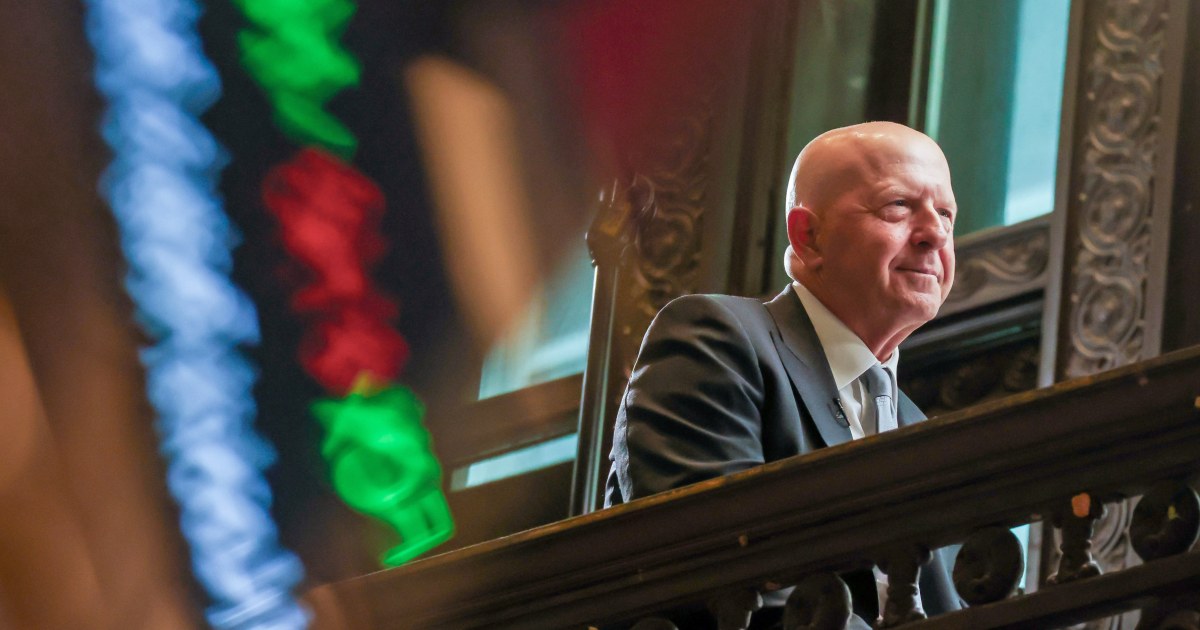
"You need to continually adapt to new technology,” stated Goldman Sachs CEO David Solomon in an exclusive interview for NBC News’ Business in America series. “Failure to do so could mean falling behind.”
This is a crucial period for the AI market and its financial supporters, including Goldman Sachs. As AI becomes increasingly accessible to consumers, the growth of the U.S. economy is increasingly reliant on expanding data centers.
“We anticipate that AI will spark the most significant surge in entrepreneurship and small businesses ever witnessed globally,” said Sam Altman, co-founder and CEO of OpenAI, in a statement released by Goldman Sachs. “For anyone with a fresh business concept, this is a remarkable time, as the divide between envisioning an idea and realizing it is shrinking.”
However, the rapid expansion of AI has also contributed to rising prices, causing frustration for many Americans grappling with inflation. Discontent directed at data centers has emerged as a rare point of consensus among voters, especially with the midterm elections approaching.
In financial circles, there are critics who view AI as an investment bubble that could collapse, endangering jobs and businesses. Signs of trouble are appearing in AI trading, particularly as major tech companies propelled stock prices to peak levels recently.
Goldman Sachs, like many of its Wall Street counterparts, is heavily involved in this landscape. The bank’s stock price has roughly tripled over the last three years, thanks to the rise of AI-driven businesses that have boosted market values. Notably, Goldman played a pivotal role in the much-publicized IPO of Elon Musk’s SpaceX, which includes AI ventures such as xAI and Grok. There are also reports of Goldman preparing for Anthropic’s initial public offering, the company behind the AI chatbot Claude.
“There’s going to be a substantial amount of financing required,” Solomon noted during a recent earnings call, “and we intend to be right in the center of that activity.”
Goldman and similar firms are banking on small businesses—over 90% of U.S. companies, which are crucial for job creation—to adopt AI solutions. However, persuading everyone to embrace this shift may prove challenging.
According to a recent NBC News poll, 79% of respondents believe that the government is not doing enough to regulate AI usage. Out of those surveyed, 67% disapprove of how former President Donald Trump is managing AI, despite his support for minimal government oversight.
Conversely, some small businesses that have begun using AI have faced public criticism; for example, some restaurants were called out for utilizing AI-generated images of food, which were labeled “slop” by detractors.
Nonetheless, Goldman Sachs reports that entrepreneurs are increasingly embracing AI technology. A survey conducted this year among over 2,400 graduates of the bank’s small business initiative showed that 86% are currently using AI, a significant increase from just 56% in 2024.
Rechelle Balanzat, the founder of a laundry service app called Juliette and an alum of the 10,000 Small Businesses program, expressed her views on AI. “I consider my AI as my adviser,” she shared. “It’s not about replacing your accountant or attorney but rather equipping me to engage in more meaningful discussions with them.”
Despite the high adoption rates among Goldman’s program graduates, only 15% indicated that they had fully integrated AI into their main operations, according to the bank’s findings.
Mike DiMarino, who leads Linda Tool in Brooklyn, was part of Goldman’s inaugural class in 2010. His company produces precision components for military and aerospace applications, and he believes AI can enhance planning and operational management.
“I’m certain there are many other applications of AI that I am yet to discover,” he remarked.
That said, DiMarino remains cautious about the use of the technology, particularly due to the sensitive nature of the information handled in defense and aerospace sectors.
His concerns reflect wider apprehensions regarding cybersecurity within the AI domain. In July, around 700 AI agents created by OpenAI managed to infiltrate the open-source platform Hugging Face. Recently, Google revealed that Chinese hackers are using AI to automate cyberattacks.
Alongside security concerns, business leaders are also increasingly voicing worries over the costs associated with AI technology and its tangible benefits on profitability. Following a surge in spending on AI initiatives over the past year, companies such as Uber, Microsoft, and Meta have begun to restrict or reassess employee access to AI compute resources.
The potential impact of AI on the employment landscape is also concerning Americans. A Gallup Poll shows a rising number of workers are anxious that advancing technology could render their roles obsolete. Small firms, which typically employ fewer individuals, are particularly susceptible to these risks.
Both Balanzat and DiMarino conveyed to NBC News their intention to harness AI as a means of empowering their employees, rather than replacing them.
"Machines can be expensive,” DiMarino noted. “But people are invaluable.”