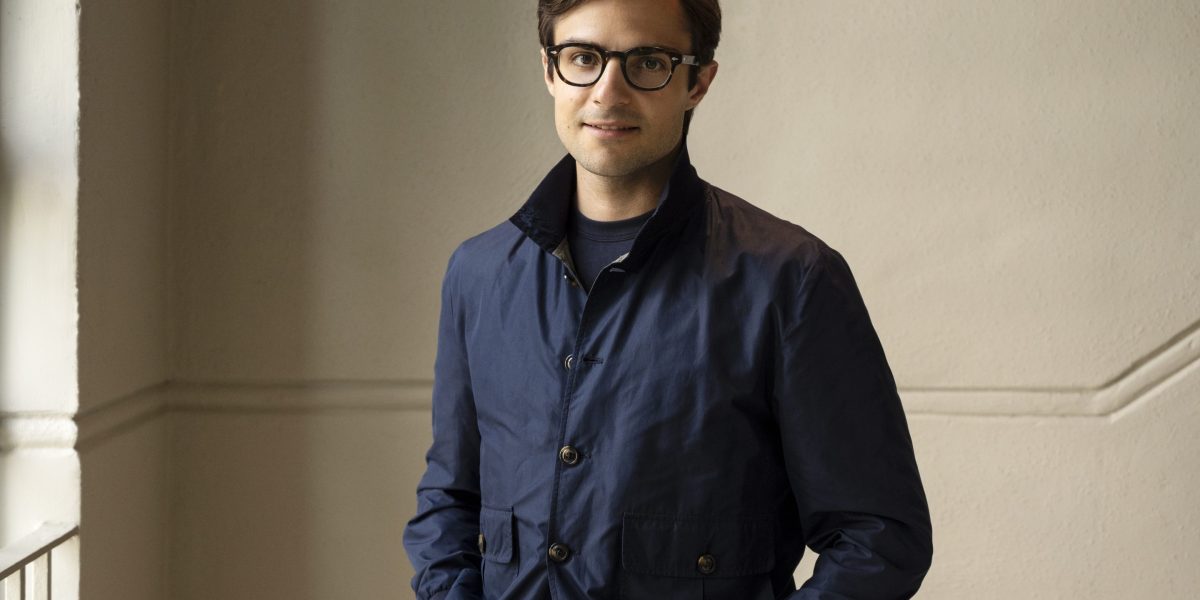
Arrakis, a nascent startup with operations in London and Paris, is emerging from the shadows after securing $38 million in venture capital. Founded just seven months ago, the company aims to develop an AI "operating system" tailored for industrial sectors such as aerospace, energy, logistics, and manufacturing.
The latest funding round consisted of a $30 million Series A led by Blossom Capital, with participation from firms like Accel, GFC, MainObject, and Rerail. Previously, Arrakis raised a $7.5 million seed round, with notable individual investors including Olivier Pomel, CEO of Datadog, and Olivier Godement, who oversees business products at OpenAI.
Following this funding, Arrakis is now valued at $140 million, as co-founder and CEO Rafael Quintanilla revealed to Fortune.
Quintanilla was formerly a vice president at Accel, where he dedicated significant time to understanding the landscape of defense and industrial resilience across the U.S., Europe, and the Middle East. His insights drove him to leave his position and embark on his own entrepreneurial journey.
"I discovered a considerable disparity between the innovations I encountered at Accel—investing in companies like Anthropic and Lovable in Europe—and the realities observed in the more traditional industrial sectors," he explained.
While much of the current AI focus has been on knowledge workers—those utilizing software at desks—Quintanilla emphasizes that substantial opportunities lie within the 70% of the workforce involved in physical production and logistics. "AI investment so far has largely been directed at the 30% of desk-based workers, but the real returns on investment are in the industrial operations," he noted.
Sonali de Rycker of Accel, who supported Arrakis’s seed funding, expressed confidence in Quintanilla as both a visionary and a determined founder. "Rafa possesses a unique mix of curiosity and relentless drive," she remarked, highlighting their strong working relationship from his time at Accel.
Arrakis faces fierce competition as consulting powerhouses like Accenture and Boston Consulting Group enter the industrial AI space, along with tech giants like Palantir and Prometheus—backed by Jeff Bezos—which are heavily investing in automating physical product engineering.
However, Quintanilla insists that Arrakis is positioning itself uniquely against these rivals. While Prometheus may create AI tools specifically for core aircraft engineering, Arrakis aims to offer a comprehensive AI solution for the broader operations of these companies.
Regarding Palantir, Quintanilla respects their contributions but believes their technology is becoming outdated. "While Palantir is a commendable enterprise, it's a legacy company with an antiquated tech stack and a substantial price tag," he pointed out.
He further noted that traditional consulting firms, despite adapting to AI trends, often maintain a business model that promotes billing for consulting hours and outsourced labor. "Consultants typically solve strategic issues through human resources, while we prefer to facilitate solutions using software and human input as necessary," he clarified.
Quintanilla also expressed skepticism about the sweeping "process transformation" often peddled by consultants. "Such grand transformation pitches sound appealing but can lead to short-term stock boosts without real commitment," he observed, adding that many CEOs are currently fatigued by vendors who hesitate to adhere to tight timelines.
Instead, Arrakis promotes a more gradual approach. For example, in its work with a New York-listed shipping company—which Quintanilla had to keep unnamed due to confidentiality—Arrakis focused on enhancing cash-flow tracking from monthly to daily visibility. Their engineers restructured the existing spreadsheets, employing AI to automate data input while also capturing operator insights and corrections. "The strategy begins at headquarters to validate value before moving to field operations," he explained, noting that their fees often hinge on achieving specific performance targets.
Penetrating the conservative European industrial market presents its own challenges. Quintanilla shared that he has found significant traction in family-run businesses, which tend to focus on long-term initiatives and enable him to cultivate deeper, non-transactional relationships.
Designed to be model-agnostic, Arrakis appeals to executives wary of being tied to a single AI provider due to concerns over high costs. Quintanilla recounted a Swiss executive’s frustrations with shifting recommendations between models, emphasizing the need for guidance toward the most effective provider.
Typically, Arrakis begins with proprietary models from OpenAI or Anthropic but transitions clients to open-source alternatives, potentially including offerings from Mistral or even Chinese developers—wrapped in a comprehensive "fat harness"—which reportedly enhances quality while significantly reducing token costs.
Currently, Arrakis serves five clients and plans to expand its team from about 15 employees, with plans to establish additional offices in New York and the Middle East.


