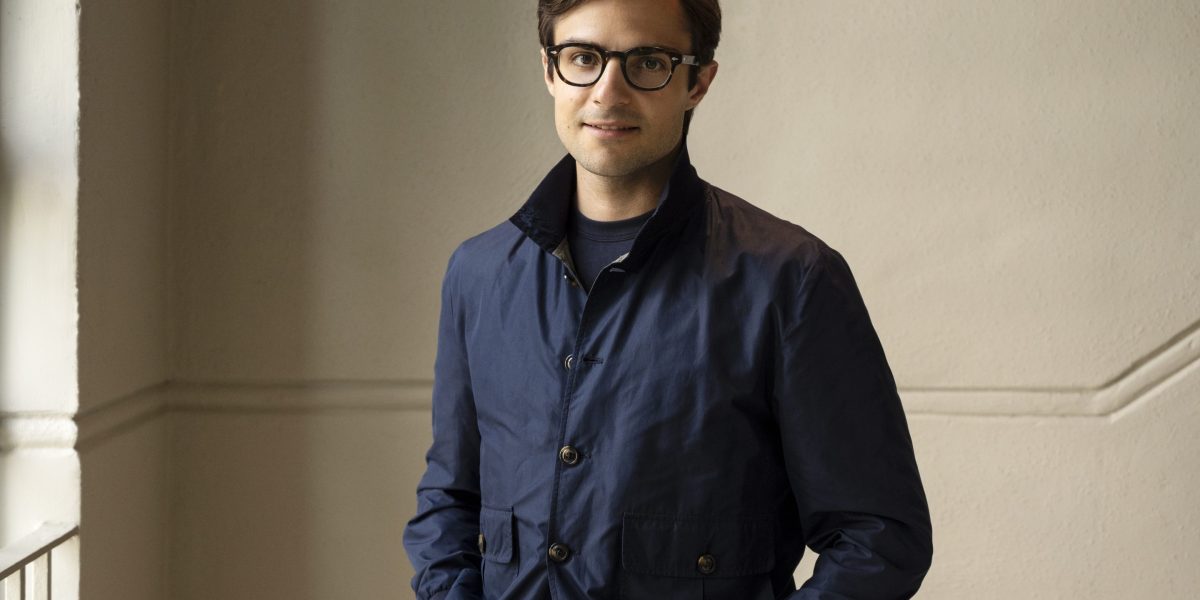
Etched, an AI chip startup established by three Harvard dropouts in 2022, has successfully completed a Series C funding round, securing $300 million and achieving a valuation of $10.3 billion, as reported by co-founder and COO Robert Wachen to TechCrunch.
This funding round, led by Sequoia, included participation from prominent investors such as Andreessen Horowitz, SK Hynix, Jane Street, and Diffusion Capital, along with earlier supporters. Notable backers include influential figures like Peter Thiel, Andrej Karpathy, Dylan Field, and Amjad Masad, among others.
In December, just seven months prior, Etched was valued at $5 billion after raising $500 million, reflecting a remarkable growth trajectory. This valuation marks a record for a Sequoia-led Series C. Last month, the company announced the successful production of its proprietary chips and the initiation of testing its initial complete systems with clients while also reporting $1 billion in booked orders.
When Etched emerged, the concept of creating a chip tailored for AI models based on transformer technology was met with skepticism. The founders continue to tackle misconceptions about their products, which encompass full systems beyond merely chips. Wachen clarifies that their systems can run any AI model, including Mixture of Experts frameworks like DeepSeek and Qwen, as well as non-transformer architectures such as Mamba that utilize a state-space model. The innovative idea of etching components of AI models directly into silicon to enhance performance is now gaining traction, with companies like Google reportedly exploring similar concepts.
Currently, Etched's standout achievement is the creation of two new components designed from the ground up to accelerate inference—the process that occurs once a user submits a prompt. Wachen describes inference as occurring in two stages: "prefill" and "decode." The prefill stage involves comprehending the prompt and its context, requiring significant computational resources, while the decode phase generates the response tokens, which is less intensive but demands substantial memory capacity.
To enhance prefill performance, Etched has developed a chip that operates "dramatically" quicker, facilitated by its ability to run at a much lower voltage than existing AI chips—what they refer to as low-voltage inference. This voltage reduction helps minimize heat output, allowing for increased transistor density.
For the decode phase, the startup has introduced a novel memory type and interconnect technology termed cluster-scale memory, which enables multiple chips to connect and utilize a shared memory pool with minimal latency. This innovation promises both high-speed capabilities and reduced costs.
The founders of Etched—Wachen, CEO Gavin Uberti, and Chris Zhu—have faced considerable skepticism due to the lack of widespread access to their systems. Access has primarily been limited to early customers and investors, a strategy that helped attract notable investors by showcasing private demos in their office.
Wachen notes that some of the most enthusiastic backers, including Andrej Karpathy from Anthropic and Geoffrey Hinton, have personally tested the hardware. However, the journey to mass production remains challenging. The three founders, who left Harvard, initially had no experience in fundraising or hiring talent.
Reflecting on their early days in the Bay Area after leaving school, Wachen recalls sleeping on a friend's floor without a proper bed. The team first set up their servers in the garage of an early employee. As they grew, so too did their facilities, now operating with a workforce of 400 and managing a 2 megawatt data center. Recently, they inaugurated an 80,000-square-foot facility with a 10 megawatt capacity in Milpitas, close to their primary location in San Jose.
Today, Wachen and his team collaborate with some of the largest players in the AI sector while reflecting on their journey. "It’s come a long way," he remarks. "When you genuinely believe something is achievable and remain committed to it over time, you can make it happen."