The European Union has announced a significant investment of 10 billion euros (approximately $11.4 billion) to facilitate the construction of seven AI gigafactories, a move designed to enhance its competitive edge in artificial intelligence against major players like the U.S. and China. This initiative was revealed by the EU's executive branch on Thursday.
The European Commission is optimistic that this public funding will catalyze an additional 20 billion euros (about $22.8 billion) in private investments. "Gaining access to massive computing power through AI gigafactories is essential for Europe's strategic interests as advancements in AI technology pick up pace," stated Henna Virkkunen, the executive vice president of the Commission responsible for technological sovereignty.
Concerns have been rising within Brussels regarding dependency on foreign technology, which leaders believe poses potential risks of being "weaponized" against Europe. Previous complaints from U.S. President Donald Trump regarding the EU's tech policies have compounded these worries, alongside China's restrictions on vital minerals necessary for the tech industry.
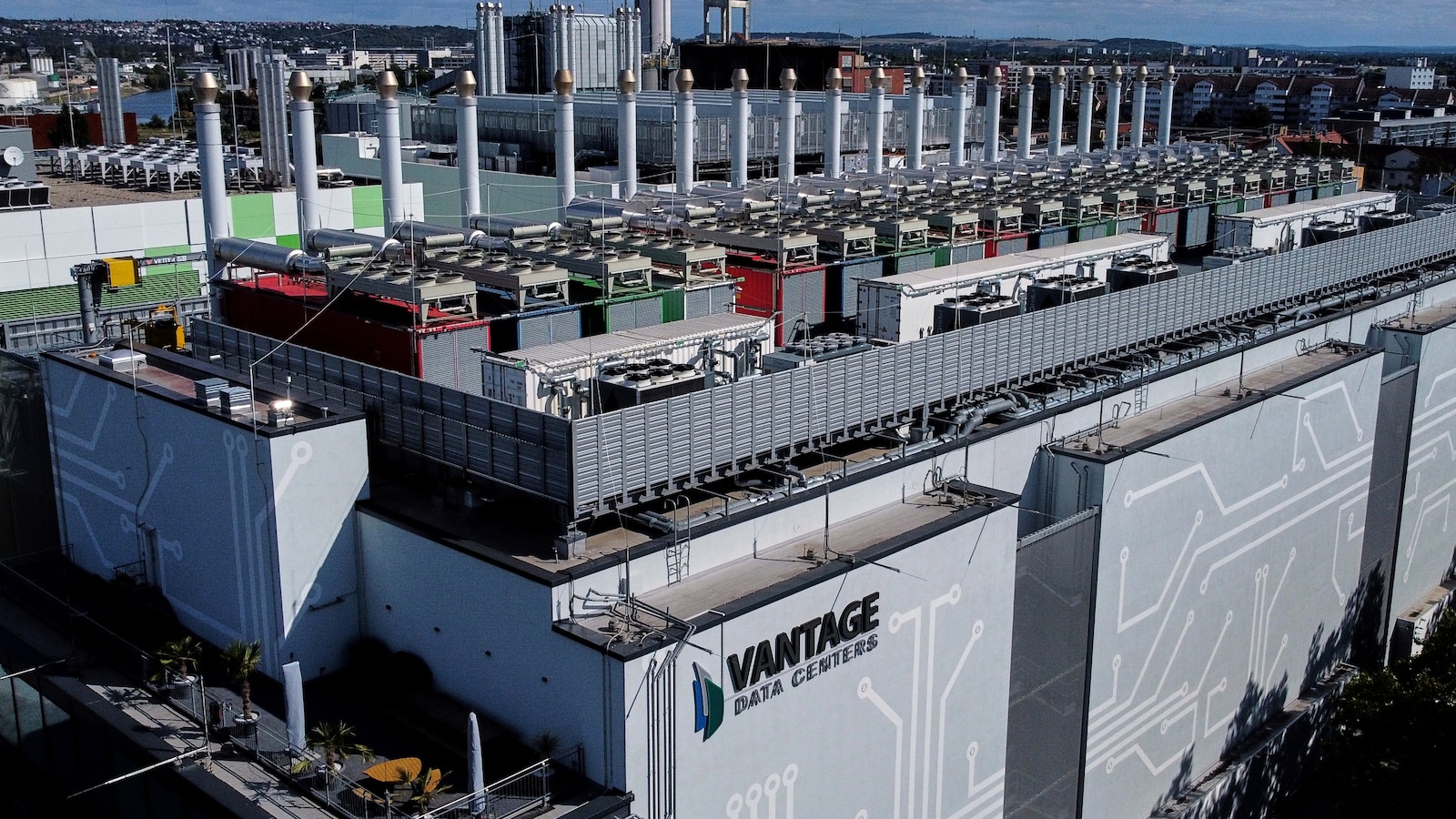
Companies are now eligible to apply for contracts to develop gigafactories, each expected to produce a minimum of 100,000 state-of-the-art AI chips—each factory projected to offer around four times the processing power of the existing data centers currently operating within the EU.
The introduction of these seven gigafactories is anticipated to more than double the EU's current computing capabilities, which are supported by 19 AI data centers located from Finland to Spain.
Currently, Europe trails behind both the U.S. and China in key areas crucial for AI development, as highlighted in a 2025 analysis by the U.S. Federal Reserve. China boasts an extensive electrical capacity for its data centers, while a major share of private investment in AI is concentrated in the U.S.
Additionally, Europe is not a major manufacturer of many components essential for data centers, and energy costs within the EU can be significantly higher—sometimes double or triple—that of prices in the U.S. and China, according to a report presented to the European Parliament last June.
The report warns that European businesses and public entities are likely to remain dependent on U.S. AI providers, which disadvantages local service providers striving to innovate. It noted that all five of the leading cloud service providers in the EU are American, stressing that such dependency on major global companies, especially for critical applications, poses risks pertaining to data access by third countries and threatens operational autonomy.
Notably, French company Mistral operates the largest AI data center in the EU, located in Paris. Although Mistral, known for its Le Chat chatbot, has achieved some success, it has not kept pace with American giants like OpenAI or Chinese competitors like DeepSeek.
Political leaders, including French President Emmanuel Macron, have expressed concerns regarding Europe's need for indigenous AI enterprises. Alongside these economic worries, there are prevailing fears about how emerging AI technologies could disrupt industries and impact privacy.
The European Commission has assured that AI products generated using this expanding network of data centers will comply with EU standards for data protection, safety, security, and ethics, referencing key regulations such as the Digital Services Act and the Digital Market Act.
In a related initiative, 40 mayors globally recently signed an agreement aimed at mitigating the adverse effects of AI data center construction on natural resources, energy pricing, and urban climate initiatives, encompassing cities from Phoenix to Melbourne.