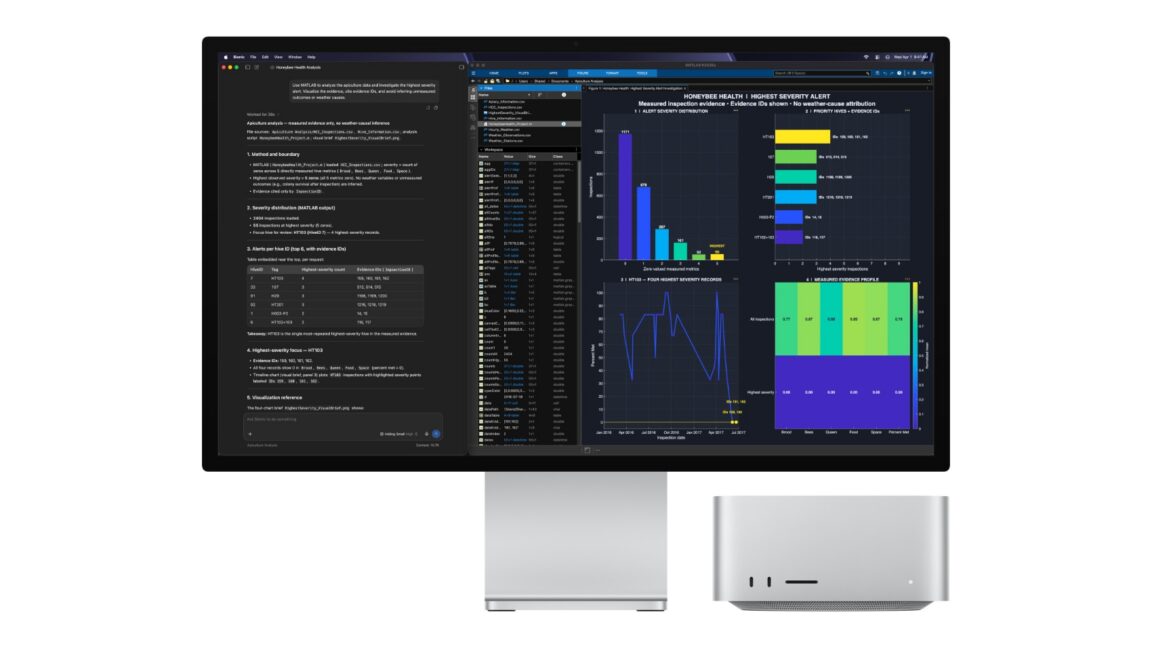
The Mac mini and Mac Studio serve different roles within Apple's desktop lineup; however, they both share a newfound popularity for local AI inference and software development. This surge in interest stems from their unified memory architecture combined with high-performance CPUs and GPUs built into their systems-on-a-chip.
Apple recently unveiled updated versions of both desktops, introducing two new processors: the M6, marking the debut of Apple’s first 2nm chip in the M-series for Macs, and the M5 Ultra, which now stands as the most powerful chip in the series, particularly well-suited for AI tasks.
These updates do not bring substantial new features; rather, they primarily offer an upgrade in specifications. Nonetheless, Apple is clearly positioning these refreshed models to highlight their capabilities for specific applications—use cases that were not initially contemplated during the design of earlier versions.
The increased interest in production inference surged following the release of macOS 26.2 last December. According to Apple, this update enabled "low-latency communication between Thunderbolt 5 hosts for applications such as distributed AI inference using MLX." Thunderbolt 5 is an ultra-fast wired connection, while MLX serves as an open-source framework aimed at optimizing machine learning workflows to leverage the M-series chips' unified memory effectively.
Since the update, both amateurs and professional developers have been connecting multiple Mac minis or Mac Studios to execute inference on expansive local language models, which far exceed the capabilities of a single mainstream device. This approach provides a viable alternative to high-end specialized hardware, particularly those reliant on dedicated Nvidia GPUs.