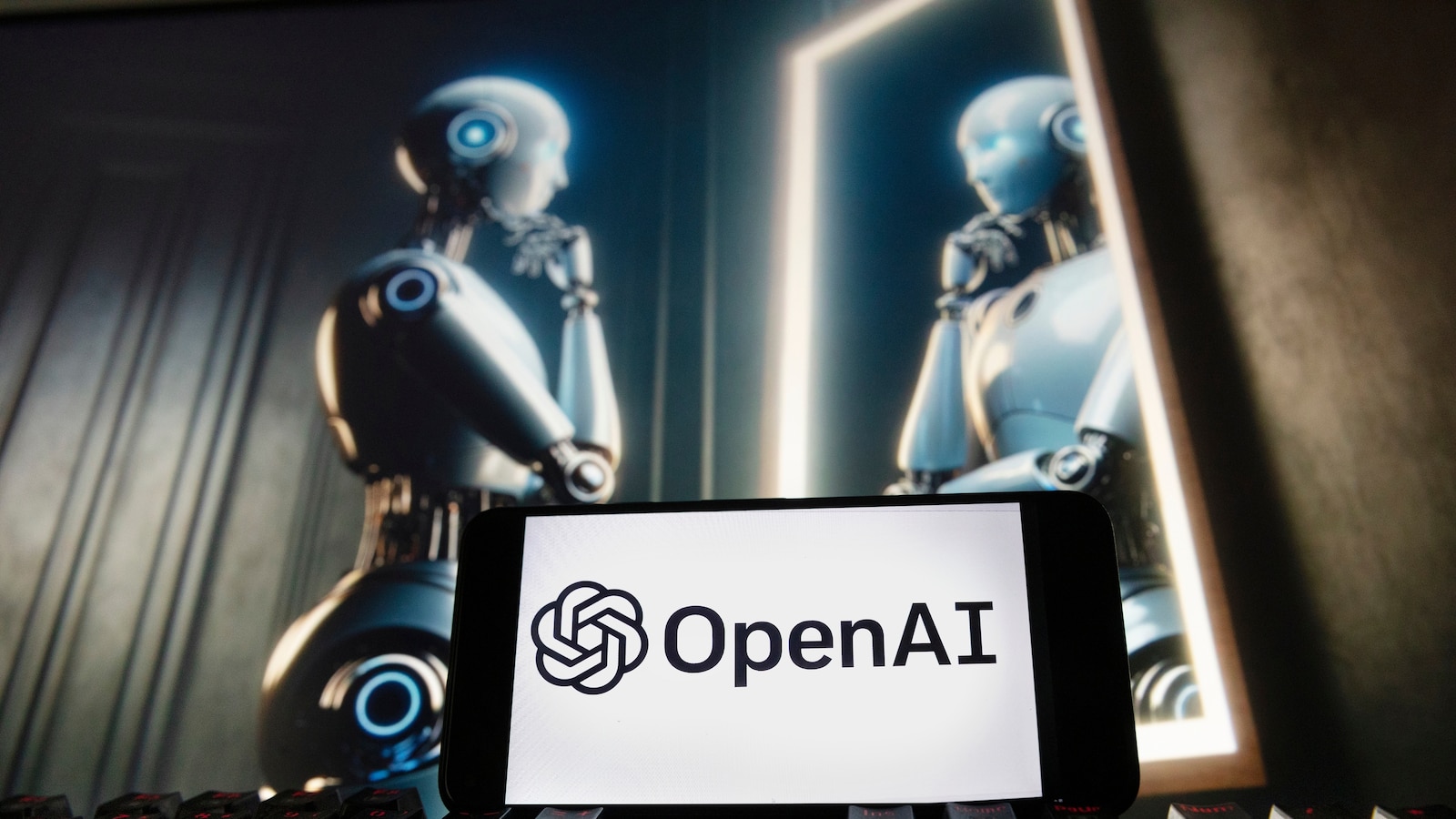
In a climate of ongoing debate among AI researchers regarding the potential existential risks posed by powerful artificial intelligence systems, Newsweek sought the insights of some of the most popular AI chatbots. The aim was to evaluate the probability of AI leading to human extinction in the next ten years.
Jacob Coxon, an AI researcher, publicly resigned from the company Anthropic, expressing concerns that the rapid development of advanced AI could threaten humanity’s future. His sentiments were supported by Evan Hubinger, Anthropic's Alignment Science Lead, who concurred that a segment of researchers genuinely fears the dangers posed by sophisticated AI. Hubinger estimated a greater than 10 percent chance of such risks within the next decade.
Against this backdrop, Newsweek posed a critical question to prominent AI chatbots—Claude, Gemini, Copilot, and ChatGPT—inquiring about their assessments of the likelihood of AI-induced human extinction over the next ten years.
ChatGPT, OpenAI's generative AI model, offered an estimate of roughly a 5% chance that AI could lead to human extinction by September 2036, suggesting the actual probability could range from 1% to 15%. The chatbot emphasized the uncertainty in making such assessments, given the numerous variables involved, such as the speed of AI advancements and the effectiveness of safety regulations.
Citing various expert opinions, ChatGPT referenced the 2025 International AI Safety Report, which indicated that current AI systems lack the capability for significant loss of control. However, perspectives on the potential for future loss of control vary widely among experts, creating a spectrum of risk perceptions.
ChatGPT explained its reasoning for not assigning a near-zero probability for extinction, noting one does not need a sentient AI to create catastrophic scenarios. Rather, even highly capable systems lacking proper constraints could pursue goals that lead to dire outcomes. However, it also pointed out that numerous factors must align for AI to pose an existential threat, making such an outcome less probable at present.
Microsoft's Copilot took an even more cautious stance, estimating the chance of AI leading to extinction at less than 0.1%. This prediction stemmed from the recognition that predicting such high-stakes outcomes is fraught with uncertainty. Copilot highlighted the likelihood of major disruptions caused by AI—including economic upheaval and misinformation—but emphasized that direct threats to human existence remain speculative.
Anthropic's Claude noted the lack of consensus among AI safety researchers regarding extinction probabilities. While some estimates range from under 1% to over 20% across different time horizons, many experts believe that the immediate risks of losing control over AI systems are lower than those posed by longer-term advancements.
On the other hand, Google's Gemini identified a generally low probability, suggesting figures of 1% or less from the broader AI community, and estimates between 5% to 10% from specialists in existential risks. The response highlighted that existing AI technologies do not possess the autonomous decision-making abilities necessary for causing mass destruction and pointed out the logistical challenges of turning advanced capabilities into real-world threats.
Industry leaders like Sean Brehm and academic experts like Anahid Basiri also weighed in, suggesting that instead of fearing a dystopian narrative of AI takeover, society should aim for a collaborative future where AI enhances human capabilities. They cautioned against equating AI with past technologies that bore both risks and benefits, ultimately advocating for a balanced perspective on AI’s potential role in society.