Recently, a software engineer friend recounted the significant changes in his role since his company adopted an “AI-first approach.” He shared how this shift has transformed the dynamics within his team, leading to a prevalent question in the office that now haunts him: “Why don’t you just give it to Claude?” Here, 'it' refers to complex engineering challenges that previously absorbed the team's attention for extended periods—discussions that would have lasted over an hour not long ago. Now, the expectation is that these problems are handed off to Claude, who consistently provides effective solutions within minutes. His frustration stems not from Claude's efficiency but from feeling his expertise and authority have diminished, rendering him, in a sense, replaceable or even outdated.
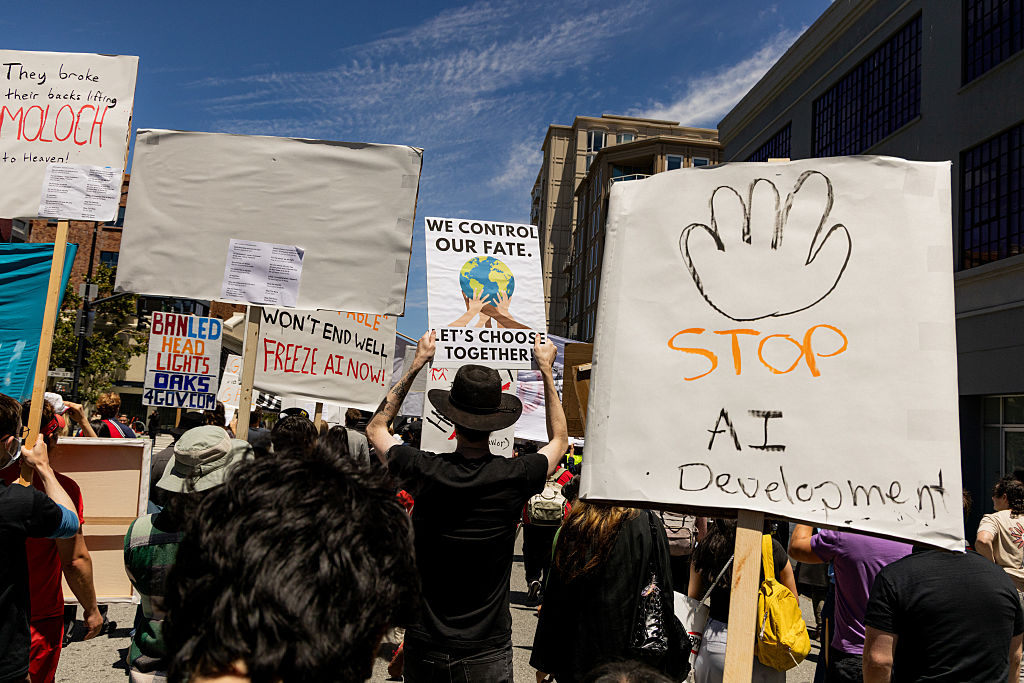
Garrison Lovely explores the troubling concept of human obsolescence in his book "Obsolete: The AI Industry’s Trillion-Dollar Race to Replace Us — and How to Stop It." Unlike other recent works focusing on the experiences of workers (such as Sarah O’Connor’s "We Are Not Machines"), Lovely adopts a broader perspective, framing the issue within political economy. He views obsolescence, redundancy, and fungibility as political challenges. However, those engaged in the ongoing discussions around artificial intelligence recognize that the current debates often transcend traditional political divisions. For instance, Lovely points out the unlikely alliances, such as Elon Musk siding with the Service Employees International Union against Nancy Pelosi and billionaire Marc Andreessen, or Steve Bannon collaborating with former Obama advisor Susan Rice while critiquing Donald Trump’s policies.
Lovely asserts that there’s a point of consensus: a small elite, supported by powerful organizations, is striving to render human labor obsolete. While this assertion might seem exaggerated or paranoid to some, Lovely quickly notes that many AI companies are surprisingly transparent about their ambitions to minimize human roles.
For example, OpenAI's charter states its goal of achieving Artificial General Intelligence (AGI), which it defines as a system that can outperform humans in most economically valuable tasks. Regardless of how the objective is articulated, the ambition to create AGI essentially seeks to convert capital into labor, thereby diminishing the reliance on human workers. Lovely contends that AGI should be viewed as not merely an advanced intelligence but as a new form of machinery that produces labor itself, coining the term “the Obsoleting Machine.”
In the initial section of "Obsolete," titled “What You’ve Heard,” Lovely outlines the primary stances on AI today. He identifies three opposing camps in the debate about AGI: worriers, accelerationists, and critics. The worriers, often associated with the AI-safety movement, acknowledge the feasibility of AGI but predict dire consequences. Critics, such as Emily Bender—who famously dismissed large language models as “stochastic parrots”—hold a skeptical view, questioning both the possibility and urgency of AGI developments. Finally, the accelerationists advocate for rapid AGI advancement, believing in its transformative potential; figures like Andreessen have argued that delaying AGI could result in preventable loss of life.
The alliances that form among these groups can be quite surprising. For instance, both critics and worriers advocate for industry regulation but often from vastly different perspectives. Meanwhile, accelerationists and critics sometimes agree that hypothetical threats shouldn’t overshadow current realities.
Lovely spends a considerable portion of his book addressing and countering the arguments from these factions—often with success—before presenting his own stance as a “reformer.” He posits that the current harms associated with AI and the potential catastrophes are interrelated and stem from the same issues: competitive pressures, concentrated power, and a lack of accountability. He cites examples such as chatbots encouraging self-harm among teens and the existential risks posed by AGI; both scenarios arise from companies rushing to implement technologies they do not fully understand.
What are the potential measures to prevent the anticipated technological crises that Lovely foresees? His recommendations in the final section, "What to Do," are ambitious; he calls for a U.S.-China agreement to halt the development of AI systems intended for full labor automation until public consensus and scientific assurances of safety are established. However, given the prevailing rhetoric during the Trump administration about "securing America’s global AI dominance,” such agreements appear highly unlikely. The Biden administration has similarly framed AI as a race against China. More feasible proposals include creating publicly owned computing infrastructure and forming “data unions” for collective bargaining over training materials. Yet, if China escalates its AI endeavors, it may be unrealistic to expect the U.S. to resist following suit, regardless of these more equitable proposals.
At times, Lovely’s writing can be frustrating; the casual style occasionally detracts from his points. Phrases like "neither side wants to create a rogue superintelligence or let any rando kill billions" may undermine the gravity of his argument. The book's structure, featuring numerous chapters subdivided into smaller sections, can feel overly academic, replete with cramped charts that may not contribute significantly to the narrative. The sensational subtitle adds an extra layer of critique. Despite these editorial flaws, the core messages presented in "Obsolete" are profoundly thought-provoking, raising critical questions about the intersection of technology, labor, and the future of society.