The U.S. Department of Energy has announced new funding aimed at leveraging artificial intelligence to enhance scientific discovery. The Lawrence Berkeley National Laboratory (Berkeley Lab) will spearhead 13 initiatives while also collaborating on over 30 additional projects.
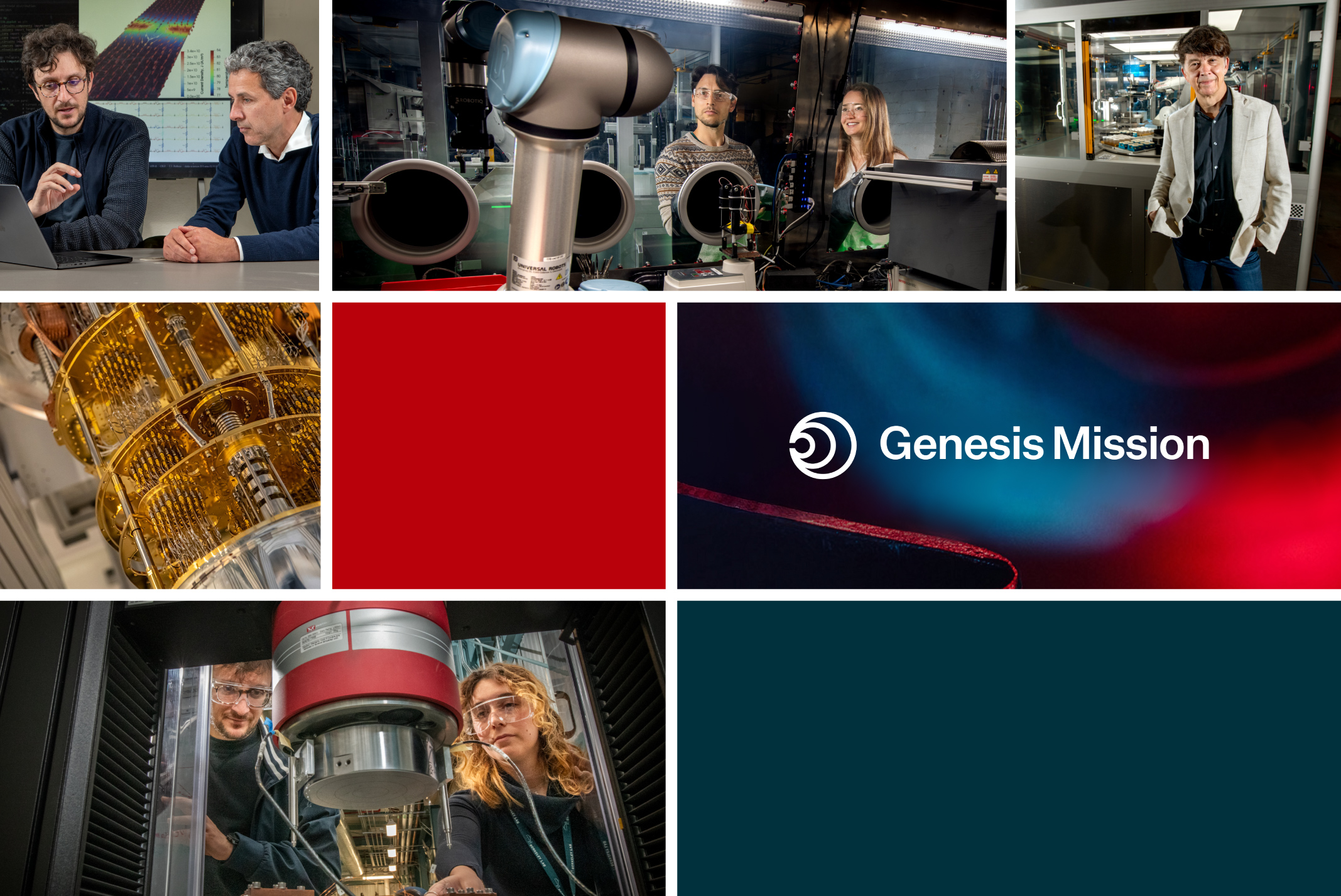
These initiatives are part of the DOE’s ambitious Genesis Mission, a groundbreaking national program designed to create an unparalleled integrated science discovery platform. This initiative seeks to foster collaboration among government entities, industry leaders, academic institutions, and philanthropic organizations to spur advancements in energy, scientific research, and national security utilizing a cutting-edge combination of AI, supercomputing, quantum technology, and sophisticated scientific tools.
Berkeley Lab's involvement in the Genesis Mission draws from decades of robust research in high-performance computing, data management, and the development of innovative AI models. The lab will initiate projects across various fields, enhancing research areas such as critical minerals extraction, materials science, manufacturing processes, fusion energy, and broader energy solutions.
Kathy Yelick, the director of Berkeley Lab, stated, “By harnessing advanced AI tools alongside high-quality datasets and supercomputing resources, our team is enhancing scientific outcomes and accelerating the pace of discovery. More than just immediate gains, the Genesis Mission represents a chance to develop superior AI methods that will benefit scientific communities for generations.”
Phase 1 of the Genesis Mission's projects aims to pinpoint transformative scientific capabilities and lay the groundwork for future scaling and investments. Teams will design and test research workflows that merge AI with scientific exploration, carefully assessing whether these methods can expedite discoveries, boost predictive models, refine experimentation, or lead to novel scientific insights.
The flagship projects led by Berkeley Lab include:
- **ASPIRE**: This project will utilize Department of Energy data to create an AI-driven system that enhances precipitation predictions to safeguard U.S. hydropower production and critical grid infrastructure. - **AI-Driven Autonomous Labs**: Researchers will develop intelligent systems integrated with autonomous laboratories to streamline materials discovery and foster scientific breakthroughs.
- **Quantum and Optoelectronic Materials Discovery**: AI, guided by physics simulations, will identify key quantum and optoelectronic materials, accelerating the development of next-generation computing, sensing, and energy technologies.
- **Water Supply Predictions for Energy**: An AI framework will be designed to provide integrated forecasts for surface and groundwater dynamics, supporting both energy and water security efforts.
- **Cloud-Based AI Workflows**: The Agentic HPC Pipeline Initiative (AHPI) aims to establish AI workflows that allow U.S. manufacturers to utilize powerful DOE research codes through commercial cloud services.
- **AI and Nuclear Waste Repository Design**: A digital-twin approach will foster a more cohesive environment for evaluating nuclear waste repository designs, breaking down existing siloed processes.
- **AI-Accelerated Alloy Engineering**: This initiative combines AI-driven structure predictions and advanced microscopy techniques to enhance the design of sophisticated alloys for extreme conditions.
- **HERALD Project**: This project will develop an AI-driven platform to review decades of classified government research, facilitating commercial access and expediting nuclear innovation.
- **Water-Energy Demand Predictions**: AI will enable the creation of a precise prediction system for water resource availability in relation to energy infrastructure.
- **Critical Minerals Recovery**: The team will apply AI strategies to optimize the extraction of critical minerals from various deposits, including copper and nickel.
- **Digital Twins for Fusion Magnet Systems**: AI-driven digital twins will help ensure the successful operation of high-temperature superconducting magnets essential for future compact fusion power plants.
- **AI for Subsurface Fractures Prediction**: This project will merge AI with geophysical data to enhance the forecasting of subsurface fractures, furthering geothermal energy technologies.
- **Nuclear Waste Storage Models**: Advanced AI-generated 3D geological models will aid in identifying suitable sites for the underground storage of nuclear waste.
Lawrence Berkeley National Laboratory is dedicated to innovative research aimed at finding discoveries and solutions for sustainable, reliable energy resources. With a broad expertise in materials science, chemistry, biology, physics, earth sciences, and mathematics, Berkeley Lab provides state-of-the-art scientific facilities for researchers worldwide. Established in 1931, the lab has garnered 17 Nobel Prizes, embodying the belief that collaborative approaches are integral to solving significant global challenges. Managed by the University of California for the U.S. Department of Energy’s Office of Science, Berkeley Lab continues to be at the forefront of impactful research.
The DOE's Office of Science is the largest supporter of foundational research in the physical sciences across the nation, actively addressing some of today's most pressing issues. Further details can be found at energy.gov/science.