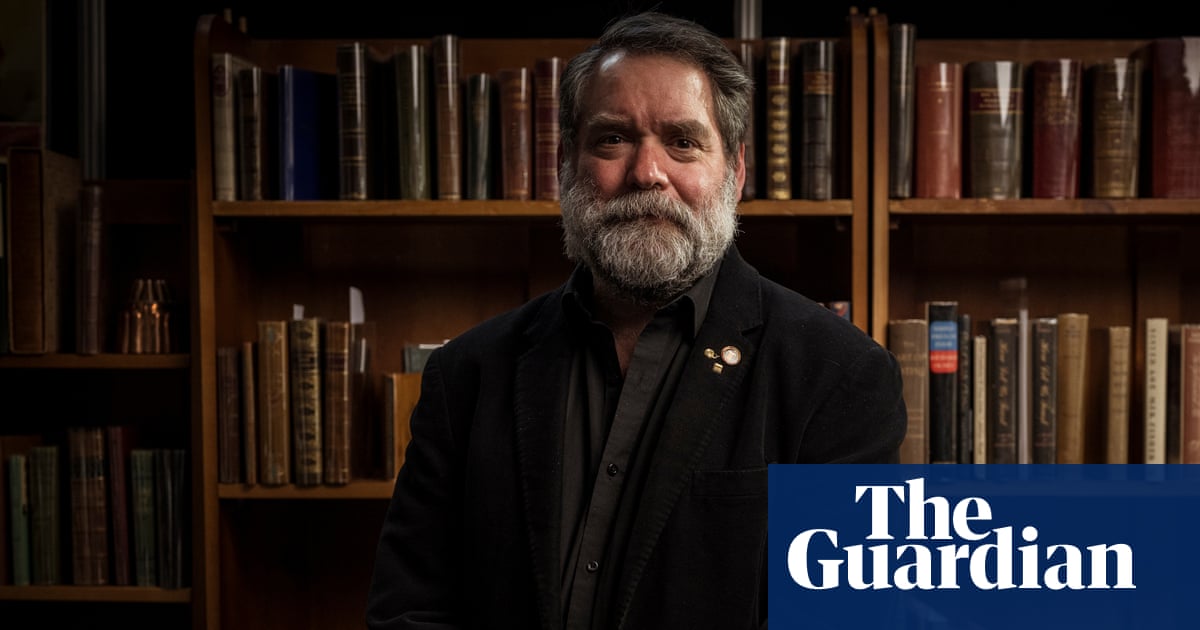
Tim White, the owner of the independent bookstore Books for Cooks, is meticulously organizing a collection of carefully preserved books and pamphlets for his booth at the upcoming Melbourne Rare Book Fair, taking place this weekend at Wilson Hall, Melbourne University. For White, the physicality of a book is as significant as its written words, as he emphasizes the profound connection between food and society.
“Our focus is on exploring the intersections of food and human experience,” White explains. “We are continuously searching for unique materials that offer insights into what it means to be human. This is the essence of our work as rare booksellers—we engage with items that have compelling stories.”
Yet, there is growing concern among rare book vendors and experts about the potential threat posed by generative AI companies, which are eager to acquire new texts to enhance their technologies. The source of this worry is a copyright lawsuit in the U.S. against the AI firm Anthropic, where it was revealed in court documents that the company had engaged in “destructive scanning.” This unethical practice involved purchasing physical books, removing their spines for easier scanning, and then discarding the remains. A judge ruled this method was permissible under U.S. copyright law, categorizing it as "transformative use," a decision that has sparked significant backlash.
Reports indicate that this practice is becoming more prevalent among generative AI firms, and various intermediaries are stepping in to streamline the acquisition of books. Australian secondhand booksellers have become wary after noticing a surge in unusual orders that don’t align with typical customer behavior.
Several vendors have reported receiving orders from a Canadian entity, Zoom Books, which bills itself as a “book recycler.” These orders, often placed through major secondhand marketplaces like Abebooks and Biblio, varied from inexpensive paperbacks to rare finds. Delfina Manor of Good Reading Secondhand Books in Benalla shared her experience of receiving three boxes of orders from Zoom Books in May, noting that fulfilling these requests was a logistical challenge.
John Sainsbury, the owner of Sainsburys Books in Melbourne, corroborated the influx of peculiar orders from Zoom Books, highlighting their randomness and price insensitivity. He noted the distinct nature of these orders, which included an eclectic mix of niche titles and older stock, often resulting in the need to ship multiple boxes internationally.
While some vendors suspect that Zoom Books may be engaged in arbitrage—common in the secondhand trade—the specific combination of books ordered raises eyebrows. For instance, one order included a 1970s manual on soil mechanics alongside a collection of early Australian poetry, which had languished unsold for decades.
White reflects on the complexity of the issue, highlighting what he calls an “interesting tension.” He feels that while the loss of a common book might not elicit strong emotions, the destruction of a unique volume rich in story and significance is heartbreaking.
For booksellers like Nick and Jenny Dawes of Grant’s Bookshop, who manage around 500,000 books, the situation presents a dilemma. Nick articulates a conflicted stance: while the prospect of unloading an enormous inventory is appealing, losing a rare or singular copy is unacceptable.
Historically, the destruction of books for profit isn’t new. Some vendors intentionally cut up rare texts to sell illustrations separately. Gwenyth Todd of Chatelaine Books finds this practice reprehensible and takes measures to ensure her books end up in the right hands.
An Anthropic spokesperson has stated that their company does not purchase from Zoom Books and claims to source material responsibly for training language models, ensuring that rare and antiquarian books are not harmed.
Zoom Books co-founder Manroop Gill recently mentioned the company’s aggressive expansion in a LinkedIn post. They have previously denied engaging in destructive practices, asserting their commitment to reusing and responsibly recycling books that can no longer be resold. However, they have not disclosed whether they supply intact books to AI companies for scanning purposes, citing confidentiality in their commercial agreements.