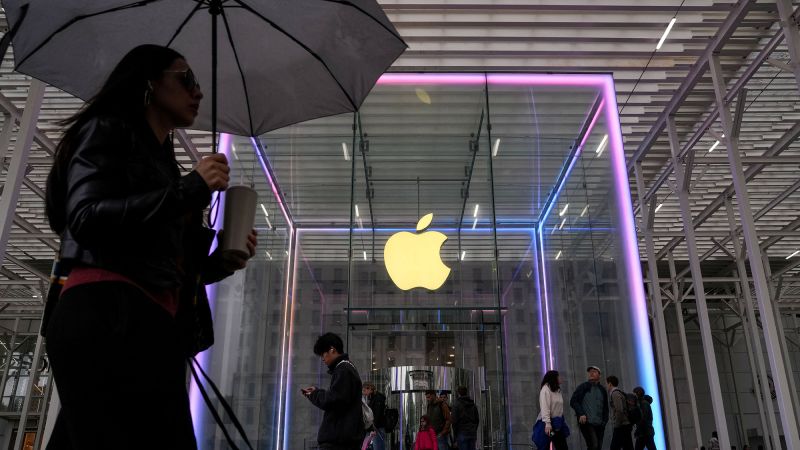
On Friday, Apple filed a lawsuit against OpenAI, accusing the artificial intelligence firm of misappropriating its trade secrets to create its own upcoming AI devices. The legal action was initiated in the Northern District of California, with Apple alleging that OpenAI breached contracts and engaged in the unauthorized use of confidential information.
The case arises after OpenAI announced last year its collaboration with Apple's former design head on a secretive initiative aimed at integrating AI capabilities into new devices geared toward smartphone users. An official reveal of this new product is anticipated later this year, but the lawsuit could potentially derail those plans and complicate OpenAI’s aspirations for an imminent public offering.
OpenAI spokesperson Drew Pusateri countered Apple’s claims, asserting, “We have no interest in other companies’ trade secrets. Our commitment remains to developing innovative technology that empowers individuals globally.”
The lawsuit names several parties, including OpenAI itself, former Apple engineer Chang Liu, hardware chief Tang Tan—who both played significant roles in Apple’s iPhone and Apple Watch design—and io Products, a company established by Jony Ive, Apple’s former design chief who significantly contributed to the iPhone’s creation. While Iv is not implicated in the lawsuit, the suit notes that OpenAI acquired io Products last year.
Apple alleges that Liu and Tan were instrumental in the alleged theft of sensitive company information. Liu, who departed from Apple to join OpenAI in January 2026, reportedly did not fulfill obligations regarding confidentiality agreements and failed to return a company-issued laptop, according to the lawsuit. Furthermore, he allegedly accessed and downloaded numerous confidential files, including technical specifications and data on unreleased products after his departure.
Tan is accused of using proprietary information during the recruitment process for new candidates, including requests for them to bring Apple components to interviews, and allegedly provided coaching to Apple employees on how to depart the company. Additionally, he is said to have shared insights from key supplier meetings and emailed confidential information to himself prior to leaving Apple.
Apple has claimed to have found evidence that other former Apple staffers may have taken confidential data with them when moving to OpenAI, underscoring the ongoing tension between the two tech giants. In a statement, Apple emphasized the importance of safeguarding its intellectual property and the innovative efforts of its teams.
The lawsuit also signals a deterioration in what was previously a collaborative relationship; in 2024, Apple and OpenAI announced a partnership aimed at integrating ChatGPT into Apple's offerings. However, reports surfaced in May that OpenAI was contemplating legal action against Apple for purportedly failing to adequately promote and integrate its technology.
OpenAI has notably recruited several high-profile current and former Apple engineers, aiming to bolster its hardware division. A recent analysis by CNN indicated that at least ten engineers transitioned from Apple to OpenAI.
This legal dispute underscores the competitive nature of the tech sector as companies vie to establish themselves at the forefront of the AI landscape. OpenAI is strategically centering ChatGPT in its product strategy while Apple prepares to launch a redesigned version of Siri, which will feature improved compatibility with apps and utilize user data for personalized responses.
While details regarding OpenAI’s project remain largely undisclosed, sources have indicated that the company is developing a smart speaker that can be attuned to a user's environment. As AI continues to transform the technology landscape, companies are eager to adapt, aiming to reduce reliance on traditional apps and screen interactions as these intelligent agents become increasingly capable. The story will continue to develop as the legal situation unfolds.