Last week, the Beijing-based AI firm Moonshot unveiled its latest innovation, the Kimi K3, a large language model that has been instantly elevated by experts to the elite ranks of models developed by industry leaders like OpenAI and Anthropic. Even tech luminary Elon Musk deemed it "impressive work."
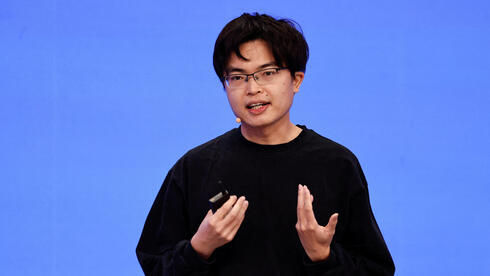
The spotlight on this Chinese breakthrough shines brightly, largely due to the dynamic 34-year-old founder, Yang Zhilin, a rock music lover who pursued his higher education in the United States. Yang completed his PhD at Carnegie Mellon University in an impressive four years, graduating in 2019.
While studying at Carnegie Mellon, he co-authored significant research papers on transformer technology, which revolutionized chatbot interactions by enabling them to engage in conversations that resemble human dialogue. Yang quickly garnered attention in Silicon Valley, with Apple making a strong push to recruit him, while Google and Meta rolled out inviting offers. Even prestigious postdoctoral opportunities awaited him at Stanford and MIT. Yet, in a surprising turn, he opted to return to China instead of taking the typical route many of his peers would have chosen.
What could have caused the US—often seen as a land full of opportunity—to lose a promising talent like Yang so effortlessly? One prevailing theory suggests that he may have been discouraged by increasing immigration restrictions and fears of Chinese industrial espionage in the US. However, friends of Yang emphasize that his primary goal was to launch his own AI venture in China. He expressed to them that failing to pursue this path would lead to lifelong regret.
Despite Apple's offer for a senior role at their Beijing offices—an opportunity that would have represented a dream job while allowing him to return home—Yang stuck to his aspirations. He founded Moonshot, inspired by Pink Floyd’s iconic album, *The Dark Side of the Moon*.
The company's headquarters in Beijing's Haidian district features meeting rooms named after legendary rock bands, with a white piano as a focal point in the office. He brought together many researchers who had previously studied alongside him at Tsinghua University, where he completed his undergraduate studies.
One such collaborator is Zhou Xinyu, who once organized music competitions at the university with Yang, who himself participated as a drummer in the student band Splay.
The release of the K3 model last week marked a significant milestone in Moonshot’s journey, igniting concerns in the West about the rapid advancements in Chinese AI development, akin to the reactions triggered by the launch of another prominent model, DeepSeek, the previous year.
Within just three years of its founding, Yang’s team of 300 managed to create an AI model that could stand toe-to-toe with the best globally. Yet, the road to success was not without challenges. Observers in China's AI sector initially expressed skepticism about Moonshot's prospects in the fiercely competitive and costly landscape of large language model development. In 2024, the company earned a modest $2.4 million as the expenses for model training and talent acquisition soared. In a pivotal decision, Yang shifted away from developing a chatbot and embraced an open-source model approach.
The strategy quickly paid off. By June, Moonshot had positioned itself as one of China's fastest-growing AI model providers, achieving approximately $300 million in annual revenue.
The Financial Times has noted that China's burgeoning AI ecosystem is increasingly appealing to domestic talent and entrepreneurs returning home, with Yang being one of many. Dr. Harry Shum, ex-chief researcher and executive vice president at Microsoft, returned to China after a notable career and is now the chairman of the International Digital Economy Academy in Shenzhen. Similarly, Professor Qi Lu, a former senior vice president at Yahoo and Microsoft, came back in 2017 to lead Baidu. Professor Song Chun Zhu, a top figure in computer vision, returned to Beijing in 2020 to head the Beijing Institute for General Artificial Intelligence.
Traditionally, many Chinese students in science and technology opted to stay in the United States post-PhD, joining prestigious tech research labs. However, a 2024 Stanford survey revealed that 73% of 1,304 Chinese American scientists felt "unsafe" as academic researchers, while 65% cited concerns over "anti-Asian hatred and violence."
According to the Financial Times, Chinese professionals with similar backgrounds express a newfound comfort in launching startups in China, driven by their personal networks and cultural familiarity. Many emphasize a sense of patriotism, believing their contributions to China’s AI sector can propel the country to the forefront of the global tech revolution.
This shifting narrative around Yang’s departure has sparked broader discussions in the United States about retaining AI talent. In response, discussions in Silicon Valley have emerged, proposing automatic green cards for all foreign residents earning doctorates in AI to encourage them to remain in the US.
China is evolving from simply importing talent trained in the US; it's now actively cultivating its own homegrown talent. Research from Stanford’s Hoover Institution tracking the creators behind DeepSeek shows that 53.5% had never studied or worked outside of China, and among those with US experience, 70% returned to China.
For many years, America’s technological superiority relied on a straightforward principle: attract the world’s brightest minds and cultivate them domestically. Yang Zhilin’s journey highlights a critical shift, revealing not only a less welcoming environment in the US but also the allure of opportunities burgeoning in China.